
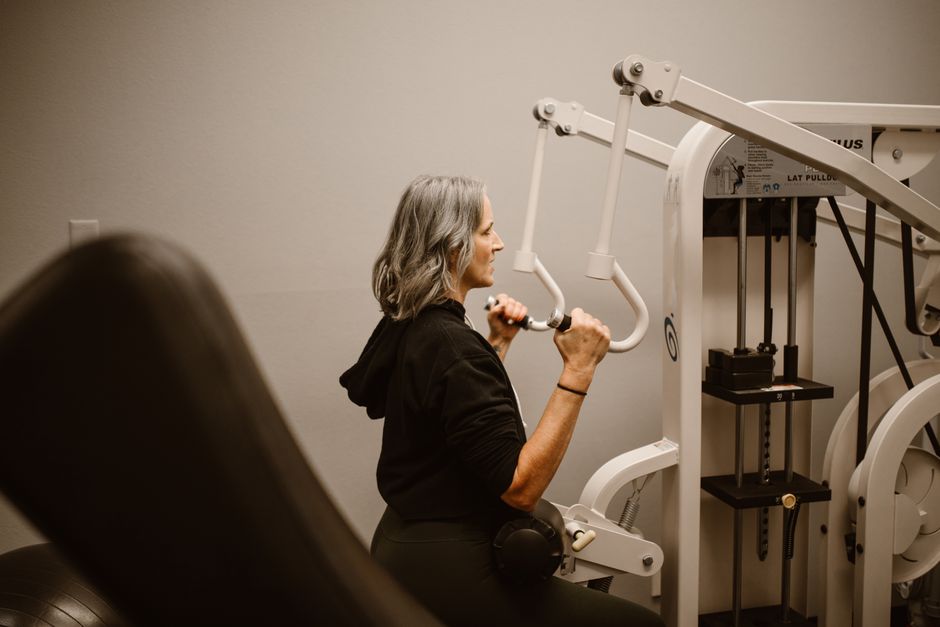
There is no single switch that resets female hormones. The body already runs a tightly timed feedback loop between the brain, the pituitary gland, and the ovaries, and that loop responds to everyday inputs like sleep, food, movement, and stress. The realistic goal is not a “reset” but support: giving that system the conditions it needs to function closer to its baseline.
Hormones shift across the menstrual cycle, through pregnancy, and into perimenopause and menopause. What helps at 40 is not always what helps at 55. This article explains what the research actually supports, what remains uncertain, and where marketing has outrun the evidence.
What Does “Resetting Female Hormones” Actually Mean?
Hormones are chemical messengers, and the female reproductive system runs on a feedback loop called the hypothalamic-pituitary-ovarian axis. The hypothalamus releases GnRH. The pituitary responds by releasing FSH and LH. Those signals tell the ovaries to produce estrogen and progesterone. Rising estrogen then feeds back to quiet the brain’s signal. The cycle repeats.
When people talk about a “hormone reset,” they usually mean one of three things: easing symptoms like irregular periods, acne, or mood swings; supporting fertility; or managing the transition into perimenopause. These are different problems with different evidence behind them.
No supplement, tea, or diet plan has been shown to “reset” this axis. What some lifestyle changes can do is remove obstacles. Poor sleep, chronic stress, and severe calorie restriction can all disrupt the signaling loop. Addressing those is where the real leverage sits.
How Does Sleep Affect Female Hormone Balance?
Sleep and reproductive hormones influence each other in both directions. The menstrual cycle can change sleep quality, and poor sleep can change hormone patterns.
Some studies suggest that insufficient sleep is associated with irregular menstrual cycles and shifts in LH and FSH patterns, though the research is not uniform. What is well established is that sleep affects cortisol, insulin sensitivity, and appetite hormones like leptin and ghrelin. Those systems intersect with reproductive hormones more than people realize.
Melatonin, the hormone that signals darkness to the body, also plays a role in reproductive timing. Shift workers, who have disrupted melatonin rhythms, tend to report more cycle irregularity. That does not prove melatonin supplements fix anything. It suggests that consistent sleep timing matters.
Practical direction, based on general sleep research rather than hormone-specific trials:
- Keep a consistent wake time, even on weekends
- Aim for 7 to 9 hours, the range the National Sleep Foundation recommends for most adults
- Get bright light in the morning and dim light in the evening
- Limit alcohol close to bedtime, since it fragments sleep in the second half of the night
None of this is a cure. It is removing friction from a system that already knows how to work.
Can Diet Really Change Your Hormones?
Diet affects hormones, but not in the way most online content claims. There is no food that “balances estrogen.” What food does is influence insulin, inflammation, body fat, and the raw materials the body uses to build hormones.
Insulin is the clearest example. High insulin levels are associated with higher androgen production in people with polycystic ovary syndrome (PCOS), a condition affecting roughly 1 in 10 women of reproductive age according to the CDC. Weight loss of 5 to 10 percent in people with PCOS who carry extra weight is associated with improved cycle regularity and ovulation in multiple studies. This is one of the better-supported diet-hormone links.
For everyone else, the evidence is softer. Some research suggests that diets high in fiber and low in refined carbohydrates are associated with lower circulating estrogen, because fiber can bind to estrogen in the gut and affect how much is reabsorbed. The effect size is modest and the studies are mostly observational.
What is reasonable to say:
- Eat enough. Severe calorie restriction can suppress GnRH and stop ovulation — this is well documented in athletes and people with eating disorders
- Include protein at each meal to support stable blood sugar
- Get fiber from vegetables, legumes, and whole grains
- Limit alcohol, which is associated with higher estrogen levels in some studies
What is not supported: “seed cycling,” detox teas, and specific food combinations marketed as hormone balancing. No clinical trials confirm these work.


Does Exercise Help or Hurt Hormone Balance?
Exercise helps hormones when it is moderate and consistent. It hurts them when it is extreme and paired with under-eating.
Regular moderate activity improves insulin sensitivity, which indirectly supports healthier androgen and estrogen levels. It also supports sleep and mood, both of which feed back into the hormone loop.
At the other end, the Female Athlete Triad and its broader successor, Relative Energy Deficiency in Sport (RED-S), describe what happens when energy intake does not match energy output. The hypothalamus reduces GnRH pulses. LH and FSH drop. Estrogen falls. Periods stop. This is not a “reset” — it is a shutdown, and it carries bone density and cardiovascular consequences.
The line between helpful and harmful is not a specific number of hours. It depends on total energy intake, stress, sleep, and individual physiology. If periods stop for three months or more in someone who is not pregnant or in menopause, that warrants a medical evaluation. Amenorrhea is a symptom, not a training badge.
How Much Does Stress Affect Hormones?
Chronic stress can disrupt the reproductive axis, and the mechanism is fairly well understood. The body responds to stress by releasing cortisol through the HPA axis. Cortisol and GnRH share some of the same brain circuitry. When cortisol stays elevated for long stretches, GnRH signaling can be suppressed.
This is why prolonged psychological stress is associated with irregular cycles, worsened PMS symptoms, and in some cases missed ovulation. The relationship is real but not simple. Short-term stress generally does not throw hormones off. It is the sustained, unrelenting kind that matters.
Some evidence supports stress-reduction practices for symptom relief, though study quality varies. Cognitive behavioral therapy has been studied for PMS and PMDD with generally positive results. Mindfulness-based approaches show mixed findings. What works for one person may not work for another, and none of these replace medical treatment for a diagnosed condition.
What About Perimenopause and Menopause?
Perimenopause is the transition before menopause, and it can start in the mid-40s for many women, sometimes earlier. Estrogen and progesterone fluctuate unpredictably, then decline. Menopause is defined as 12 consecutive months without a period, and the average age in the US is 51.
No natural method reverses this transition. It is a normal life stage, not a hormone imbalance to fix. Lifestyle changes can reduce symptom burden for some women, but the evidence for specific interventions is uneven:
- Hot flashes: Some evidence supports cognitive behavioral therapy and clinical hypnosis for bothersome hot flashes. Weight loss and avoiding triggers like alcohol and spicy food help some women
- Sleep: Sleep hygiene is a reasonable first step, though it often is not enough on its own
- Bone health: Weight-bearing exercise and adequate calcium and vitamin D are well-established supports for bone density, which declines faster after menopause
Hormone therapy is the most effective treatment for moderate to severe vasomotor symptoms, based on decades of trial data. Whether it is appropriate depends on individual risk factors and should be discussed with a clinician. This is not a natural-versus-medical choice — it is a personal medical decision.
Which Supplements Have Real Evidence?
Most supplements marketed for “hormone balance” have no clinical trial evidence behind them. A few have some support, but the effects are usually modest and specific to a condition.
- Inositol: Some studies suggest it can improve ovulation and insulin sensitivity in PCOS. Doses used in research are typically in the 2 to 4 gram per day range, but anyone considering it should talk to a clinician first
- Vitamin D: Deficiency is common and correcting it supports general health. Whether it improves cycle regularity is not well established
- Omega-3 fatty acids: Some evidence suggests they may reduce menstrual pain. Effects on hormone levels themselves are less clear
- Vitex (chasteberry): Some smaller studies suggest benefit for PMS symptoms. Evidence is limited and it can interact with hormonal medications
Supplements are not regulated the same way as medications in the US. Potency and purity can vary between brands. Anyone taking hormonal medication, pregnant, or breastfeeding should check with a clinician before starting anything.
When Should You See a Doctor?
Lifestyle changes have limits. Certain symptoms point to conditions that need medical evaluation, not a diet tweak.
- Periods that stop for three months or more without pregnancy
- Cycles consistently shorter than 21 days or longer than 35 days
- Heavy bleeding that soaks through a pad or tampon every hour for several hours
- Signs of high androgens, such as rapid acne, facial hair growth, or voice deepening
- Hot flashes, night sweats, or cycle changes that disrupt daily life
- Symptoms of thyroid problems, like unexplained weight change, fatigue, or temperature sensitivity
PCOS, thyroid disorders, hyperprolactinemia, and primary ovarian insufficiency all can look like “hormone imbalance” but require specific diagnosis and treatment. A blood test and a conversation with a clinician is the honest starting point.
Frequently Asked Questions
Can you actually reset your hormones naturally?
No — hormones operate on a feedback loop that cannot be “reset” by diet or lifestyle alone. What lifestyle changes can do is remove factors like poor sleep, chronic stress, or severe calorie restriction that disrupt the loop.
What is the fastest way to balance female hormones?
There is no fast fix. The best-supported steps are consistent sleep, adequate nutrition, regular moderate exercise, and stress management, and improvements in symptoms typically take weeks to months, not days.
Do hormone-balancing supplements work?
Most have no clinical trial evidence. A few, like inositol for PCOS, have some research support, but effects are modest and specific, and supplements are not regulated like medications in the US.
When should I see a doctor about hormone symptoms?
See a clinician if periods stop for three months or more, cycles fall outside the 21-to-35-day range, bleeding is unusually heavy, or symptoms like hot flashes disrupt daily life.
