
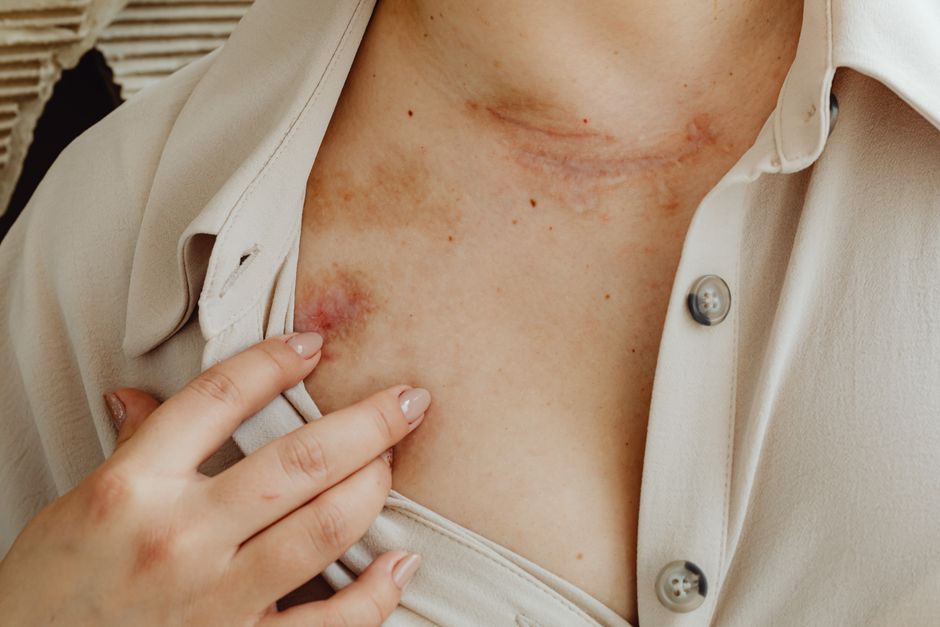
Getting a piercing removed does not always mean the mark goes away. Many people are left with small bumps, dark spots, or indentations after they take out their jewelry. The good news is that most piercing scars fade significantly with the right approach. Treatments that work include silicone sheets, laser therapy, and consistent sun protection. The key is matching the treatment to the type of scar you have — and being patient enough to let the process work.
What Causes Piercing Scars in the First Place?
A piercing scar forms when the body repairs skin that has been punctured. The wound healing process creates collagen fibers to close the hole. Sometimes the body makes too much collagen. That leads to a raised scar called a keloid or hypertrophic scar. Other times the body makes too little collagen, leaving a sunken or indented scar.
The location of the piercing matters. Earlobes, nostrils, and cartilage areas heal differently. Cartilage has less blood flow, so it heals slower and scars more easily. The type of jewelry and aftercare also play a role. Nickel allergies or infections during healing increase the chance of scarring.
Research published in the Journal of Cutaneous and Aesthetic Surgery notes that keloid scars are more common in people with darker skin tones. Genetics also influence how your body scars. If you have a history of keloids from cuts or scratches, you are more likely to develop them after piercings.
How To Remove Piercing Scars Treatments That Work: What the Evidence Says
Silicone sheets are one of the most studied treatments for raised scars. The American Academy of Dermatology recommends silicone gel or sheets as a first-line therapy for hypertrophic scars and keloids. They work by hydrating the scar tissue and reducing collagen production. You need to wear them for 12 hours a day for at least three months to see results.
Laser therapy is another option with strong evidence. Pulsed dye laser treatment targets blood vessels in red or pink raised scars. It flattens them and improves color. Fractional laser treatments help with texture and can reduce the appearance of indented scars. A 2020 review in Lasers in Medical Science found that laser therapy improved scar appearance in 70 to 90 percent of cases depending on scar type.
Corticosteroid injections are used for stubborn keloids. A doctor injects the steroid directly into the scar tissue. This reduces inflammation and shrinks the scar over several sessions. The CDC reports that keloids have a high recurrence rate after treatment, often over 50 percent, so follow-up care matters.
Do At-Home Remedies Actually Help or Are They a Waste of Time?
Many online sources claim that lemon juice, apple cider vinegar, or honey can fade piercing scars. There is no clinical evidence that any of these work. In fact, acidic substances like lemon juice can irritate the skin and make scarring worse. Aloe vera gel is safe and moisturizing, but studies have not proven it changes scar tissue.
Vitamin E oil is widely promoted for scars. Research published in Dermatologic Surgery found that vitamin E oil did not improve scar appearance and caused contact dermatitis in some people. Do not assume natural means effective. Some natural ingredients can delay healing or cause allergic reactions.
Massage is one at-home method that has some support. Gentle circular massage of scar tissue for five minutes twice a day may help break down collagen bundles. This works best on newer scars that are still forming. For older scars, massage alone is unlikely to make a visible difference.




What About Microneedling and Chemical Peels for Piercing Scars?
Microneedling uses tiny needles to puncture the skin and trigger collagen production. This can help with indented or atrophic scars. A 2018 study in the Journal of Cosmetic Dermatology found that microneedling improved acne scars by 50 to 60 percent after several sessions. The same principle applies to piercing scars. The treatment stimulates the body to rebuild collagen in the scarred area.
Chemical peels remove the top layer of skin and can improve surface texture and pigmentation. They work best for dark spots left by piercings rather than raised or indented scars. A light peel with glycolic acid or lactic acid is safe for most skin types. Deeper peels carry more risk and should only be done by a dermatologist.
Both treatments require multiple sessions spaced weeks apart. Results take time. You may see some improvement after one session, but full results usually appear after three to six treatments. Cost varies widely. Microneedling sessions range from 100 to 700 dollars depending on the provider and location.
Comparison of Common Piercing Scar Treatments
| Treatment | Best For | Time to Results | Cost Range |
|---|---|---|---|
| Silicone sheets | Raised scars, hypertrophic scars | 3 to 6 months | 15 to 50 dollars per sheet |
| Pulsed dye laser | Red, raised scars | 2 to 4 sessions | 200 to 500 dollars per session |
| Corticosteroid injections | Keloids, stubborn raised scars | 3 to 6 sessions | 100 to 300 dollars per injection |
| Microneedling | Indented scars, texture issues | 3 to 6 sessions | 100 to 700 dollars per session |
| Chemical peels | Dark spots, surface texture | 3 to 5 sessions | 100 to 300 dollars per session |
What Should You Never Do to a Piercing Scar?
Do not pick at the scar or try to cut it off at home. This can cause infection and make the scar larger. Do not use over-the-counter scar creams that contain ingredients you cannot identify. Many of these products have no proven benefit and are expensive.
Do not expose a healing scar to direct sunlight without protection. UV rays darken scar tissue and make it more noticeable. The Skin Cancer Foundation recommends using a broad-spectrum sunscreen with SPF 30 or higher on scars. Reapply every two hours if you are outside.
Do not expect any treatment to make a scar disappear completely. That is not realistic. The goal is to make the scar less noticeable. Even the best treatments reduce appearance by 50 to 80 percent in most cases. Anyone promising a total removal is overselling.
When Should You See a Dermatologist for a Piercing Scar?
If the scar is painful, itchy, or growing larger, see a doctor. These are signs of a keloid that may need medical treatment. If the scar is dark and does not fade after six months of home care, a dermatologist can assess whether laser or peel treatments are appropriate.
If you have a history of keloids, do not try to treat the scar alone. Keloids often require a combination of treatments — steroid injections, laser, and sometimes surgical removal followed by radiation. According to the American Academy of Dermatology, surgical removal of a keloid without follow-up treatment has a recurrence rate of 45 to 100 percent.
If the scar is in a visible area and bothers you emotionally, do not hesitate to seek help. A board-certified dermatologist can create a treatment plan tailored to your scar type and skin tone. They can also rule out other skin conditions that might look like a scar but are not.
Common Misconceptions About Piercing Scar Removal
One widespread myth is that toothpaste or baking soda can fade scars. There is no evidence for this. These substances are abrasive and can damage the skin barrier. Another myth is that you can remove a piercing scar by re-piercing the same spot. Re-piercing often makes scarring worse because it creates new trauma to the area.
Some people believe that all scars fade completely within a year. That is not true for everyone. Scar maturation can take 12 to 18 months, but some scars remain visible indefinitely. The color may fade, but the texture change often stays.
Another common belief is that expensive creams work better than cheap ones. Price does not equal effectiveness. Silicone is the only ingredient with solid research behind it for scar treatment. Many luxury scar creams contain the same silicone base as drugstore brands.
Frequently Asked Questions
Can piercing scars go away completely?
No treatment can make a scar disappear completely. Most treatments reduce visibility by 50 to 80 percent.
How long does it take for a piercing scar to fade?
With consistent treatment, noticeable fading usually takes three to six months. Older scars may take longer.
Is laser treatment safe for all skin tones?
Pulsed dye laser is safe for most skin tones. Fractional lasers require careful settings for darker skin to avoid hyperpigmentation.
Do silicone sheets work on old piercing scars?
Silicone sheets work best on newer scars less than six months old. They can still help older scars but results are slower.
