
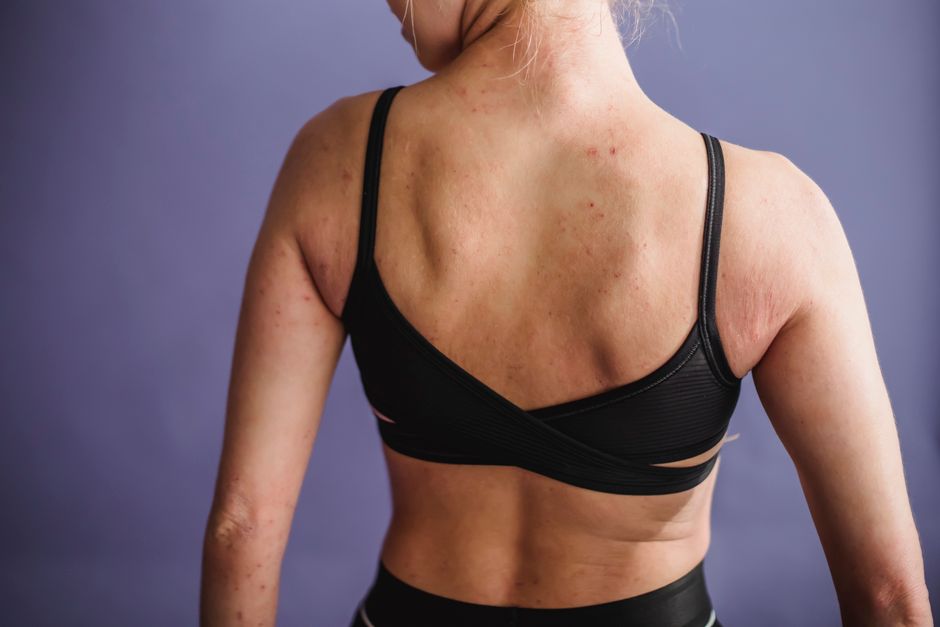
Back pimples, often called “bacne,” are the same type of acne you get on your face. They happen when hair follicles on your back get clogged with oil, dead skin cells, and bacteria. The causes range from hormones and sweat to friction from clothing and genetics. Treatments exist, but they require patience because back skin is thicker and slower to heal than facial skin.
What Actually Causes Back Pimples in the First Place?
Your back has more sebaceous glands than most other body parts. These glands produce sebum, an oily substance meant to keep skin moist. When your body makes too much sebum, it mixes with dead skin cells and blocks pores. That is the basic starting point for any pimple.
Hormones drive this process more than anything else. Androgens, which include testosterone, tell your oil glands to work harder. This is why back acne often flares during puberty, menstrual cycles, or times of high stress. Cortisol, the stress hormone, also increases oil production.
Sweat plays a role too, but not the way most people think. Sweat itself does not cause pimples. The problem is when sweat sits on your skin for hours after a workout. It traps dirt and bacteria against your back, especially under tight clothing. Washing soon after sweating matters more than how much you sweat.
Genetics determine how sensitive your follicles are to hormones. If your parents had back acne, you are more likely to have it. Some people simply produce more oil or shed skin cells faster, and neither is something you can fully control.
Is It Really Acne or Something Else?
Not every bump on your back is a pimple. This is where people waste time and money on the wrong treatments. Folliculitis looks almost identical to acne but requires different care. It is an infection of the hair follicle caused by bacteria or fungi, often from hot tubs, sweaty gym equipment, or tight synthetic clothing.
Folliculitis tends to appear as small red bumps with a white head at the center of each hair. Acne lesions are usually larger, more inflamed, and appear in areas where oil glands are densest. If over-the-counter acne treatments do not work after a few weeks, folliculitis is a likely culprit.
Keratosis pilaris is another look-alike. It feels like rough, sandpaper-like bumps on the upper arms and sometimes the back. These are not pimples at all. They are harmless buildup of keratin protein in the hair follicles. Moisturizers and gentle exfoliation help. Acne medications do not.
If you are unsure what you have, see a dermatologist. A quick visual exam is usually enough to tell the difference. Wasting months on the wrong treatment just delays real improvement.
What Treatments Actually Work for Back Acne?
Research shows that benzoyl peroxide is the most reliable first-line treatment for back acne. It kills the bacteria that cause inflamed pimples and helps clear clogged pores. It comes in body washes and leave-on creams. A 5% to 10% benzoyl peroxide body wash used in the shower is a good starting point. Leave it on for two to three minutes before rinsing.
Salicylic acid works differently. It helps shed dead skin cells from the surface of your skin, keeping pores from clogging in the first place. It is less irritating than benzoyl peroxide but also less powerful against inflamed pimples. Many people use both on different days or alternate them.
Current research suggests that combining benzoyl peroxide with a gentle routine works better than using harsh scrubs or multiple strong products at once. Back skin is thick, but it still gets irritated. Over-scrubbing or using too many actives makes acne worse by damaging the skin barrier.
For stubborn cases, dermatologists prescribe topical retinoids like adapalene or tretinoin. These are vitamin A derivatives that speed up skin cell turnover and prevent clogged pores. They require a prescription in higher strengths. Adapalene 0.1% is available over the counter as of 2026 and is a reasonable option for people who have not responded to benzoyl peroxide or salicylic acid alone.
Oral medications are reserved for severe cases. Spironolactone helps women by blocking androgen hormones. Antibiotics like doxycycline reduce inflammation and bacteria short-term. Isotretinoin, commonly known as Accutane, is the most effective treatment for severe cystic back acne but comes with significant side effects and requires close medical monitoring.




Comparison of Common Back Acne Treatments
| Treatment | How It Works | Best For | Common Side Effects |
|---|---|---|---|
| Benzoyl peroxide | Kills bacteria, clears pores | Inflamed red pimples | Dryness, bleaching of clothes |
| Salicylic acid | Exfoliates dead skin cells | Clogged pores, blackheads | Mild irritation |
| Adapalene | Speeds skin cell turnover | Stubborn non-inflamed acne | Dryness, peeling, sun sensitivity |
| Oral antibiotics | Reduces bacteria and inflammation | Moderate to severe acne | Stomach upset, antibiotic resistance |
| Spironolactone | Blocks androgen hormones | Hormonal acne in women | Dizziness, frequent urination |
What Lifestyle Changes Actually Help Prevent Back Pimples?
Shower immediately after sweating. This is the single most effective habit change you can make. Bacteria and oil have less time to clog pores when you wash within 30 minutes of exercise. Use a gentle cleanser, not a harsh scrub. Scrubbing too hard inflames the skin and makes acne worse.
Wear loose, breathable clothing during workouts. Tight synthetic fabrics trap sweat and heat against your skin. Cotton or moisture-wicking materials allow your skin to breathe. Change out of workout clothes as soon as you finish exercising. Do not sit around in damp clothing for hours.
Wash your bedsheets and pillowcases weekly. Dead skin cells, oil, and bacteria build up on fabric over time. Your back presses against those sheets every night. Clean sheets reduce the chance of reintroducing bacteria to your skin. Use a gentle, fragrance-free detergent. Harsh fragrances can irritate already sensitive skin.
Pay attention to what touches your back throughout the day. Backpacks, chair backs, and car seats all trap sweat and friction against your skin. If you wear a backpack regularly, wash your back after carrying it for long periods. Some people find that switching to a crossbody bag reduces breakouts on one specific area of their back.
What Common Mistakes Make Back Acne Worse?
Using too many products at once is the most common mistake. People see a pimple and throw everything they have at it. Benzoyl peroxide in the morning, salicylic acid at night, a scrub in the shower, and maybe a clay mask on top. This destroys the skin barrier. The result is red, irritated, peeling skin that looks worse than the original acne.
Start with one active ingredient. Use it consistently for four to six weeks before deciding if it works. Add a second active only if the first is well tolerated and you still need more help. More is not better with acne treatments.
Popping or picking at back pimples is another problem. Back skin is thicker and takes longer to heal than facial skin. Popping forces bacteria deeper into the follicle, causing more inflammation and often leaving dark spots or scars. These marks can last months longer than the pimple itself would have.
Some people assume that drying out their skin will kill acne. This is not true. Dry, irritated skin produces more oil to compensate, which can actually trigger more breakouts. Moisturizing is not optional. Use a lightweight, oil-free, non-comedogenic moisturizer after washing. Your skin needs hydration to function properly and heal.
Another overlooked mistake is ignoring your hair products. Shampoos, conditioners, and styling products rinse down your back in the shower. Heavy oils, silicones, and fragrances in these products can clog pores on your back. If you have persistent back acne along your shoulders and upper spine, try washing your body after you rinse out your conditioner. This simple change helps many people.
Frequently Asked Questions
Can diet cause back pimples?
Some studies suggest high-glycemic foods and dairy may worsen acne in some people, but the evidence is not strong enough to recommend specific dietary restrictions for everyone. If you notice a clear pattern between certain foods and your breakouts, it is reasonable to reduce those foods temporarily to see if it helps.
How long does it take for back acne treatments to work?
Most treatments require at least four to six weeks of consistent use before you see noticeable improvement. Full results often take three to four months because back skin is thicker and turns over more slowly than facial skin.
Should I see a dermatologist for back pimples?
Yes, if over-the-counter treatments have not helped after two to three months, or if your acne is painful, cystic, or leaving scars. A dermatologist can prescribe stronger medications and rule out other conditions like folliculitis.
Does sweating make back acne worse?
Sweat itself does not cause acne, but leaving sweat on your skin for long periods can trap bacteria and oil against your pores. Showering soon after sweating is the key preventive step.
