
Burning pain in your upper back feels different from a dull ache or a sharp stab. It is a heat-like sensation that can spread across the shoulder blades or up toward the neck. The first step to relief is figuring out whether the cause is muscular, nerve-related, or something more serious. For most people, the pain comes from muscle strain or poor posture, and it improves with targeted stretching, heat therapy, and correcting how you sit and move. If the burning is accompanied by chest pain, shortness of breath, or nausea, stop reading and seek emergency care immediately.
What Causes a Burning Sensation in the Upper Back?
Burning pain is often a sign that nerves are involved, not just muscles. When muscle tissue is strained, it usually feels like a deep ache or tightness. A burning quality suggests irritation or compression of a nerve root in the cervical or thoracic spine.
The most common culprits include:
- Muscle strain from repetitive movements or holding a position too long
- Poor posture, especially forward head posture from phone or computer use
- Herniated or bulging discs in the upper spine pressing on nerve roots
- Thoracic outlet syndrome, where nerves or blood vessels get compressed between the collarbone and first rib
- Myofascial trigger points in the rhomboids or trapezius that refer pain in a burning pattern
Less common but serious causes include shingles, which produces a burning sensation before a rash appears, and gallbladder issues, which can refer pain to the right upper back. If the burning pain follows a band-like pattern around one side of your torso, shingles is a real possibility and needs medical evaluation.
How To Relieve Burning Pain In Your Upper Back With Immediate Steps
Start with the safest, simplest interventions first. These are appropriate for muscle-related burning pain that has no red flag symptoms.
Apply heat for 15 to 20 minutes. A heating pad or warm shower increases blood flow to tight muscles and can reduce the nerve irritation that causes the burning quality. Do not use heat if the area is swollen or if you have a fresh injury from a fall or accident.
Change your position. If you have been sitting at a desk, stand up and roll your shoulders backward. Gently tilt your head side to side. Many burning sensations resolve within minutes when you remove the compressive position that caused them.
Try gentle stretching. The chin tuck is one of the most effective moves. Sit upright, pull your chin straight back as if making a double chin, and hold for 5 seconds. Repeat 10 times. This opens the space where nerve roots exit the spine.
Use over-the-counter anti-inflammatories. Ibuprofen or naproxen can reduce inflammation around irritated nerves. Follow the dosing instructions on the label. These medications are not appropriate for everyone, particularly people with kidney disease or a history of stomach ulcers.
Stretches and Exercises That Target the Upper Back
Consistent stretching addresses the root cause of most upper back burning pain: prolonged muscle shortening and poor joint mobility.
The doorway stretch targets the chest muscles that pull your shoulders forward. Stand in a doorway, place your forearm on the frame, and step forward until you feel a stretch across your chest. Hold for 30 seconds on each side.
The thoracic extension stretch improves mobility in the mid-back. Sit on a chair, place your hands behind your head, and lean backward over the top of the chair back. Move slowly and only to a comfortable range.
Shoulder blade squeezes strengthen the muscles that hold your shoulders in proper alignment. Sit or stand tall, squeeze your shoulder blades together as if holding a pencil between them, and hold for 5 seconds. Do 15 repetitions.
Perform these exercises daily, not just when pain flares. Consistency matters more than intensity. If any stretch increases the burning sensation or causes numbness or tingling in your arms, stop and consult a healthcare provider.





When Posture Is the Real Problem
Forward head posture places significant strain on the upper back. For every inch your head moves forward from neutral, it adds roughly 10 pounds of load to your cervical spine. Over hours and days, this compresses the discs and joints that nerve roots pass through.
Set up your workspace so your monitor is at eye level. Your elbows should rest at a 90-degree angle, and your feet should be flat on the floor. Take a 2-minute movement break every 30 minutes of sitting.
Your sleeping position matters too. Stomach sleeping forces your neck into rotation for hours. Side sleeping with a supportive pillow that keeps your head aligned with your spine is generally better for upper back health.
Can Massage or Manual Therapy Help?
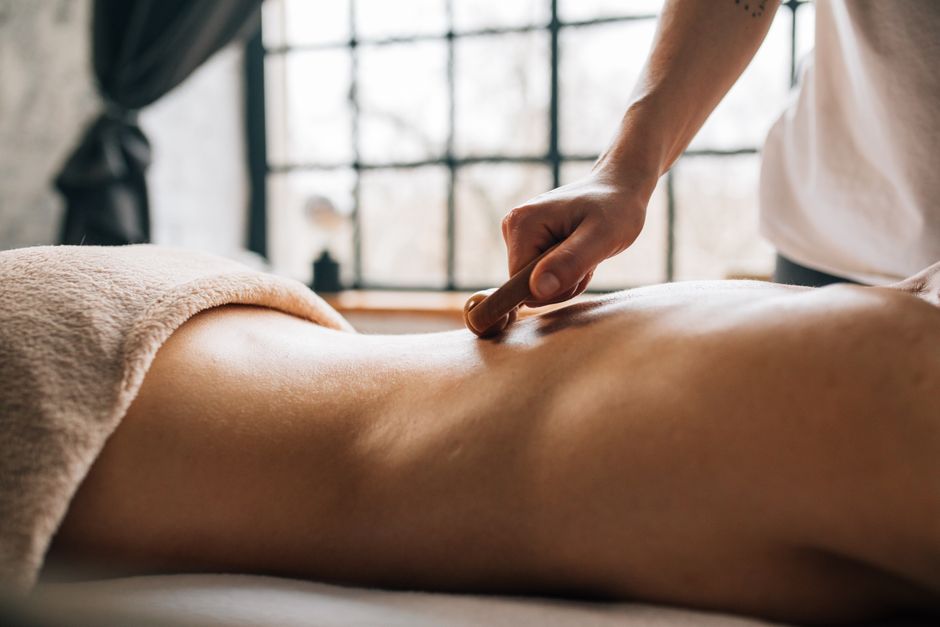
Massage can relieve the muscle tension component of burning upper back pain. A 2020 review of studies on massage for neck and back pain found moderate evidence that it provides short-term relief compared to no treatment. The effect is often temporary, lasting days to weeks, and works best when combined with exercise and posture correction.
Trigger point release, either through massage or self-massage with a tennis ball against a wall, can reduce referred burning pain. Apply pressure to the tight spot for 30 to 60 seconds. It should feel like strong pressure, not sharp pain.
Chiropractic spinal manipulation is another option some people try. Research on its effectiveness for upper back pain is mixed. Some studies show benefit comparable to other treatments, while others show minimal difference. If you choose manipulation, ensure the practitioner is licensed and communicates clearly about what they will do.
When Burning Pain Is a Medical Emergency
Not all upper back burning pain is musculoskeletal. Some causes require immediate medical attention.
Go to an emergency room if the burning pain is accompanied by:
- Chest pain, pressure, or tightness
- Shortness of breath
- Nausea, sweating, or dizziness
- Pain spreading to the jaw, left arm, or between the shoulder blades
- Sudden severe pain that started after a fall or injury
These symptoms can indicate a heart attack, aortic dissection, or spinal fracture. The burning quality of the pain does not rule out cardiac causes. Women in particular may experience heart attack symptoms as upper back or jaw pain rather than classic chest pressure.
Seek prompt medical evaluation if the burning pain persists for more than a few weeks, worsens despite home treatment, or is accompanied by arm weakness, numbness, or loss of bladder or bowel control. These signs point to nerve compression that may require imaging and specialized treatment.
What About Shingles?
Shingles is caused by reactivation of the varicella-zoster virus, the same virus that causes chickenpox. Before the characteristic rash appears, it produces burning, tingling, or shooting pain in a specific area. The upper back is a common location.
The pain typically appears on one side of the body only and follows a band-like pattern. Within a few days, a rash of fluid-filled blisters develops. If you suspect shingles, see a doctor promptly. Antiviral medications work best when started within 72 hours of the rash appearing. They can shorten the illness and reduce the risk of postherpetic neuralgia, a chronic pain condition that can persist for months.
Frequently Asked Questions
Can a burning sensation in the upper back be a heart attack symptom?
Yes, particularly in women, heart attacks can present as burning pain between the shoulder blades. Seek emergency care if the pain comes with chest discomfort, shortness of breath, nausea, or sweating.
How long does burning upper back pain from muscle strain last?
Most muscle-related burning pain improves within 1 to 2 weeks with heat, stretching, and posture correction. If it lasts longer than 3 weeks or keeps returning, see a healthcare provider.
Is ice or heat better for burning upper back pain?
Heat is generally better for burning pain because it relaxes tight muscles and improves blood flow. Use ice only if the area feels swollen or if you have a recent injury.
Can stress cause burning pain in the upper back?
Stress can increase muscle tension in the upper back and neck, which may contribute to nerve irritation and burning pain. Stress reduction techniques can help, but they do not replace treatment for the underlying cause.
