
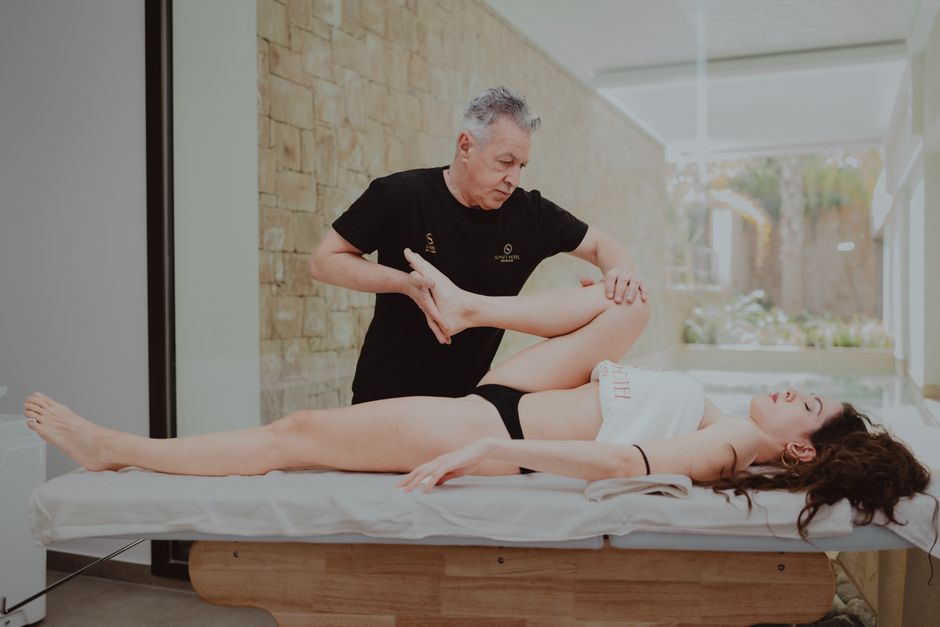
Groin pain from sciatica usually starts in the lower back and travels forward through the hip into the inner thigh. It happens when a nerve in the lumbar spine is compressed or irritated, and the pain signal travels along that nerve’s path. Most people improve with a mix of gentle movement, targeted stretching, over-the-counter pain relief, and time. When pain is severe, steadily worsening, or paired with numbness or weakness, medical care is needed.
Why Does Sciatica Cause Pain in the Groin?
Sciatica is not a diagnosis. It is a symptom — pain that follows the path of the sciatic nerve or one of the nerve roots that feeds into it. The sciatic nerve itself runs down the back of the leg, not through the groin. So groin pain from sciatica almost always means a different nerve root is involved than the one people usually picture.
The nerves that exit the upper lumbar spine — mainly L1 and L2 — supply sensation to the groin and inner thigh. When a disc, bone spur, or narrowed spinal canal presses on those upper lumbar roots, the pain travels forward into the groin rather than down the back of the leg. This is sometimes called upper lumbar radiculopathy or a high lumbar disc problem.
This matters because treatment depends on which nerve is irritated. A standard hamstring stretch or calf stretch will not help a groin problem driven by an L1 or L2 nerve root. The location of the pain is a clue, not a diagnosis. Only a clinician using an exam and, when needed, imaging can confirm which nerve is involved.
What Does Groin Pain From Sciatica Actually Feel Like?
The sensation is usually sharp, burning, or electric rather than a dull ache. It may feel like it is coming from deep inside the hip or the front of the thigh. Some people describe a pulling or shooting quality that changes with position.
Common patterns include:
- Pain that worsens with sitting, bending forward, or coughing
- Pain that eases when lying down with the knees slightly bent
- Numbness or tingling in the groin or inner thigh
- Pain that travels rather than staying in one exact spot
- Weakness in the hip or thigh, which is a more serious sign
One detail worth knowing: true groin pain can also come from the hip joint itself, from a muscle strain, or from a hernia. These are different problems with different treatments. Nerve-related groin pain tends to follow a predictable path and often comes with tingling or numbness. Joint or muscle pain tends to be more localized and tied to specific movements. A clinician can usually tell them apart during an exam.
How Do You Relieve Groin Pain From Sciatica at Home?
Most cases of nerve-related groin pain improve without surgery. Home care focuses on reducing irritation and keeping the area moving without provoking the nerve.
Relative rest, not bed rest. Lying flat for days tends to make nerve pain worse, not better. Short periods of rest during a flare are fine, but gentle activity is generally better for recovery. This is one of the more consistent findings in back and nerve pain research.
Over-the-counter pain relievers. Nonsteroidal anti-inflammatory drugs such as ibuprofen or naproxen are commonly used for short-term relief. Acetaminophen may help with pain but does not reduce inflammation. These are not a cure, and long-term use has risks, so anyone with stomach, kidney, or heart conditions should check with a clinician first.
Heat or cold. Some people get relief from a heating pad on the lower back or hip. Others prefer an ice pack. There is no strong evidence that one works better than the other. Use whichever gives you comfort, and avoid direct skin contact with extreme temperatures.
Position changes. Sleeping on your side with a pillow between the knees can reduce pressure on the lower spine. Avoid prolonged sitting, which often increases nerve compression.
Gentle movement. Short walks and slow, pain-free range-of-motion exercises can help. The goal is motion without flare-ups, not pushing through pain.
If pain is not improving after a few weeks of home care, or if it is getting worse, that is the point to see a clinician rather than wait it out.





Which Stretches and Exercises Help Groin Pain From Sciatica?
Exercise is one of the better-supported approaches for nerve-related back and leg pain. But the right exercise depends on which nerve is irritated, and some common stretches make groin pain worse. This is where a physical therapist earns their keep.
Exercises that often help include:
- Pelvic tilts — gentle rocking of the pelvis while lying on your back
- Knee-to-chest — pulling one knee toward the chest slowly, one at a time
- Prone press-ups — lying face down and gently pressing the upper body up, if tolerated
- Bird-dog — extending opposite arm and leg while on hands and knees
- Glute bridges — lifting the hips while lying on your back with knees bent
Stretches that aggressively pull the hamstring or rotate the hip deeply can sometimes aggravate high lumbar nerve roots. If a stretch sends pain shooting into the groin or leg, stop. That is a signal, not a challenge.
Core stability work matters here. The muscles that support the lower spine help reduce the load on irritated nerve roots. A physical therapist can build a program around your specific nerve involvement rather than a generic list.
When Should You See a Doctor for Groin Pain?
Most groin pain from sciatica is not an emergency. Some signs mean you should not wait.
Seek urgent medical care if you have:
- Loss of bladder or bowel control
- Numbness in the saddle area — the groin, inner thighs, and buttocks
- Rapidly worsening weakness in one or both legs
- Severe pain that comes on suddenly after an injury
- Fever along with back or groin pain
These can signal a serious condition called cauda equina syndrome, which is a surgical emergency. This is rare, but it needs immediate attention.
See a clinician soon, but not urgently, if:
- Pain has not improved after several weeks
- Pain is interfering with sleep or daily activity
- You have numbness, tingling, or weakness that is getting worse
- You have a history of cancer, recent infection, or significant unintentional weight loss
Groin pain can also come from causes unrelated to the spine, including hip arthritis, a hernia, or a pulled muscle. A clinician can sort this out with a physical exam and, when needed, imaging such as MRI.
What Medical Treatments Are Available?
When home care is not enough, clinicians have several options. None of these are guaranteed, and response varies widely from person to person.
Physical therapy is usually the first step. A therapist can identify which movements provoke the nerve and build a graded program to reduce irritation.
Prescription medications may include stronger anti-inflammatories, muscle relaxants, or nerve-pain medications such as gabapentin or pregabalin. Evidence for nerve-pain drugs in sciatica is mixed, and they do not work for everyone.
Epidural steroid injections deliver anti-inflammatory medication near the irritated nerve root. These can reduce pain in the short term for some people. They are not a permanent fix, and relief varies.
Surgery is considered when pain is severe, weakness is progressing, or other treatments have failed. Procedures such as discectomy or decompression can relieve pressure on the nerve. Surgery is not a first-line option for most people.
No single treatment works for everyone. What helps one person with an L2 nerve root problem may not help another with a different pattern of compression.
Can You Prevent Groin Pain From Coming Back?
Recurrence is common with nerve-related back and leg pain. Staying active, maintaining core strength, and avoiding prolonged sitting all help reduce the odds. So does keeping body weight in a range that reduces strain on the lower spine.
Ergonomics matter. A chair with good lumbar support, a screen at eye level, and regular breaks to stand and move can reduce the load on the lower back. Lifting with the legs rather than the back is a habit worth keeping.
There is no guaranteed way to prevent recurrence. But people who stay active and keep their core strong tend to do better over time than those who avoid movement. If a specific activity reliably triggers your groin pain, that is worth mentioning to a clinician or physical therapist.
Frequently Asked Questions
How long does groin pain from sciatica usually last?
Many cases improve within a few weeks to a few months with conservative care. Some people have lingering symptoms that come and go, and a smaller number need medical treatment.
Is walking good for sciatica groin pain?
Gentle walking is often helpful because it keeps the spine moving without heavy compression. If walking makes the pain worse, shorten the distance and check with a clinician.
Can a herniated disc cause groin pain?
Yes, a disc that presses on the upper lumbar nerve roots can send pain into the groin and inner thigh. This is less common than the classic shooting pain down the back of the leg.
When is groin pain from sciatica an emergency?
Loss of bladder or bowel control, numbness in the saddle area, or rapidly worsening leg weakness are emergencies. These can signal cauda equina syndrome and require immediate care.
