
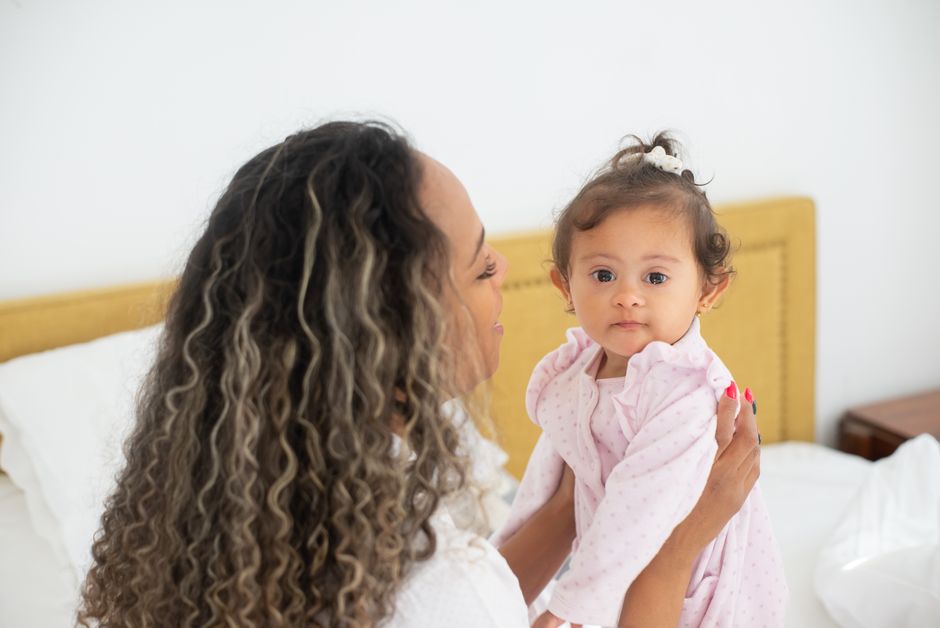
Every parent knows the feeling. You spend twenty minutes rocking your baby to sleep, their eyes flutter closed, and their little body goes limp in your arms. You tiptoe to the crib, lower them down slowly, and then it happens — their eyes snap open. The nap is over before it began. The good news is that this is a solvable problem. Most babies wake during the transfer because of a sudden change in temperature, motion, and sensation. Understanding why that happens and adjusting your technique can make a real difference.
Why Do Babies Wake Up When You Put Them Down?
Babies are wired to wake when their environment changes suddenly. In your arms, they feel warmth, hear your heartbeat, and sense your breathing. The crib is flat, cool, and still. That shift is dramatic.
The startle reflex also plays a role. When a baby’s head drops back or their arms flail, the reflex triggers and wakes them. This is normal newborn behavior, not a sign that something is wrong.
Sleep cycles matter too. A baby in deep sleep is much easier to transfer than one in light sleep. If you wait until their arms are heavy and their breathing is slow and regular, you have a better chance of a successful put-down.
How To Put Baby Down For A Nap Without Waking Them
The transfer technique matters as much as the timing. Start by lowering your baby into the crib bottom-first. Keep your body close to theirs as you lean over. Place their feet and bottom on the mattress first, then their back, and finally their head.
Keep one hand on their chest or belly after they touch the mattress. This maintains gentle pressure and warmth for a few seconds. Then slowly slide your hand out. If they stir, pause and keep your hand still until they settle again.
Another reliable method is to warm the crib sheet before the transfer. A warm towel or a heating pad placed on the mattress for a few minutes — and removed before you lay the baby down — reduces the cold-shock sensation. Never leave a heating pad in the crib.
Some parents find success with a two-stage transfer. Put your baby down fully asleep in a bassinet or crib, then pick them up again briefly if they wake, and put them down a second time. This sounds counterintuitive, but it can reset their sleep state.
What Is The Best Time To Put A Baby Down For A Nap?
Timing is everything. A baby who is overtired will fight sleep harder than one who is drowsy but calm. Most babies show clear sleep cues — eye rubbing, ear pulling, zoning out, or a faint frown. These cues appear before the frantic crying that signals overtiredness.
Wake windows are a useful guide. A newborn may only stay awake for 45 to 60 minutes. A three-month-old might manage 90 minutes. A six-month-old can often handle two to three hours. These are general ranges, not rules. Every baby is different.
Watch your baby rather than the clock. If they seem alert and happy, they are not ready. If they are looking away, losing interest in toys, or getting fussy, the window is closing. Start your nap routine when you see early cues, not late ones.





Should You Put A Baby Down Drowsy But Awake Or Fully Asleep?
Pediatric sleep experts generally recommend putting babies down drowsy but awake. This helps them learn to fall asleep independently. If they wake during the night or between sleep cycles, they can put themselves back to sleep without needing you.
That said, drowsy-but-awake does not work for every baby, especially in the first few months. Young newborns often need help falling asleep. You are not doing anything wrong if your baby needs to be fully asleep before you can transfer them.
Try a gradual approach. Put your baby down when they are almost asleep but not quite. If they cry, pick them up, soothe them, and try again. This is not a quick fix. It takes patience and consistency over days or weeks.
What If Your Baby Wakes Up Every Time No Matter What You Do?
Sometimes the transfer is not the problem. The nap environment might be. A room that is too bright, too noisy, or the wrong temperature can cause frequent waking. Most sleep specialists recommend a cool, dark, and quiet room for naps.
White noise can help. It masks household sounds and mimics the constant whooshing your baby heard in the womb. Keep the volume at a safe level — around 50 to 65 decibels, which is about the volume of a normal conversation or a gentle rainfall.
Swaddling can also make a difference for younger babies. A snug swaddle prevents the startle reflex from waking them. Stop swaddling once your baby shows signs of rolling over, usually around two to four months, because it becomes a safety risk.
If your baby is older than four months and still wakes on every transfer, consider whether the crib is the issue. Some babies do better with a slightly angled mattress or a pacifier that they can find themselves. Always follow safe sleep guidelines: firm mattress, fitted sheet, nothing loose in the crib.
Is It Safe To Let A Baby Nap On You?
Contact naps are common and not harmful in themselves. The danger comes from falling asleep in unsafe positions — on a sofa, in a recliner, or while you are exhausted. If you are going to let your baby nap on you, sit in a safe chair and stay awake.
Many parents worry that contact naps create bad habits. Research does not support that fear. Babies who contact nap during the day still learn to sleep independently at night. The idea that you can spoil a baby by holding them is not supported by evidence.
That said, contact naps are not sustainable for every family. If you need your hands free, or if you have other children to care for, you may need to transition your baby to the crib. Do it gradually. Start with the first nap of the day, when babies are often the most cooperative.
How Long Should Baby Naps Last?
Nap length changes with age. Newborns sleep in short bursts of 30 to 45 minutes. By three to four months, many babies take longer naps of one to two hours. By six months, most babies settle into two or three predictable naps per day.
Short naps are frustrating but normal in the early months. A 30-minute nap is not a failure. It is developmentally typical. Most babies grow out of it on their own as their sleep cycles mature.
If your baby consistently wakes after 20 minutes and will not settle back down, check the environment. Sometimes a small adjustment — darker curtains, a louder white noise machine, or a slightly warmer sleep sack — extends the nap.
Frequently Asked Questions
How long should I rock my baby before putting them down?
Rock until your baby is in deep sleep, usually 10 to 20 minutes after they close their eyes. Their arms should be limp and their breathing slow and regular.
Is it okay to put my baby down awake and let them cry?
Some sleep training methods use this approach, but it is not the only option. You can put your baby down awake and stay nearby to soothe them without picking them up if that feels right for your family.
What age can babies learn to fall asleep on their own?
Most babies develop the ability between four and six months. Some learn earlier, some later. There is no fixed deadline, and every baby develops at their own pace.
Should I feed my baby right before a nap?
Feeding right before a nap can create a feed-to-sleep association that makes independent sleep harder. Try to finish feeding 10 to 15 minutes before nap time if you can.
Putting a baby down without waking them takes practice. You will have failed transfers — every parent does. The technique improves with repetition, and your baby’s sleep patterns will change as they grow. Focus on the timing, the environment, and the transfer method, and give yourself grace when it does not work every time.
If you have tried everything and your baby still wakes on every transfer, talk to your pediatrician. Some babies have reflux, allergies, or other medical issues that make lying flat uncomfortable. A doctor can help rule those out and suggest safe alternatives.
