
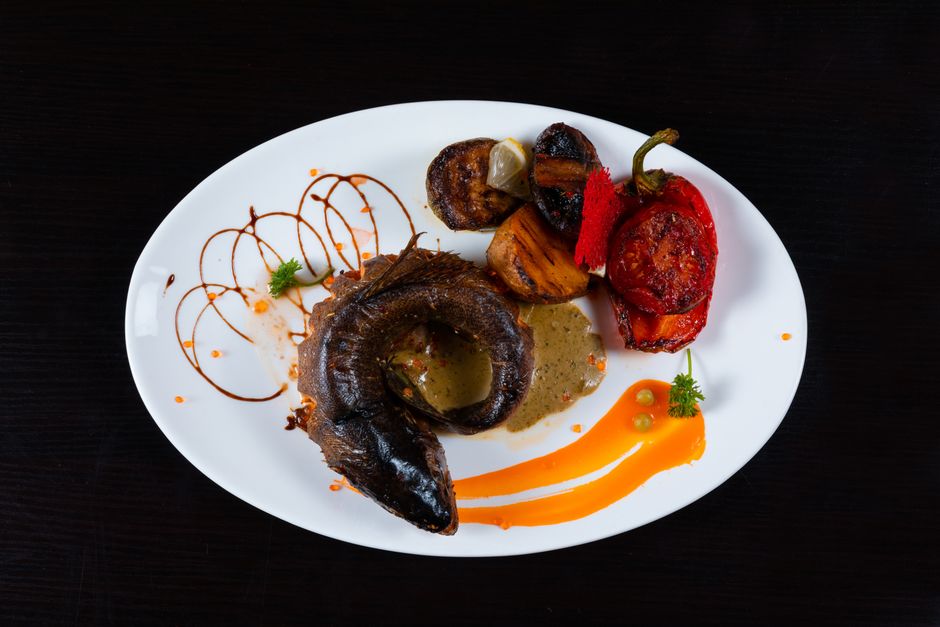
Fugu, or pufferfish, contains tetrodotoxin — a poison with no known antidote. In Japan, preparing it for sale is a licensed profession regulated by law, and only trained, certified chefs who pass a government examination are permitted to do it. There is no safe way for an untrained person to prepare fugu at home. The honest answer to how to prepare fugu without getting poisoned is this: you do not prepare it yourself. You eat it only where a licensed professional has prepared it under a system designed to prevent exactly the outcome you are trying to avoid.
Why Is Fugu So Dangerous?
Tetrodotoxin is one of the most potent naturally occurring nerve toxins known. It blocks sodium channels in nerve and muscle cells, which stops the electrical signals those cells use to communicate. The result can be paralysis — first of the mouth and lips, then the limbs, then the muscles used for breathing.
The toxin is not produced by the fish itself. Bacteria that live in and on the pufferfish produce it, and the fish accumulates it through its diet and environment. This matters because it explains why some pufferfish are far more toxic than others, and why the poison is concentrated in specific organs rather than spread evenly through the flesh.
There is no antidote. Treatment in a hospital is supportive — meaning medical staff help the patient breathe and maintain circulation while the body clears the toxin, if the dose is survivable. For a serious exposure, that may require mechanical ventilation. This is why prevention is not a preference here. It is the entire strategy.
Which Parts of the Fugu Are Poisonous?
The highest concentrations of tetrodotoxin are found in the liver and ovaries. The intestines and skin also carry significant toxin. The kidneys, eyes, and blood can be toxic as well. The muscle — the part people eat — is generally the least toxic, but it can become contaminated during handling if the toxic organs are cut carelessly.
This is the central problem with home preparation. It is not enough to remove the poisonous organs. You have to remove them without letting their contents touch the flesh, and you have to know which organs in that particular fish carry how much toxin. Toxin levels vary by species, by season, and by where the fish was caught.
Some pufferfish species are more toxic than others. Some populations of the same species carry different toxin loads depending on their diet. A chef cannot simply memorize one rule and apply it to every fish.
Can You Remove the Poison by Cooking or Freezing?
No. Tetrodotoxin is heat-stable and is not destroyed by ordinary cooking. Boiling, frying, grilling, and freezing do not make a toxic piece of fugu safe. This is one of the most common and most dangerous misconceptions about pufferfish.
Some people assume that any toxin is a protein that heat would break down, the way cooking destroys certain bacterial toxins. Tetrodotoxin is not a protein, so that reasoning does not apply. It survives temperatures far higher than any cooking method reaches.
There is no kitchen technique — no soak, no marinade, no freeze-thaw cycle — that removes tetrodotoxin from a contaminated piece of fish. If the toxin is there, it stays there.





How Do Licensed Chefs Prepare Fugu Safely?
In Japan, fugu preparation is controlled by law. Only chefs who have completed a training program and passed a licensing examination may prepare fugu for sale. The training covers species identification, anatomy, the location of toxic organs in each species, and the handling procedures designed to prevent cross-contamination.
The core of the method is careful, controlled removal of the toxic organs before the flesh is touched for consumption. The chef must identify the species correctly, know where the toxin sits in that species, and remove those parts without puncturing or spilling their contents onto the edible muscle. The removed organs are disposed of as regulated toxic waste, not discarded casually.
The licensing system exists because the margin for error is essentially zero. A single slip — a nicked liver, a contaminated knife, a misidentified fish — can be lethal. The examination is difficult by design, and the profession treats it that way.
Even within this system, the safety record is not perfect. Rare poisonings have occurred, which is part of why the regulations remain strict and why the training emphasizes procedure over confidence.
What Happens If Someone Is Poisoned by Fugu?
Symptoms typically begin within minutes to a few hours after eating. Early signs often include numbness or tingling around the mouth and lips, which then may spread to the face, tongue, and limbs. Some people report dizziness, headache, nausea, or a sense of floating.
As the toxin progresses, muscle weakness can develop, and in severe cases the muscles that control breathing become paralyzed. This is the mechanism that makes tetrodotoxin fatal — not damage to the heart or brain directly, but the loss of the ability to breathe.
If you suspect fugu poisoning, this is a medical emergency. Call 911 or your local emergency number immediately. Do not wait to see whether symptoms worsen, and do not try to treat it at home. There is no home remedy, and there is no antidote — hospital care focused on breathing support is what gives a person the best chance.
Is There Any Safe Way to Eat Fugu at Home?
There is no established method for safely preparing fugu in a home kitchen. The evidence and the regulatory reality point the same direction: this is not a skill you can pick up from a video or a written guide, and the consequences of getting it wrong are severe and irreversible.
If you want to eat fugu, the only approach supported by any credible system is to eat it at a licensed establishment where a certified chef has prepared it. In Japan, that means a restaurant staffed by a licensed fugu chef. Outside Japan, availability and regulation vary widely, and in many places the sale of fugu is restricted or prohibited entirely.
Be cautious of claims that a particular species is “safe” pufferfish. Some species and some farmed fish carry lower toxin levels, and there is ongoing research into toxin-free aquaculture. But “lower” is not “zero,” and the safety of any specific product depends on testing and regulation that a home cook cannot replicate.
Why Do People Take the Risk at All?
Fugu is a traditional delicacy in Japan, valued for its texture and subtle flavor rather than for any intoxicating effect. The appeal is partly culinary and partly cultural — a carefully prepared, highly regulated food with a long history.
The danger is real, but in a licensed setting it is managed through training, inspection, and law. The risk that remains is small precisely because the system removes the decisions that untrained people would get wrong.
What the tradition does not support is the idea that an amateur can safely replicate the process. The skill took years to develop for a reason, and the licensing exists because good intentions are not enough when the margin for error is a single cut.
Frequently Asked Questions
Can you prepare fugu safely at home?
No. There is no established safe method for home preparation, and tetrodotoxin has no antidote. Only licensed, trained chefs in regulated settings are permitted to prepare fugu for sale.
Does cooking fugu make it safe to eat?
No. Tetrodotoxin is heat-stable and is not destroyed by boiling, frying, grilling, or freezing. If the toxin is present in the fish, cooking will not remove it.
What should you do if you think you ate poisonous fugu?
Call 911 or your local emergency number immediately, even if symptoms seem mild at first. Early symptoms often include numbness or tingling around the mouth, and hospital care focused on breathing support is the only treatment.
Is all pufferfish poisonous?
Most pufferfish carry tetrodotoxin, though levels vary by species, season, and location. Some species and some farmed fish carry lower levels, but lower is not the same as safe.
