
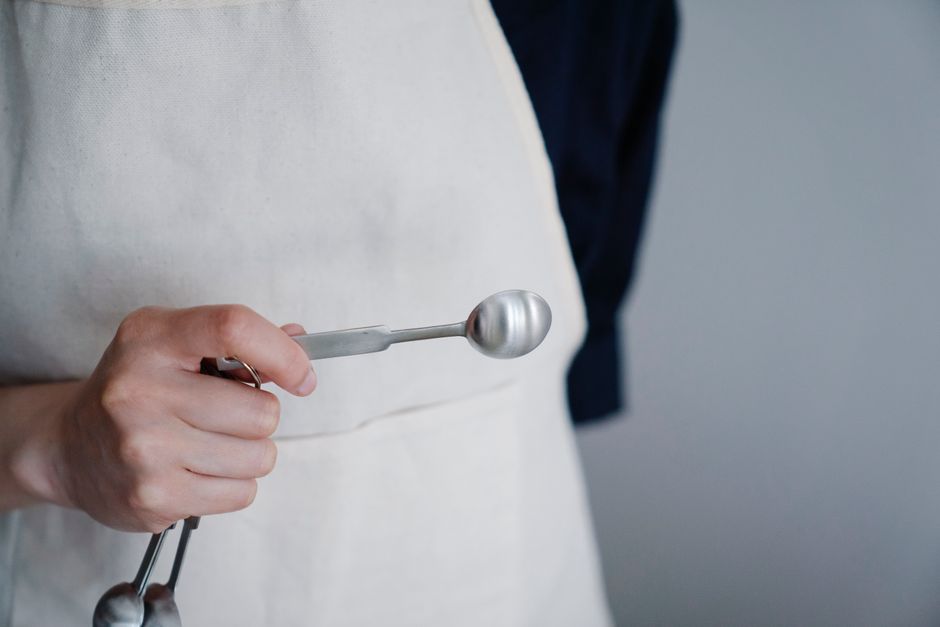
You are following a recipe that calls for 1/3 teaspoon, and you reach for your measuring spoons only to find the 1/3 tsp spoon is missing or you do not own a full set. You can measure 1/3 teaspoon accurately using a standard 1/4 teaspoon plus a pinch, or by using a 1/2 teaspoon and removing a small amount. The most reliable method is to fill a 1/4 teaspoon completely, then add just a small pinch (about half the volume of the 1/4 spoon) to reach the 1/3 teaspoon mark. This works because 1/3 teaspoon is equal to 1/4 teaspoon plus 1/12 teaspoon, which is roughly the size of a generous pinch between two fingers.
Why 1/3 Teaspoon Is Awkward to Measure
Most measuring spoon sets include 1/4 tsp, 1/2 tsp, 1 tsp, and 1 tbsp. The 1/3 tsp spoon is often included in larger sets but is frequently lost, misplaced, or simply not part of a basic set. This makes it one of the more frustrating measurements to estimate in the kitchen.
The math is simple: 1/3 tsp is larger than 1/4 tsp but smaller than 1/2 tsp. It sits in an awkward middle zone. There is no single standard spoon that equals it exactly, so you have to combine or adjust other spoons to get close.
For baking, precision matters more than in general cooking. Baking soda, baking powder, salt, and spices all affect chemical reactions and flavor balance. A small error in these ingredients can change the texture or taste of the finished product.
How To Measure 1 3 Tsp Without A Measuring Spoon
The most accurate way to measure 1/3 teaspoon without a dedicated spoon is to use a 1/4 teaspoon and add a pinch. Fill the 1/4 tsp spoon level with the ingredient. Then add a small pinch with your fingers. This pinch should be about half the size of the ingredient already in the spoon.
Here is the breakdown:
- 1/4 tsp = 1.25 ml
- 1/3 tsp = 1.67 ml
- Difference = 0.42 ml
That 0.42 ml difference is roughly the amount you can hold between your thumb and forefinger. It is a small but noticeable pinch. For dry ingredients like salt, baking soda, or dried herbs, this method works well.
Another method is to use a 1/2 tsp spoon. Fill it halfway, then remove a tiny amount. The challenge here is that “halfway” is harder to judge by eye than “full plus a pinch.” Most people find the 1/4 tsp plus pinch method more consistent.
For liquid ingredients, the same logic applies. Fill a 1/4 tsp measuring spoon with liquid, then add drops using a dropper or the tip of a clean spoon until the liquid reaches just above the rim. This is less precise than dry measuring because liquids have surface tension that can distort the level.
Using Everyday Objects as Alternatives
If you do not have any measuring spoons at all, you can use common household items. The cap of a standard plastic water bottle holds about 1 teaspoon. To get 1/3 tsp from that, fill the cap one-third full. This is harder to judge accurately than the spoon method, but it works in a pinch.
A typical dinner spoon (tablespoon) holds about 15 ml or 3 teaspoons. One-ninth of a tablespoon equals 1/3 tsp. Visually dividing a spoonful into nine equal parts is not practical for most people.
Your fingertip can also serve as a rough guide. The tip of your index finger, from the first crease to the tip, holds roughly 1 teaspoon. Dividing that into thirds by eye is possible but not precise.
These methods are useful when you have no tools at all, but they are not ideal for baking. If you bake regularly, it is worth buying a set that includes a 1/3 tsp spoon. They are inexpensive and eliminate guesswork.




Why Accuracy Matters for Different Ingredients
Salt is the ingredient where 1/3 tsp errors are most noticeable. A 1/3 tsp of fine table salt weighs about 2 grams. If you use 1/4 tsp instead, you are adding about 1.5 grams. That difference can make food taste flat or overseasoned depending on the direction of the error.
Baking soda and baking powder are even more sensitive. These leavening agents produce carbon dioxide when mixed with liquid and acid. Using too little means your baked goods will not rise properly. Using too much can leave a bitter metallic taste.
Spices like cinnamon, paprika, and chili powder are more forgiving. A slight over- or under-measurement will not ruin a dish. The flavor will be slightly different, but the recipe will still work.
Liquids like vanilla extract or almond extract are concentrated. Measuring these by eye can lead to a noticeably stronger or weaker flavor. The 1/4 tsp plus pinch method works here too, but you need to add the extra liquid drop by drop.
Scaling Recipes That Call for 1/3 Tsp
Some recipes include 1/3 tsp because they are scaled versions of larger recipes. If you are halving or doubling a recipe, you may encounter odd measurements like 1/3 tsp. Understanding how to measure it becomes more important when you are scaling.
When doubling a recipe that calls for 1/3 tsp, you need 2/3 tsp. You can measure this with a 1/2 tsp plus a 1/4 tsp and remove a small amount, or simply use a 1/4 tsp twice and add two pinches. The total will be close enough for most recipes.
When halving a recipe that calls for 1/3 tsp, you need 1/6 tsp. This is roughly a heaping 1/8 tsp or a scant 1/4 tsp. No standard spoon equals 1/6 tsp, so estimation is required.
For recipes that use metric measurements, 1/3 tsp equals 1.67 ml. If you have a 1 ml or 2 ml syringe (often found in children’s medicine), you can measure this precisely. Fill the 2 ml syringe to the 1.67 ml mark, or use a 1 ml syringe twice and add a third of it.
Weighing as the Most Accurate Alternative
If you own a kitchen scale, weighing is the most accurate way to measure small amounts. This is especially true for baking where precision matters. A digital scale that measures in grams can give you exact amounts every time.
The weight of 1/3 tsp depends on the ingredient. Fine salt weighs about 2 grams per 1/3 tsp. Baking soda weighs about 2.3 grams. Baking powder is lighter at about 1.5 grams. Ground cinnamon weighs about 1 gram per 1/3 tsp.
These weights vary slightly by brand and how finely the ingredient is ground. Coarse salt weighs less per teaspoon than fine salt because the crystals take up more space. For this reason, weight measurements are more reliable than volume measurements for ingredients that vary in density.
If a recipe gives both volume and weight measurements, use the weight. If it only gives volume, you can look up the typical weight for that ingredient and use your scale. This removes all guesswork.
When Precision Does Not Matter
Not every recipe needs precise 1/3 tsp measurement. Soups, stews, marinades, and sauces are forgiving. The flavors meld during cooking, and small differences in spice amounts are rarely noticeable in the final dish.
Baking is where precision matters. Cakes, cookies, bread, and pastries depend on chemical reactions that require specific amounts of leavening agents, salt, and sometimes spices. A 10% error in baking soda can change how much a cake rises.
If you are making a savory dish and the recipe calls for 1/3 tsp of a spice, using a rounded 1/4 tsp will be fine. The flavor will be slightly different but not wrong. If you are baking, take the extra minute to measure more carefully.
There is also a difference between cooking for yourself and cooking for others. If you are preparing food for guests or selling baked goods, consistency matters. Measuring accurately every time ensures your results are repeatable.
Frequently Asked Questions
How many 1/4 teaspoons make a 1/3 teaspoon?
One 1/4 teaspoon plus a small pinch equals 1/3 teaspoon. The pinch should be about half the volume of the 1/4 teaspoon.
Can I use a regular spoon to measure 1/3 teaspoon?
A regular spoon is too large and imprecise for measuring 1/3 teaspoon. Use a 1/4 teaspoon measuring spoon with an added pinch instead.
What is 1/3 teaspoon in milliliters?
1/3 teaspoon equals approximately 1.67 milliliters. This is slightly more than a 1/4 teaspoon (1.25 ml) and less than a 1/2 teaspoon (2.5 ml).
Is it okay to guess when measuring 1/3 teaspoon for baking?
Guessing is risky for baking because ingredients like baking soda and salt affect the final result. Use the 1/4 teaspoon plus pinch method or a kitchen scale for best results.
