
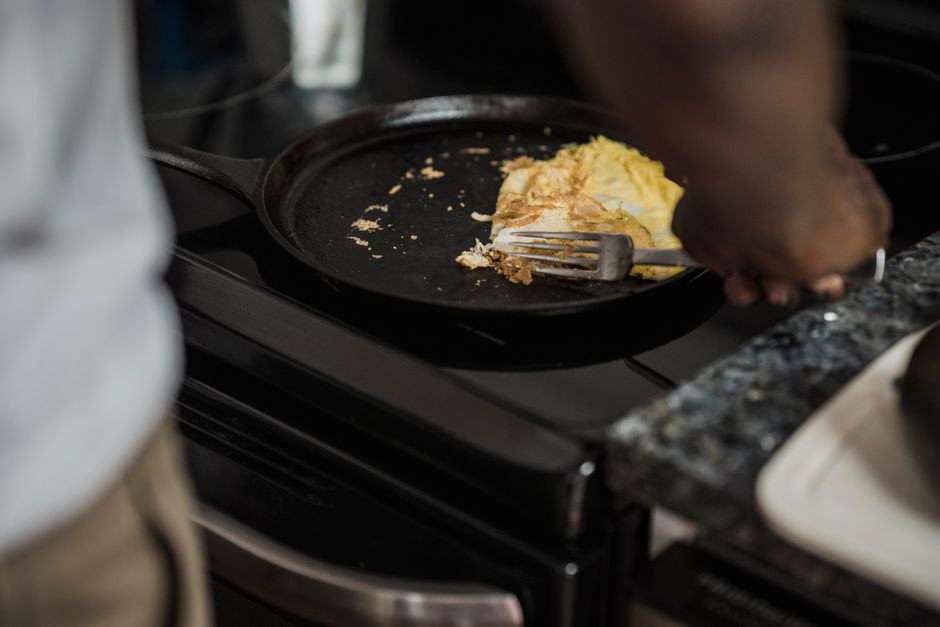
Preparing a cast iron frying pan is simpler than most online guides make it sound. You wash it, dry it completely, rub on a thin layer of oil, and bake it in the oven. That process, called seasoning, creates a natural nonstick surface that protects the pan from rust. The whole thing takes about an hour, most of which is just waiting for the oven.
Why Do You Need To Season a Cast Iron Pan?
Cast iron is raw metal. Without a protective layer, it rusts the moment it touches water. The seasoning layer — polymerized oil — seals the iron and makes it nonstick. The American Test Kitchen explains that seasoning is not just oil sitting on the surface. It is oil that has been heated past its smoke point, which causes it to bond chemically to the iron.
That bonded layer is what you are building. Each time you cook with oil and heat, you add to it. A well-seasoned pan gets better with use. A neglected one flakes rust into your food.
There is no shortcut. Some products claim to “pre-season” pans for you, and many new pans come with a factory seasoning. That is real and it works, but it is thin. You still need to strengthen it with your own oven seasoning before heavy use.
What Supplies Do You Need To Prepare a Cast Iron Frying Pan?
You do not need much. Here is what actually matters:
- Mild dish soap — for the initial wash. The old rule about never using soap on cast iron is wrong. Modern soaps do not contain lye and will not damage seasoning.
- A stiff brush or sponge — to scrub off any factory coating or dust.
- A clean lint-free cloth or paper towel — for drying and oiling.
- A neutral oil with a high smoke point — flaxseed oil, grapeseed oil, canola oil, or vegetable oil all work. Olive oil has a low smoke point and can leave a sticky residue.
- Aluminum foil — placed on the oven rack below the pan to catch any drips.
That is the complete list. You do not need special seasonings, sprays, or gadgets. The oven does the work.
How To Prepare a Cast Iron Frying Pan Step by Step
Research from the University of Illinois Extension on seasoning cast iron confirms that the process is the same regardless of pan brand or age. Follow these steps exactly.
Step 1: Wash the pan with warm soapy water. Scrub it well to remove any factory wax or dust. Rinse completely. If the pan is old and rusty, scrub with a stainless steel scrubber. That is acceptable — you are starting fresh.
Step 2: Dry the pan thoroughly. Use a clean towel, then place the pan on a stovetop burner over low heat for two minutes. This drives off all moisture. Any water left behind will cause rust spots during baking.
Step 3: Apply a thin layer of oil. Put a teaspoon of oil on the pan. Rub it into the entire surface — inside, outside, handle, and bottom — using a cloth. Then take a clean cloth and wipe off as much oil as you can. The pan should look almost dry. Too much oil creates a sticky, uneven coating.
Step 4: Place the pan upside down in a cold oven. Put a sheet of foil on the rack below to catch drips. Set the oven to 450°F (232°C). Once it reaches temperature, bake for one hour.
Step 5: Turn off the oven and let the pan cool inside. Do not open the door. Let it sit until completely cool, which takes about two hours. The pan is now seasoned.
For a new pan, repeat steps 3 through 5 two or three times before first use. This builds a solid base layer that food will not stick to.





How Often Should You Season a Cast Iron Pan?
You do not need to repeat the full oven process every time you cook. That is a common misunderstanding. Most home cooks oven-season once when they buy the pan, then maintain it through regular cooking.
Every time you cook with oil or fat, you add a microscopic layer of seasoning. The more you cook, the better the pan gets. Foods like bacon, fried chicken, and sautéed vegetables all contribute to the seasoning layer naturally.
You only need to re-season in the oven if the pan becomes sticky, develops rust spots, or food starts sticking badly. For minor issues, a stovetop touch-up works. Rub a drop of oil on the cooking surface, heat the pan until it smokes, let it cool, and wipe clean. That fixes most problems without firing up the oven.
| Condition | Action Needed |
|---|---|
| Food sticks slightly | Stovetop touch-up with oil |
| Rust spots appear | Full oven re-season |
| Sticky or tacky surface | Strip and re-season |
| Normal use | No action needed |
What Mistakes Ruin a Cast Iron Seasoning?
Some well-meaning advice online causes more harm than good. Here is what to avoid.
Using too much oil. This is the most common mistake. A thick layer of oil does not bond evenly. It turns into a sticky, gummy mess that traps food. Always wipe off as much oil as possible before heating. The pan should look dry.
Soaking the pan in water. Cast iron rusts fast. Never leave it in the sink or soak it overnight. Wash it quickly, dry it immediately, and put it away. If you must scrub stuck food, use coarse salt and a paper towel instead of water.
Cooking acidic foods too soon. Tomatoes, vinegar, and citrus react with bare iron. They can strip a fresh seasoning layer in minutes. Wait until the pan has a dark, glossy finish — usually after several months of use — before cooking tomato sauce or deglazing with wine.
Using metal utensils aggressively. Metal spatulas are fine for flipping, but scraping with a fork or knife gouges the seasoning. Use wooden or silicone utensils for delicate pans. For well-seasoned pans, metal is usually okay as long as you do not dig in hard.
Frequently Asked Questions
Can I use olive oil to season my cast iron pan?
Olive oil has a low smoke point around 375°F, which is below the 450°F needed for proper polymerization. It can leave a sticky residue. Use grapeseed, canola, or vegetable oil instead.
Do I need to strip old seasoning before re-seasoning?
Only if the current seasoning is flaking, sticky, or rusty. If the surface is smooth and intact, wash it and apply a new oil layer directly over the old one.
How do I clean a cast iron pan without ruining the seasoning?
Wash with mild soap and warm water using a stiff brush. Dry immediately with a towel, then heat on the stovetop for one minute to evaporate remaining moisture. Do not soak or use the dishwasher.
Why does my food taste like metal from a cast iron pan?
That means the seasoning layer is too thin or damaged. The iron is leaching into your food. Re-season the pan two or three times in the oven to build a thicker protective barrier before cooking again.
