
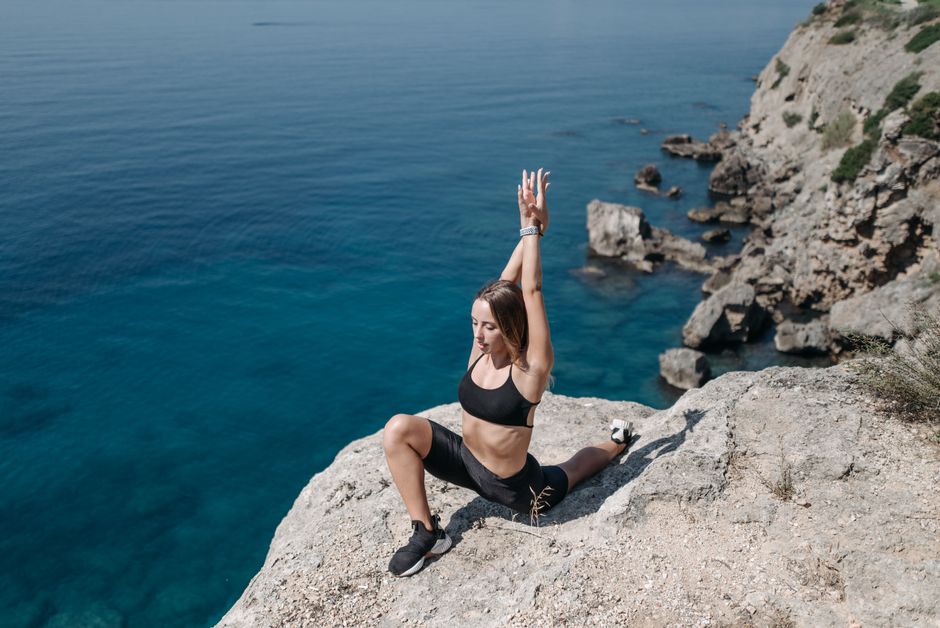
Tight hips are one of the most common complaints among adults who sit for work or drive frequently. The hip joint is built for movement in multiple directions, but prolonged sitting shortens the muscles at the front and back of the joint. The result is stiffness, lower back pain, and reduced mobility. The stretches that actually work target the specific muscles that tighten most—the hip flexors, glutes, and deep rotators—and require consistent practice rather than force.
Why Do Hips Get Tight in the First Place?
Your hip joint is a ball-and-socket joint. It is designed to bend, straighten, rotate, and move side to side. But most daily movement only happens in one plane—forward and backward when you walk or climb stairs.
When you sit for hours, the muscles at the front of the hip—the iliopsoas and rectus femoris—stay in a shortened position. Over time, they adapt to that length. The muscles at the back, including the glutes, get stretched and weakened. This imbalance creates the sensation of tightness that does not resolve with simple movement.
Research consistently shows that static stretching alone is less effective than a combination of stretching and strengthening. The muscles need to be lengthened, but they also need to be activated in their lengthened position. This is why some people stretch daily without improvement—they are only doing half the work.
How To Open Up Your Hips Stretches That Work
An effective hip-opening routine addresses three areas: the hip flexors at the front, the glutes and piriformis at the back, and the adductors on the inner thigh. A balanced approach also includes gentle strengthening exercises to support the new range of motion.
Here are the stretches with the strongest evidence behind them:
- Half-kneeling hip flexor stretch — targets the iliopsoas directly. Kneel on one knee with the other foot flat in front. Squeeze the glute on the kneeling side and shift your weight forward slightly. Hold for 30-45 seconds per side.
- Figure-four stretch — targets the piriformis and deep rotators. Lie on your back with both knees bent. Cross one ankle over the opposite knee, then gently pull the bottom leg toward your chest. Hold for 30-45 seconds per side.
- Deep squat hold — opens the groin and stretches the hip capsule. Stand with feet slightly wider than shoulder-width, toes turned out slightly. Lower into a squat and hold the bottom position. Keep heels down. Hold for 30-60 seconds.
- Pigeon pose — a yoga staple that targets the glutes and piriformis. From a tabletop position, bring one knee forward toward the same-side wrist and extend the other leg behind you. Keep hips square. Hold for 30-45 seconds per side.
- Kneeling quad stretch — targets the rectus femoris, which crosses both the hip and the knee. Kneel on one knee, grab the back foot, and pull it toward your glute. Keep your pelvis tucked under slightly. Hold for 30 seconds per side.
Perform these stretches at least four to five times per week. Consistency matters more than intensity. A gentle daily stretch routine produces better results than an aggressive session once a week.
Why Some Hip Stretches Do Not Work
Many people stretch their hips and feel no change. The most common reason is that they are stretching the wrong muscle. When you bend forward to touch your toes, you feel a pull in the back of your legs—that is your hamstrings, not your hips. The hamstrings attach below the hip joint, and stretching them does little for hip flexor tightness.
Another common mistake is bouncing or forcing the stretch. Ballistic stretching—bouncing movements—can trigger a protective reflex in the muscle. The muscle contracts instead of relaxing, which makes the stretch less effective and increases injury risk.
Static stretching is most effective when the muscle is relaxed and the position is held for at least 30 seconds. Shorter holds of 10-15 seconds do not produce lasting changes in muscle length. Research shows that cumulative stretching time of about two minutes per muscle per session is associated with meaningful improvements in flexibility over several weeks.
One non-obvious point: tight hips are often weak hips. If the glutes are underactive, the hip flexors compensate and stay in a constant state of tension. Stretching the hip flexors without strengthening the glutes is like loosening one side of a rope while the other side stays tight. The imbalance remains.





How Long Before You See Results?
Muscle length changes are gradual. Connective tissue and muscle fibers adapt over weeks, not days. Most people notice measurable improvements in hip mobility after three to four weeks of consistent stretching.
Some people feel immediate relief after a single session. This is largely neurological—the nervous system allows a temporary increase in range of motion—rather than a true structural change in the muscle. That temporary relief can last several hours and is useful before exercise, but it does not represent permanent improvement.
For lasting change, combine stretching with strengthening. Exercises like glute bridges, clamshells, and lateral band walks activate the muscles that support proper hip function. When the supporting muscles are stronger, the hip joint moves more freely and the sensation of tightness decreases.
Do You Need to Warm Up First?
Stretching a cold muscle is less effective and slightly riskier than stretching after light activity. A five-minute warm-up that raises your heart rate—brisk walking, marching in place, or light cycling—increases blood flow to the muscles and makes them more pliable.
If you are stretching first thing in the morning, spend a few minutes moving before you go to the floor. The goal is not to break a sweat but to increase tissue temperature slightly. Warmer muscles respond better to stretching and are less likely to strain.
Dynamic stretches—controlled movements through a range of motion—are also valuable. Leg swings, hip circles, and walking lunges prepare the joint for activity without the static hold. Many physical therapists recommend dynamic stretching before exercise and static stretching after exercise or as a standalone routine.
When Hip Tightness Is Not Just Tightness
Persistent hip pain that does not improve with stretching deserves medical attention. Hip osteoarthritis, labral tears, and femoroacetabular impingement can all produce stiffness that mimics muscle tightness. If stretching causes sharp pain, clicking with pain, or if the stiffness worsens over time, see a healthcare provider.
Your doctor may recommend imaging to rule out structural problems. Physical therapy is often the first-line treatment for hip pain regardless of the underlying cause. A physical therapist can assess your specific movement patterns and design a program that addresses your individual imbalances.
Pain that radiates down the leg or is accompanied by numbness may involve the lumbar spine rather than the hip joint itself. This distinction matters because the treatment approach is different. Stretching the hip will not resolve a nerve root irritation originating in the lower back.
Common Mistakes to Avoid
Several errors reduce the effectiveness of hip stretching:
- Holding your breath — breath holding increases muscle tension. Exhale as you ease into the stretch and breathe steadily throughout the hold.
- Rounding your lower back — many hip stretches require a neutral spine. Rounding the back shifts the stretch away from the hip and into the spine.
- Comparing yourself to others — hip mobility varies widely based on anatomy, age, and activity history. Your range of motion is yours alone.
- Skipping the glute activation — as noted, strengthening the glutes is essential for lasting hip flexibility.
Stop any stretch that causes sharp or shooting pain. A mild pulling sensation is normal. Sharp pain is not. If a stretch consistently hurts, modify the position or skip it entirely and choose an alternative that targets the same muscle group.
Frequently Asked Questions
How often should I stretch my hips?
Stretch your hips four to five times per week for best results. Daily stretching is also fine as long as you are not forcing the range of motion.
How long should I hold a hip stretch?
Hold each hip stretch for 30 to 45 seconds. Shorter holds do not produce lasting changes in muscle length.
Can tight hips cause lower back pain?
Yes, tight hip flexors can tilt the pelvis forward and increase the curve in the lower back. This position places extra strain on the lumbar spine over time.
Is it better to stretch hips in the morning or evening?
Either time works if you warm up briefly first. Evening stretching may feel easier because muscles are warmer from daily movement.
