
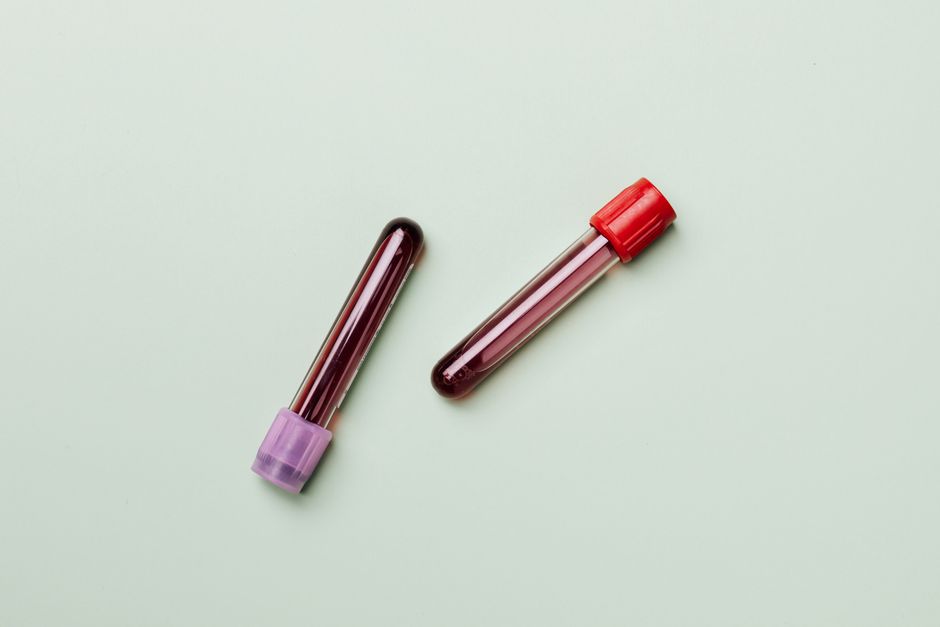
At-home STD tests let you collect a sample yourself, mail it to a certified lab, and get your results online within a few days. The process is straightforward: you order a kit, collect your sample at home, send it back in the prepaid packaging, and the lab runs the same tests a clinic would use. Results arrive through a secure website or app, usually within 2 to 5 days after the lab receives your sample.
What Comes Inside an At-Home STD Test Kit?
Most kits contain everything you need for collection and shipping. You will typically find a sterile swab, a small blood collection device if the test requires blood, a biohazard bag, and a prepaid return envelope.
Some tests use a finger-prick blood sample. Others use a urine cup or a vaginal swab. The specific collection method depends on which infections the kit screens for. Chlamydia and gonorrhea are usually detected with urine or swabs. HIV and syphilis typically require a blood sample.
Kits often include a unique ID code. You register this code online before mailing your sample. That code links your sample to your account without putting your name directly on the specimen tube. This protects your privacy during shipping and testing.
How Do You Collect the Sample Correctly?
Follow the instructions exactly. Each test provides detailed steps, and some brands offer video tutorials. The accuracy of the entire process depends on collecting the sample properly.
For urine tests, you generally need to provide a first-catch urine sample. That means you urinate into the cup for the first part of your stream, not mid-stream. This captures the highest concentration of bacteria if an infection is present.
For swab tests, you insert the swab into the vagina or rectum and rotate it for a specific number of seconds. The swab must contact the tissue surface to pick up enough cells. If it only touches urine or discharge, the test may miss an infection.
For blood tests, you use the provided lancet to prick your finger and fill a small collection tube. You need enough blood to fill the tube to the marked line. Too little blood can cause an invalid result, which means you would need to retest.
What Happens After You Mail the Sample?
You place your sample in the biohazard bag and seal it in the prepaid envelope. Then you drop it in a mailbox or schedule a pickup, depending on the brand.
Once the envelope reaches the lab, technicians log the sample into their system using your unique ID. The sample is assigned a lab accession number, and testing begins. Most laboratories are certified under the Clinical Laboratory Improvement Amendments, known as CLIA. This certification means the lab meets federal standards for accuracy and quality control.
Shipping time adds to the total wait. The clock does not start until the lab receives your sample. Most at-home testing companies use overnight or priority shipping, so the package usually arrives at the lab within 1 to 2 days after you mail it.
Which Tests Do Labs Actually Run on Your Sample?
At-home STD tests use the same laboratory methods that clinics use. These are not simplified or less accurate versions of the tests.
For chlamydia and gonorrhea, labs use a method called nucleic acid amplification testing, or NAAT. This test detects the genetic material of the bacteria. It is highly sensitive and is the gold standard for diagnosing these infections.
For HIV, labs typically run a fourth-generation antigen-antibody test. This test detects both HIV antibodies and the p24 antigen, which appears earlier in infection than antibodies. This makes it more accurate than older tests that only looked for antibodies.
For syphilis, labs use a treponemal antibody test. If that test is positive, they often run a second confirmatory test called RPR or a different treponemal test. This two-step approach reduces false positives.
For trichomoniasis, labs use NAAT on a swab or urine sample. This is more accurate than the older microscopic examination, which often missed the parasite.
How Accurate Are At-Home STD Tests Compared to Clinic Tests?
When collected correctly, at-home STD tests are highly accurate. The laboratory analysis is identical to what a clinic would use. The main variable is the sample collection.
Studies have compared self-collected samples to clinician-collected samples. Research consistently shows that self-collected vaginal swabs and urine samples are just as accurate as clinician-collected samples for chlamydia and gonorrhea. This is well established in the medical literature.
Finger-prick blood samples for HIV are also reliable. The fourth-generation test used on these samples detects infection accurately when performed at the right time after exposure.
The biggest limitation is timing. Every STD has a window period. This is the time between exposure and when a test can detect the infection. If you test too early, you can get a false negative even if you are infected.
For chlamydia and gonorrhea, the window period is usually 1 to 2 weeks. For syphilis, it is about 3 to 6 weeks. For HIV, a fourth-generation test can detect infection as early as 18 to 45 days after exposure. Testing before these windows close can produce a negative result that is not reliable.
How Do You Get Your Results?
Results are delivered through a secure online portal or mobile app. You will receive an email or text notification when your results are ready. You log in with your account credentials to view them.
Most companies take 2 to 5 days to post results after the lab receives the sample. Some brands offer faster processing for an additional fee.
Your results will clearly state whether each infection was detected or not detected. A negative result means the lab found no evidence of that infection in your sample. A positive result means the infection was detected and you need treatment.
If you test positive, most companies provide a free telehealth consultation. A healthcare provider will call you to discuss your results, answer questions, and prescribe treatment if appropriate. Prescriptions are sent to a pharmacy of your choice.
Positive results are also reported to local health departments. This is required by law in most states. Public health reporting is confidential and is used for tracking and partner notification. It does not affect your employment, insurance, or immigration status.
When Should You Take an At-Home STD Test?
Testing is recommended if you have symptoms, if you had unprotected sex with a new partner, or if a partner tested positive for an STD. Routine screening is also recommended for sexually active people based on age and risk factors.
You should not test immediately after exposure. Waiting until the window period has passed is essential for accurate results. If you test too early and get a negative result, you may need to retest after the window period closes.
Symptoms of an STD include unusual discharge, burning during urination, sores, rashes, or pelvic pain. However, many STDs cause no symptoms at all. Chlamydia and gonorrhea are often silent, especially in women. This is why routine screening matters even when you feel fine.
What Are the Limitations of At-Home STD Tests?
At-home tests do not screen for every infection. Most panels cover chlamydia, gonorrhea, HIV, syphilis, and trichomoniasis. They generally do not test for herpes, HPV, or hepatitis unless you order a specific panel that includes them.
Herpes testing requires a swab from an active sore for the most accurate result. A blood test for herpes antibodies can tell you if you have been exposed, but it cannot tell you when or where you were infected. For this reason, many at-home panels omit herpes testing.
HPV testing is not recommended for routine screening in the same way other STDs are. The medical community does not currently recommend routine HPV testing for men, and for women it is done as part of cervical cancer screening, not as a standalone STD test.
If you have symptoms, seeing a clinician in person is often better. A clinician can examine you, perform a physical exam, and test for conditions that at-home kits do not cover. Some conditions that cause STD-like symptoms are not sexually transmitted at all, and a clinician can help identify the true cause.
How Much Do At-Home STD Tests Cost?
Prices vary by brand and panel size. A basic panel that tests for chlamydia and gonorrhea typically costs less than a comprehensive panel that includes HIV, syphilis, and trichomoniasis. Comprehensive panels generally range from $100 to $250.
Some companies accept health insurance, but most do not. You can often pay with a health savings account or flexible spending account. If cost is a concern, free or low-cost testing is available at public health clinics, Planned Parenthood locations, and some community health centers.
Frequently Asked Questions
How long does it take to get at-home STD test results?
Most results are available within 2 to 5 days after the lab receives your sample. Shipping time adds 1 to 2 days, so the total wait is usually about a week from mailing your sample.
Are at-home STD tests as accurate as clinic tests?
Yes, when you collect the sample correctly, because the lab analysis is identical to what clinics use. The main risk of error is improper sample collection, so follow the instructions carefully.
When should I take an at-home STD test after exposure?
Wait until the window period has passed for the infection you are testing for. For most common STDs, this is 2 to 6 weeks after exposure, and testing before that can produce a false negative.
Can at-home STD tests detect all sexually transmitted infections?
No, most panels cover chlamydia, gonorrhea, HIV, syphilis, and trichomoniasis. They generally do not test for herpes, HPV, or hepatitis unless you order a specific panel that includes them.
