
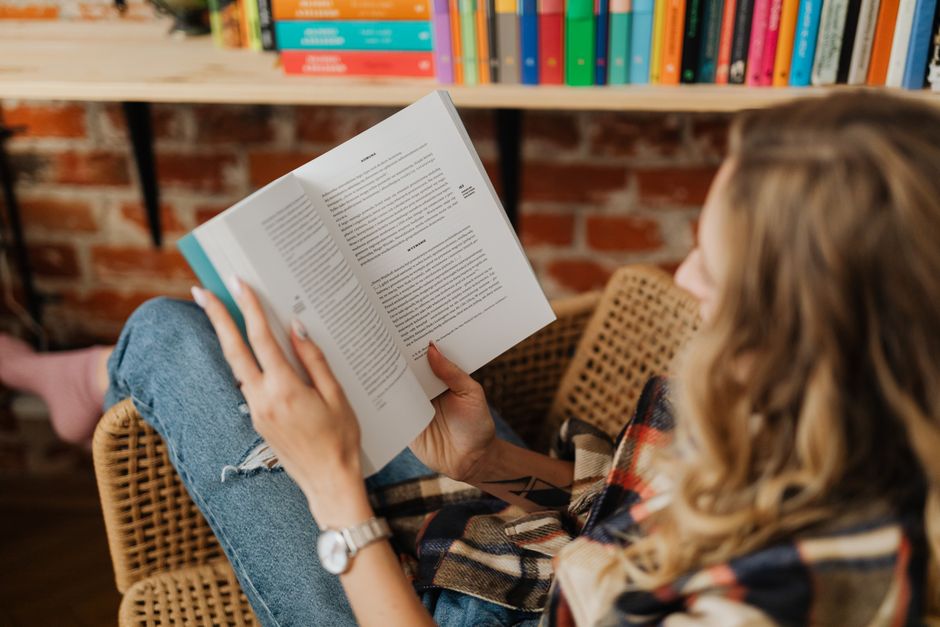
Keeping a book open without hands seems simple until you actually try it. Cookbooks, textbooks, and thick paperbacks all snap shut the moment you let go. The solution depends on the book’s size, the surface you are using, and whether you need to turn pages while you read. Here is a direct answer: use a book holder or book stand for firm support, use a weighted book snake or magnets for flat surfaces, or use the book’s own spine tension by breaking it in properly. Each method works differently, and the right choice depends on your specific situation.
Why Do Books Keep Closing On Their Own?
A closed book naturally wants to stay closed. The spine is designed to hold the pages together, and that binding tension works against you when you try to keep it open.
New books have stiff spines. The glue and stitching have not been flexed yet. Older books that have been read many times stay open more easily because the spine has loosened. This is why a well-worn paperback lies flat while a brand new hardcover snaps shut.
The weight of the pages also matters. Large reference books have heavy page blocks that pull the covers closed. Thin paperbacks with light pages are easier to manage than thick textbooks.
Understanding this basic mechanism helps you pick the right solution. A book that wants to close needs external force to hold it open. That force can come from a device, from weights, or from the book’s own structure.
How To Hold A Book Open Without Hands Using Book Holders
Book holders, also called book stands, are the most reliable option. They hold the book at an angle so you can read while sitting at a desk or table.
Most book stands have adjustable arms or clips that grip the pages. You place the book on the stand, open it to your page, and adjust the arms to hold the pages down. The stand itself supports the weight of the book, so you do not need to hold anything.
Some stands are designed for cookbooks in the kitchen. These often have a clear plastic shield that protects the pages from splashes. Others are made for textbooks and have a flat surface with a lip at the bottom to keep the book from sliding.
Portable book stands fold flat and fit in a bag. They work well for travel or for reading at a café table. Heavier metal stands are more stable but less portable.
The main limitation of a book stand is that it requires a flat surface. You cannot use one while lying in bed or sitting in an armchair. For those situations, you need a different approach.
Using Book Snakes And Weights To Keep Pages Down
Book snakes are weighted fabric tubes that sit across the pages. They are simple, effective, and work on any flat surface.
You place the book open on a table, then lay the snake across the top of the page spread. The weight keeps the pages from curling up. Book snakes come in various weights and lengths. Heavier ones work better for thick books with stiff pages.
You can also use improvised weights. Paperweights, small stones, or even a heavy mug can hold pages down. The key is to place the weight near the top or bottom edge of the page, not in the middle of the text you are reading.
Magnetic page holders are another option. These are small magnets that clip onto the page and hold it against a metal surface. They work best on book stands that have a metal backing. On a plain table, they do not have anything to grip.
Book snakes and weights are ideal for cookbooks because you can set them down quickly and adjust them easily. They do not damage the book if used gently, though heavy weights can leave creases in soft paper covers.





How To Hold A Book Open Without Hands By Breaking In The Spine
Breaking in a new book’s spine makes it stay open on its own. This is the oldest method and requires no equipment at all.
To break in a paperback, open the book to the middle and press the pages flat. Work your way through the book in sections, opening each section gently and pressing it down. Do not force the spine open too far, or you will crack the binding and pages may fall out.
For hardcovers, the same process works but requires more patience. Open the book partway and press gently along the spine crease. Repeat this in several places through the book.
This method works best for paperbacks and smaller hardcovers. Very thick books, like dictionaries or large textbooks, will still close even after breaking in because the page block is too heavy.
Some readers avoid breaking in books entirely because it creates visible creases on the spine. If you collect books or plan to resell them, this method may not be acceptable. For cookbooks and books you read repeatedly, the creases are a fair trade for hands-free reading.
A related technique is to alternate the book’s position while reading. If you read a section from the left page, then switch to the right page, the spine flexes evenly. This reduces the tension that pulls the book closed.
Reading In Bed Without Hands: Special Positions And Tools
Reading in bed is the hardest situation for hands-free reading. There is no flat surface, and the book must be held at an angle above you.
Reading pillows with side arms are a popular solution. These are large pillows with padded arms on each side. You place the book on the pillow, and the arms support it at an angle. The weight of the book rests on the pillow, not on your hands.
Some reading pillows have a strap across the front to hold the book in place. Others have a pocket or shelf at the bottom for the book to rest on.
For side sleepers, a different approach works. Lie on your side and place the book on the mattress in front of you. Prop it up with a small pillow or rolled-up blanket. This keeps the book at eye level without requiring your hands.
Overbed tables are another option. These are tables on wheels or legs that roll over the bed. You place the book on the table and adjust the height. They work well for people who read for long periods in bed, especially those with chronic pain or limited mobility.
For e-readers, the solution is simpler. Many e-reader cases fold into a stand. You can also buy a gooseneck tablet holder that clamps to the headboard and holds your device above you. These holders work with phones and tablets too, and some models fit e-readers.
No method works for every position in bed. You will likely need to adjust your reading position to match your equipment. A book stand on an overbed table requires you to sit up. A reading pillow allows you to recline but not lie flat.
Hands-Free Reading While Standing Or Moving
Reading while standing or moving is the most difficult scenario. Your hands are needed for balance, and there is no surface to support the book.
For cooking, a book stand on the counter is the standard solution. You read the recipe, then look up at your ingredients. Some cooks attach a clip to the stand so the page stays put even when you flip it.
For reading while walking, the options are limited. Audiobooks are the practical answer for most people. If you must read a physical book while walking, a small paperback held in one hand with your thumb along the spine is the only realistic approach, and it still requires one hand.
Some musicians use clip-on page holders for sheet music. These attach to a music stand and hold the pages open. The same device can work for a book on a podium or lectern.
Lecterns are designed for hands-free reading. They hold the book at a comfortable angle and often have a lip to keep the pages from turning. Public speakers and teachers use them for this reason. A portable lectern or music stand can serve the same purpose at home.
DIY Solutions That Actually Work
You do not need to buy specialized equipment. Several household items work just as well as commercial products.
A large binder clip can hold a book open. Clip it to the top edge of the book, and the tension keeps the pages down. This works best for thin paperbacks. For thicker books, use two binder clips, one at the top and one at the bottom.
Rubber bands work in a pinch. Loop a rubber band around the front cover and the back cover, then slide it to the top of the book. The band holds the covers open while you read. This method works for paperbacks but can damage the covers if the band is too tight.
A heavy plate or cutting board can hold a cookbook open in the kitchen. Place the book on the counter, open it, and set the plate on top of the open pages. The weight keeps the pages flat.
For reading at a desk, a stack of heavy books placed on either side of your open book works. This is not elegant, but it is effective. The weight presses down on the outer edges of the open pages, keeping them flat.
Some readers use a clean kitchen towel folded into a strip. Place the towel across the open pages, and the friction holds the pages down. This works surprisingly well for paperback cookbooks.
Choosing The Right Method For Your Situation
Match the method to the book and the environment. A heavy hardcover on a desk calls for a book stand. A thin paperback on the couch works with a book snake. In bed, a reading pillow or overbed table is the only practical option.
Consider how often you need to turn pages. If you are reading a novel, you turn pages frequently, and a book stand with clips may slow you down. If you are cooking from a recipe, you turn pages rarely, and a heavy weight is fine.
Think about the book’s value. Breaking in the spine of a collectible book reduces its resale value. Use a non-damaging method like a book snake or stand instead.
Your physical comfort matters too. Reading with your neck bent forward to look down at a table can cause strain. A book stand that angles the book up reduces neck tension. Reading in bed with a pillow that supports the book at eye level is better for your neck than propping the book on your chest.
No single method works for everyone. Most readers end up using two or three different solutions for different situations. A book stand at the desk, a reading pillow in bed, and a set of book snakes in the kitchen covers most needs.
Frequently Asked Questions
What is the best way to hold a book open without hands?
A book stand or book holder is the most reliable option because it supports the book’s weight and holds pages open with clips or arms. Book snakes work well on flat surfaces like tables and kitchen counters.
Does breaking in a book spine damage it?
Gentle spine breaking creates visible creases but does not damage the binding if done carefully. Forcing the spine open too far can crack the glue and cause pages to fall out.
Can I read a physical book hands-free in bed?
Yes, using a reading pillow with side arms or an overbed table. These devices hold the book at eye level so your hands stay free.
Are DIY book holders as good as store-bought ones?
Binder clips, rubber bands, and heavy objects can work for short reading sessions. For long reading sessions or heavy books, a dedicated book stand is more stable and comfortable.
