
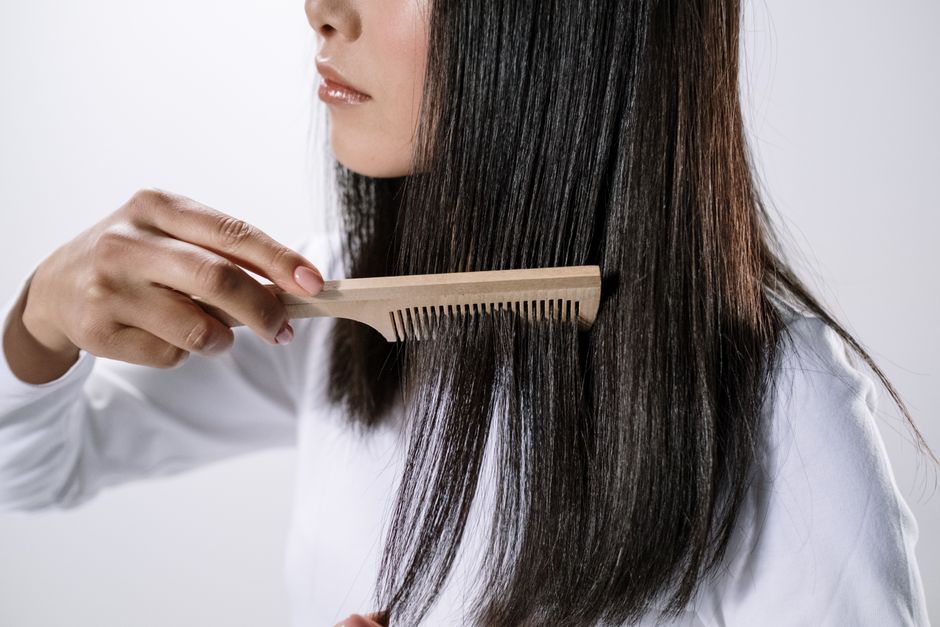
Greasy hair happens when your scalp’s sebaceous glands produce more oil than your hair can absorb or you can reasonably remove. The fix is not to wash more aggressively — that often backfires. The most effective approach combines washing with a gentle shampoo at a sensible frequency, keeping conditioner off your scalp, and avoiding habits that push oil production up or spread it down the hair shaft.
Below is what actually works, what does not, and why some popular advice makes oily hair worse.
Why Does Hair Get Greasy So Fast?
Sebaceous glands sit at the base of every hair follicle and secrete sebum, a mix of fats that coats the scalp and hair shaft. Sebum is not a flaw. It moisturizes skin, supports the scalp barrier, and gives hair some natural conditioning.
The problem is quantity and distribution. Some people simply have more active sebaceous glands. That trait runs in families. Hormones also drive oil production, which is why oily hair often shows up or worsens during puberty, around menstrual cycles, during pregnancy, and in the years around menopause. Androgens in particular stimulate sebum output.
Then there is the mechanical side. Sebum from the scalp spreads down the hair shaft over time. Fine, straight hair shows it faster because there is less hair volume to hide the shine and fewer strands to distribute the oil. People with coarse or curly hair may notice greasiness mostly near the roots.
One detail that surprises many people: touching your hair moves oil from your fingertips and scalp down the strand. So does brushing repeatedly. A scalp that feels oily by evening is often partly a transfer problem, not just a production problem.
How Often Should You Wash Greasy Hair?
Daily washing is fine for most people with genuinely oily scalps. The idea that washing every day damages hair or “trains” the scalp to produce more oil is not supported by how sebaceous glands work. Oil production is driven mainly by hormones and genetics, not by how often you shampoo.
That said, daily washing with a harsh shampoo can strip the scalp and leave hair dry at the ends while the roots rebound quickly. A reasonable approach for most people with oily hair:
- Wash once a day if your scalp is very oily, using a gentle formula.
- Wash every other day if oil builds more slowly, and use dry shampoo or a quick rinse on off days.
- Adjust based on how your scalp feels and looks, not on a fixed rule.
If you have been washing every day and your hair still looks greasy within hours, the issue is usually the product or technique, not the frequency. More washing will not fix a shampoo that is too heavy or a conditioner applied at the roots.
What Shampoo Should You Use for Oily Hair?
Look for a shampoo labeled for oily hair or one described as lightweight or clarifying. These tend to contain milder surfactants that lift oil without over-stripping. You do not need an expensive product. Ingredient lists matter more than price.
What to avoid if your goal is less grease:
- Heavy moisturizing or “nourishing” shampoos, which often contain oils and butters that add to the problem.
- Two-in-one shampoo and conditioner, which leaves conditioning agents on the scalp.
- Sulfate-free formulas marketed as gentle — some are fine, but a few do not clean oily scalps well enough.
Clarifying shampoos remove buildup from styling products and hard water minerals. They can help, but they are stronger than everyday shampoos. Using one too often can leave hair dry and brittle. Most people with oily hair do not need a clarifying wash more than occasionally, and some do not need one at all.
There is a common claim that certain shampoos “balance” the scalp or regulate oil production. No shampoo changes how your sebaceous glands work. What a good shampoo does is remove the oil that is already there without irritating the scalp. That is the realistic outcome.





Does Conditioner Make Hair Greasier?
Conditioner does not cause greasy hair if you use it correctly. The mistake is applying it to the scalp. Conditioner is designed to coat and smooth the hair shaft, and the scalp does not need that coating. On an oily scalp, it adds to the shine and weight.
Apply conditioner from the mid-lengths to the ends only. Rinse thoroughly. If your hair is short or very fine, you may be able to skip conditioner entirely or use a light leave-in on the ends. People with oily roots and dry ends often do best with this split approach: cleanse the scalp, condition only the ends.
Leave-in conditioners, serums, and oils sit on the hair and can migrate toward the roots. If you use them, keep them away from the scalp and use less than you think you need.
Do Home Remedies and Dry Shampoo Help?
Dry shampoo absorbs oil that is already on the hair. It does not reduce oil production or clean the scalp. Used occasionally between washes, it can make hair look less greasy for a day. Used repeatedly without washing, it can build up on the scalp and cause itching or irritation in some people. It is a bridge, not a replacement for washing.
Apple cider vinegar rinses are popular. There is no good evidence that they reduce sebum production. They may temporarily make hair feel cleaner by removing some residue, but the effect is short-lived and the smell is a practical drawback. Vinegar is acidic and can irritate a sensitive scalp.
Tea tree oil has some evidence for treating certain scalp conditions, but that is different from reducing oiliness. No well-designed human trials show that tea tree oil reduces sebum production in people with oily hair.
Scalp scrubs, clay masks, and charcoal products are marketed for oily scalps. Some people find they help with buildup. The evidence that they reduce oil production is limited. If you try one, watch for irritation and do not use it more often than the label recommends.
What Habits Make Oily Hair Worse?
Several everyday habits push oil production up or spread oil through the hair.
- Touching your hair. Hands transfer oil. The more you touch and adjust, the faster it looks greasy.
- Over-brushing. Brushing distributes sebum from the scalp down the shaft. A few strokes to style is fine. Constant brushing spreads oil.
- Washing with very hot water. Hot water can strip the scalp and leave it feeling tight, and some people find it triggers more oil rebound. Warm water works well.
- Using heavy styling products. Waxes, pomades, and oils near the roots add to the greasy look and can clog the scalp.
- Going to bed with product in your hair. This gives oils and residue hours to spread and build up.
- Not rinsing thoroughly. Leftover shampoo or conditioner residue can make hair look dull and greasy even after washing.
Diet is often blamed for oily hair. The evidence here is limited. Some research suggests that diets high in certain fats or sugars may influence sebum composition, but the findings are not consistent enough to support specific dietary advice for oily hair. A balanced diet is reasonable for general health, not a proven fix for greasy roots.
When Should You See a Doctor About Oily Hair?
Oily hair on its own is not a medical condition. It is a normal variation in how much sebum your scalp produces.
See a doctor or dermatologist if oily hair comes with other symptoms. These include persistent scalp itching, redness, flaking that looks like dandruff but does not respond to shampoo, painful bumps, or patches of hair loss. These can point to conditions such as seborrheic dermatitis or other scalp disorders that need proper diagnosis and treatment.
A sudden change in oiliness, especially alongside other symptoms like fatigue, weight change, or irregular periods, is worth mentioning to a doctor. Hormonal conditions can affect sebum production, and a clinician can assess whether further testing is appropriate.
For most people, oily hair is managed with the basics: a suitable shampoo, sensible washing frequency, conditioner kept off the scalp, and less touching and brushing. These steps will not change your genetics or your hormones, but they reliably reduce how greasy your hair looks day to day.
Frequently Asked Questions
Does washing your hair more often make it greasier?
No. Sebum production is driven mainly by hormones and genetics, not by washing frequency. Washing daily with a gentle shampoo is fine for most people with oily scalps.
What is the best way to make hair less greasy fast?
Wash with a lightweight shampoo, rinse thoroughly, and keep conditioner off your scalp. Dry shampoo can absorb existing oil between washes, but it does not reduce oil production.
Can I train my hair to be less greasy?
There is no evidence that stretching out washes reduces oil production over time. Your sebaceous glands do not adjust their output based on how often you shampoo.
Why is my hair greasy even after washing?
Common causes include leftover conditioner or product residue, a shampoo that is too heavy for your scalp, or not rinsing thoroughly. Touching and brushing your hair afterward also spreads oil.
