
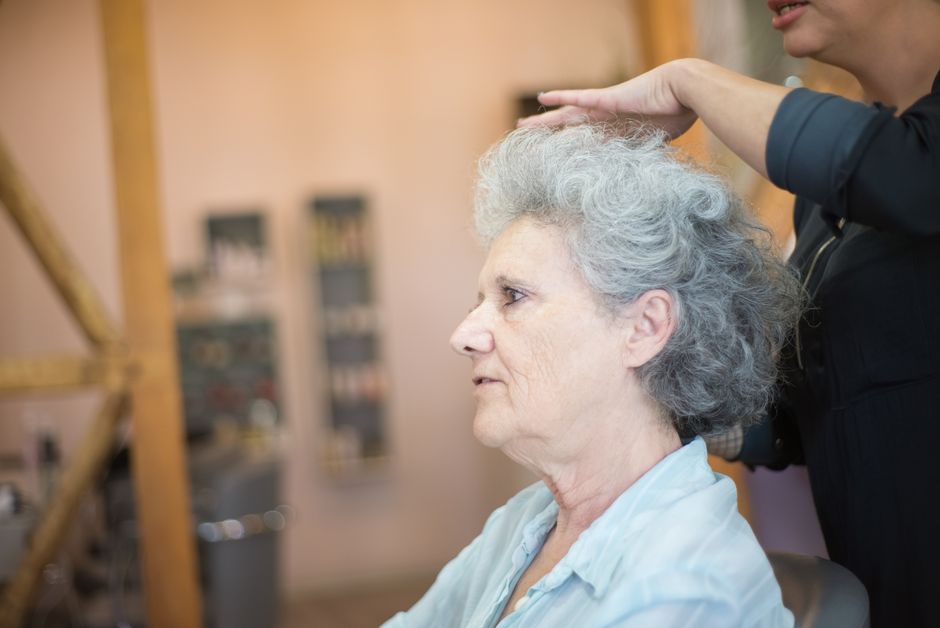
Seeing your first grey hairs can be unsettling. Many people assume grey hair signals that their body is aging faster than it should. The direct answer is no — grey hair alone does not mean you are aging faster overall. The timing of when your hair turns grey is largely determined by genetics, not by how quickly your body is aging internally.
Does Grey Hair Mean You Are Aging Faster The Truth?
Grey hair happens when your hair follicles stop producing melanin, the pigment that gives hair its color. This process is natural and happens to almost everyone eventually. But the age at which it starts varies widely from person to person.
Some people see their first grey hairs in their twenties. Others do not go grey until their fifties. Both scenarios can be completely normal. Research published in the journal Nature Communications found that a specific gene called IRF4 is strongly linked to when people first go grey. This gene is inherited, meaning your parents largely determine your greying timeline.
If you are greying early, it does not automatically mean your cells are aging faster or that your lifespan will be shorter. The connection between grey hair and biological aging is much weaker than most people think.
What Actually Causes Hair to Turn Grey?
Your hair color comes from melanocytes, cells inside each hair follicle that produce melanin. As you age, these cells gradually become less active. They produce less pigment until eventually they stop entirely. When a hair grows without melanin, it appears grey, white, or silver.
Several factors influence this process beyond genetics. Oxidative stress plays a role. This is damage caused by unstable molecules called free radicals that build up in your body over time. The cells that produce melanin are especially sensitive to oxidative damage. When they get damaged, they stop working.
Some studies suggest that certain lifestyle factors can speed up greying. Smoking is one example. A study in the Indian Journal of Dermatology found that smokers were more likely to go grey before age 30 compared to nonsmokers. Chronic stress may also play a role, though the evidence is less direct.
Medical conditions can cause premature greying in some cases. Thyroid disorders, vitiligo, and certain autoimmune diseases are linked to early loss of hair pigment. But for most people, grey hair is simply a normal part of getting older, not a sign of disease.
Can You Reverse Grey Hair Naturally?
This is one of the most common questions people ask, and the answer is mostly no. Once a hair follicle stops producing melanin, that particular hair will grow in grey. There is no proven way to reverse the process permanently.
Some people claim that certain vitamins or supplements can bring back your natural color. The evidence for this is weak. Deficiencies in vitamin B12, copper, or iron have been linked to premature greying in some cases. If you are deficient in one of these nutrients, correcting the deficiency might help restore some pigment. But this only applies if a deficiency is actually causing the problem.
For the vast majority of people, taking extra vitamins will not turn grey hair back to its original color. The cells that produce melanin are simply running down with age, and no supplement has been shown to restart them reliably.
There is one exception worth noting. Some medications can cause temporary hair color changes. Chemotherapy drugs, certain malaria treatments, and some epilepsy medications have been known to make hair turn grey or white. In those cases, stopping the medication sometimes allows color to return. But this is a drug side effect, not natural greying.





What Does the Research Say About Grey Hair and Aging?
Several studies have looked at whether grey hair predicts faster aging in other parts of the body. The results are mixed. Some research suggests that people who go grey very early might have higher levels of oxidative stress overall. But this does not mean they will age faster in terms of heart health, brain function, or lifespan.
A 2016 study published in PLOS ONE examined the relationship between grey hair and coronary artery disease. The researchers found that a higher degree of greying was associated with a slightly increased risk of heart disease in men. But the study was small and only looked at one specific population. Other studies have not found the same link.
The American Academy of Dermatology states that greying hair is primarily determined by genetics and that it is not a reliable marker of overall health. They emphasize that most people who go grey early are perfectly healthy.
What researchers agree on is that grey hair is a poor standalone indicator of biological age. Your internal organs do not necessarily age at the same rate as your hair follicles. You can have a full head of grey hair at 40 and be in excellent cardiovascular shape. You can have no grey hair at 60 and have significant age-related health issues.
What Factors Actually Affect How Fast You Age?
If you want to know how fast your body is aging, grey hair is not the metric to watch. There are much better indicators. Here are the factors that research consistently links to faster biological aging.
| Factor | Impact on Aging | Can You Change It? |
|---|---|---|
| Smoking | Accelerates skin aging, lung decline, and cardiovascular damage | Yes, quitting helps |
| Chronic inflammation | Linked to faster cellular aging and disease risk | Partially, through diet and lifestyle |
| Poor sleep | Increases oxidative stress and DNA damage | Yes, improving sleep habits |
| High stress levels | Shortens telomeres, which are markers of cellular aging | Yes, stress management helps |
| Poor diet | Increases inflammation and oxidative damage | Yes, dietary changes work |
| Genetics | Determines baseline aging rate | No, but you can influence expression |
Notice that grey hair is not on this list. That is because it does not reliably predict any of these aging markers. Your hair color changes are largely separate from the processes that determine how your heart, brain, and immune system age.
Are There Any Health Risks Associated with Grey Hair?
Grey hair itself poses no health risk. It is cosmetic change only. The hair strands themselves are not weaker or more brittle just because they lack pigment. Some people notice that grey hair feels coarser or drier, but that is usually due to changes in the scalp’s oil production with age, not the loss of color.
However, if you start greying very early — before age 20 for white people or before age 30 for Black people — it may be worth mentioning to your doctor. In rare cases, premature greying can be a sign of an underlying condition like thyroid disease, pernicious anemia, or vitiligo.
Your doctor can run simple blood tests to check for these conditions. If nothing is found, you can be confident that your early greying is just genetics. There is no need to worry about it affecting your health.
Some people worry that grey hair means their body is running out of antioxidants or that they are aging faster internally. The evidence does not support this. Your hair follicles are just one part of your body, and they can age at a different rate than the rest of you.
What Actually Works for Grey Hair?
If you want to cover grey hair, the options are straightforward. Hair dye is the most effective and reliable method. Permanent dyes penetrate the hair shaft and deposit color that lasts until the hair grows out. Semi-permanent dyes coat the outside of the hair and fade over several washes.
There are also natural options like henna, which binds to the hair protein and adds a reddish-brown tint. Henna works well for some people but does not produce the same results as chemical dyes on grey hair. It can also be unpredictable depending on your natural color.
If you want to accept your grey hair, that is also a perfectly valid choice. Many people find that grey or silver hair looks distinguished and natural. There is no medical reason to dye it.
Some products claim to reverse grey hair naturally. These include shampoos, serums, and supplements that promise to restore pigment. As of 2026, no clinical evidence supports these claims. The Federal Trade Commission has taken action against several companies for making false claims about reversing grey hair. If a product sounds too good to be true, it almost certainly is.
Common Misconceptions About Grey Hair
Several myths about grey hair persist despite lack of evidence. One is that plucking a grey hair causes more to grow. This is false. Plucking one hair does not affect the other follicles around it. However, repeated plucking can damage the follicle and eventually stop hair growth entirely in that spot.
Another myth is that stress turns hair grey overnight. This is not possible. Hair grows slowly, about half an inch per month. A hair that is already above the scalp is dead and cannot change color. What stress can do is trigger a shedding event that causes pigmented hairs to fall out, leaving the grey ones more visible. This creates the illusion of sudden greying, but the grey hairs were already there.
A third misconception is that grey hair is weaker and more prone to breakage. Grey hair can feel different because the scalp produces less oil with age, but the structural strength of the hair is not significantly different. Proper conditioning can keep grey hair healthy.
Frequently Asked Questions
Can stress really turn your hair grey?
Stress does not instantly turn hair grey, but chronic stress may accelerate the greying process over time by increasing oxidative damage to pigment-producing cells.
Does plucking a grey hair make more grow?
No, plucking one grey hair does not cause others to grow. It can damage the follicle and may stop hair from growing there at all.
Can vitamin deficiencies cause grey hair?
Yes, low levels of vitamin B12, copper, or iron have been linked to premature greying in some people, but correcting the deficiency does not always restore color.
Is there a medical test for why I am greying early?
Your doctor can run blood tests to check for thyroid disorders, vitamin deficiencies, and autoimmune conditions if you are greying very early.
