
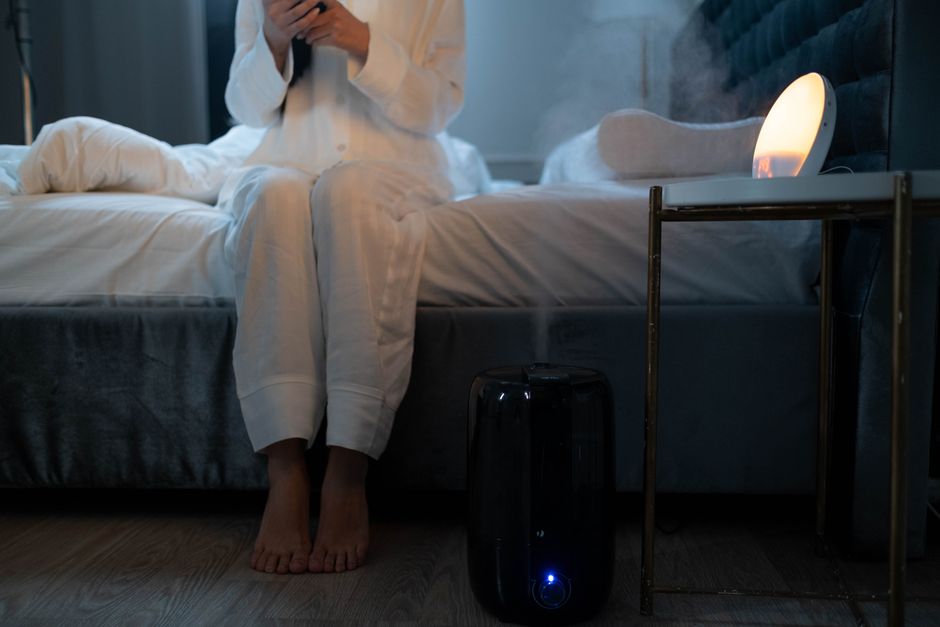
Using tap water in a humidifier can create a white dust problem. That dust is actually minerals from your water, and it can irritate your lungs. The safest and most effective way to make tap water safe is to use distilled water, which has had those minerals removed.
If you don’t want to buy distilled water, you can boil tap water and let it cool before use. This kills microbes but does not remove minerals. For mineral removal, a countertop distiller is a reliable home option. Never use tap water in a cool-mist humidifier without some form of mineral reduction if you want to avoid white dust.
Why Is Tap Water a Problem in Humidifiers?
Tap water is not just H2O. It contains dissolved minerals like calcium and magnesium. These are harmless to drink, but they do not evaporate.
When a humidifier releases mist into the air, those minerals are left behind. In an ultrasonic humidifier, they are ejected as fine white particles. This is the “white dust” you see on furniture and electronics.
Breathing in this mineral dust is not ideal. Studies have linked exposure to these particles with respiratory irritation, especially in children and people with asthma. The minerals themselves are not toxic, but they are not meant to be inhaled in concentrated form.
Does Boiling Tap Water Make It Safe?
Boiling water kills bacteria and viruses. It does not remove minerals.
When you boil water, the water turns to steam and escapes. The minerals stay behind in the pot. If you pour that cooled water into your humidifier, the minerals are still there. You will still get white dust.
Boiled tap water is better than untreated tap water because it is free of live microbes. However, it is not a complete solution for mineral problems. If your main concern is white dust, boiling alone will not fix it.
What Is Distilled Water and Why Does It Work?
Distilled water is created by boiling water into steam and then condensing that steam back into liquid. The minerals are left behind in the boiling chamber.
The result is water that is nearly pure H2O. It contains almost no dissolved minerals. When distilled water is used in a humidifier, there is nothing left behind when the water evaporates. No white dust. No mineral buildup in the machine.
This is why the US Environmental Protection Agency recommends using distilled water in humidifiers. It is the single most effective way to prevent mineral particles from entering your indoor air.




How To Make Tap Water Safe For Your Humidifier at Home
You have several practical options for making tap water safer for humidifier use. Each has trade-offs.
Option 1: Buy a Countertop Water Distiller
A countertop distiller plugs into a wall outlet. You pour in tap water, and it boils and condenses it into a separate container. This produces water very similar to store-bought distilled water.
These machines cost between $80 and $150. They take about four hours to produce one gallon of distilled water. If you run your humidifier nightly, you will likely need to run the distiller daily.
Option 2: Use a Reverse Osmosis System
Reverse osmosis (RO) systems filter water through a semipermeable membrane. They remove most dissolved minerals. Under-sink RO systems are common in homes.
RO water is not as pure as distilled water, but it is pure enough to significantly reduce white dust. If you already have an RO system for drinking water, you can use that water in your humidifier.
Option 3: Use a Filtered Pitcher (Limited Effectiveness)
Basic pitcher filters like standard activated carbon models remove chlorine and improve taste. They do not remove dissolved minerals effectively.
Some pitchers use ion-exchange resins that do remove some minerals. These are marketed as “mineral reduction” pitchers. They reduce hardness but do not eliminate it. You will still see some white dust, just less than with untreated tap water.
Option 4: Choose a Humidifier That Handles Tap Water
Evaporative humidifiers use a wicking filter and a fan. They do not create white dust because minerals stay trapped in the wick. These humidifiers are designed to run on tap water.
The trade-off is that the wick needs regular replacement. Mineral buildup will clog it over time. This is a maintenance cost, but it keeps minerals out of the air you breathe.
Can You Use a Water Softener to Treat Humidifier Water?
A water softener replaces calcium and magnesium with sodium or potassium. This prevents scale buildup in pipes, but it does not help with humidifiers.
Softened water still contains dissolved solids. When it evaporates in a humidifier, it leaves behind salt particles. These can be just as irritating to the lungs as mineral dust.
Do not use softened water in a humidifier expecting it to be safer than tap water. It is not a solution.
What About Baby Formula Water or Spring Water?
Baby formula water is bottled water that has been treated to reduce certain contaminants. It is not the same as distilled water. It may still contain minerals.
Spring water contains natural minerals. It will produce white dust just like tap water. Do not assume that “natural” or “mineral” water is safe for a humidifier. It is not.
Only water that has been processed to remove dissolved solids is appropriate for preventing white dust. That means distilled water or properly filtered reverse osmosis water.
How Often Should You Clean Your Humidifier?
Even with distilled water, humidifiers need regular cleaning. Bacteria and mold can grow in the water tank.
The EPA recommends cleaning your humidifier every three days. Empty the tank, wipe down all surfaces, and let it dry completely before refilling. This prevents microbial growth regardless of what water you use.
If you use tap water, you will also need to remove mineral scale. A mixture of white vinegar and water can dissolve calcium deposits. Rinse thoroughly after cleaning so no vinegar fumes enter the air.
Is It Safe to Add Essential Oils to Humidifier Water?
No. Essential oils are not designed for humidifier use. They can damage plastic components and create respiratory irritation.
Only use essential oils in a diffuser specifically designed for them. A humidifier is not a diffuser. Adding oils to humidifier water is a common mistake that can lead to lung irritation, especially in children.
Keep your humidifier water plain. The only thing that should go into the tank is water.
Signs Your Humidifier Is Releasing Minerals Into Your Air
White dust on surfaces is the most obvious sign. Check dark furniture and electronics screens. A thin white film indicates mineral particles are settling in your room.
Some people also report a “dusty” smell when the humidifier runs. This is not the minerals themselves, which are odorless. It may be from microbes growing in the tank, which is a separate problem.
If you see white dust, switch to distilled water immediately. The particles you see on your furniture are also landing in your lungs.
Frequently Asked Questions
Does boiling tap water make it distilled?
No. Boiling kills microbes but leaves minerals behind in the pot. Distilled water requires collecting the steam and condensing it back into liquid.
Can I use filtered tap water in my humidifier?
Basic carbon filters do not remove minerals. Only reverse osmosis or distillation effectively removes the dissolved solids that cause white dust.
Is white dust from a humidifier dangerous?
White dust is not acutely toxic, but it can irritate the respiratory tract. People with asthma or allergies may notice worsened symptoms when exposed.
How often should I clean my humidifier if I use distilled water?
Clean it every three days even with distilled water. Bacteria and mold can grow in any standing water, regardless of mineral content.
