
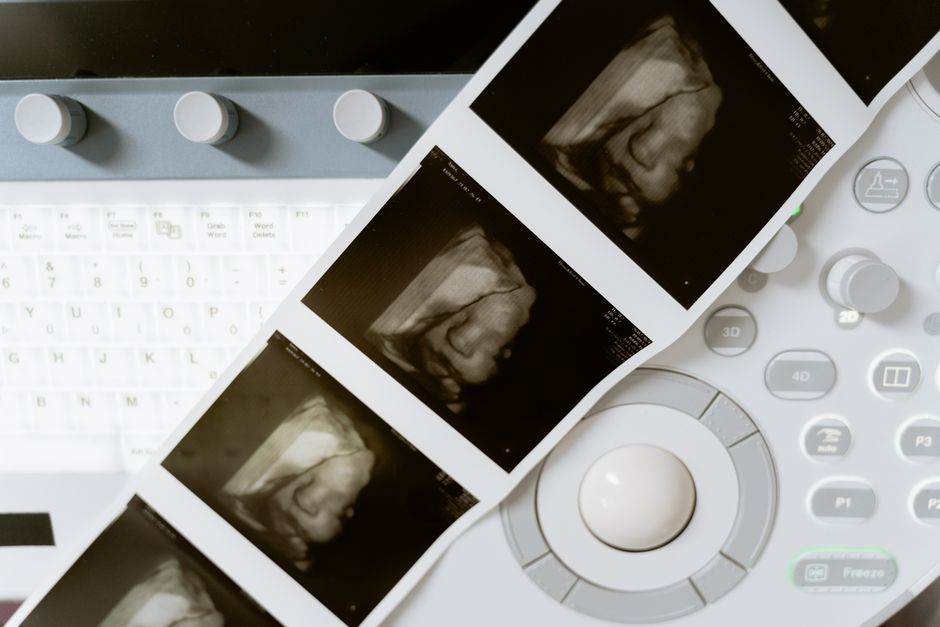
Using a fetal doppler at home is generally safe for short listening sessions a few times per week, but there is no established medical guideline that sets a specific limit. The real concern is not the sound waves themselves, but how the device is used — and what happens if you cannot find the heartbeat.
What Is a Fetal Doppler and How Does It Work?
A fetal doppler is a handheld device that uses ultrasound waves to detect your baby’s heartbeat. The device sends sound waves into your abdomen. Those waves bounce off moving tissue — like a beating heart — and return to the device, which converts them into sound.
This is the same technology your doctor or midwife uses during prenatal visits. The home versions are smaller and less powerful, but the basic principle is identical.
The key detail: ultrasound is sound energy, not radiation. It does not use ionizing radiation like X-rays do. That distinction matters because people sometimes confuse the two.
How Often Is It Safe To Use A Fetal Doppler?
No clinical guidelines specify a maximum number of times per week you can safely use a home fetal doppler. The FDA and major obstetric organizations have not issued a specific frequency limit because the devices were not designed for daily home monitoring.
Most clinicians who address this question suggest limiting use to a few minutes, a few times per week. This is a practical recommendation rather than an evidence-based threshold.
Here is what the evidence actually shows: ultrasound has been used in obstetrics for decades. Studies have not found harm from standard prenatal ultrasound exposures. But the studies that exist were done on clinical scans — which are performed by trained professionals, for specific medical reasons, and usually last under 30 minutes.
Home dopplers are different. No large studies have evaluated daily, long-term home use. That absence of evidence is not proof of safety. It is simply an unknown.
Why Prolonged or Frequent Use Is Discouraged
The main reason experts discourage frequent home doppler use is not proven harm. It is the principle of prudent caution.
Ultrasound delivers energy to tissue. The energy level from a home doppler is low, and it is the same type used in clinical settings. But in clinical settings, scans are done only when medically indicated. Using a device daily for entertainment or reassurance has no established benefit — and no established long-term safety data.
The American College of Obstetricians and Gynecologists has stated that ultrasound should be used only for medical reasons by trained operators. That position applies to clinical care. Home devices fall outside that guidance entirely.
The counterargument: millions of parents have used home dopplers without reported problems. That is true. But “no reported problems” is not the same as “proven safe.” It simply means no systematic harm has been documented.





The Real Risk: False Reassurance and False Alarm
The most significant risk of home doppler use has nothing to do with sound waves. It is what happens psychologically when you cannot find the heartbeat.
Before roughly 12 weeks, finding the heartbeat at home is genuinely difficult. Even trained professionals sometimes struggle in early pregnancy. The baby is small, positioned deep in the pelvis, and the device must be angled correctly.
If you cannot find the heartbeat, you may feel intense anxiety. That stress can lead you to the emergency room — which is appropriate if you have other symptoms like bleeding or cramping, but unnecessary if you simply could not locate the heartbeat with an at-home device.
The opposite problem is false reassurance. You find a heartbeat today, so you assume everything is fine. But a doppler only tells you that the heart is beating at that moment. It cannot tell you about the baby’s oxygen supply, growth, amniotic fluid levels, or placental function. Fetal health is far more than a heartbeat.
Some parents also mistake their own pulse for the fetal heartbeat. The adult heart rate is 60 to 100 beats per minute. A fetal heart rate is typically 110 to 160 beats per minute. If the number you are hearing is in your own range, you may be listening to your own blood flow, not your baby.
When Home Doppler Use Makes Sense
There are legitimate reasons some parents use a home doppler. After a previous loss, hearing the heartbeat can provide genuine comfort between prenatal visits. Some women have conditions that make them anxious between appointments.
In these cases, a doppler can be a useful tool — if used with realistic expectations. It is not a diagnostic device. It cannot confirm fetal health. It can only confirm a heartbeat at the moment you listen.
Some clinicians recommend dopplers for patients who have had a previous stillbirth or who experience high anxiety. This is a clinical judgment made case by case. It is not a blanket endorsement of home monitoring.
If you choose to use one, consider these practical points:
- Wait until at least 12 weeks. Before that, finding the heartbeat is unreliable even with practice.
- Use it for short sessions — 5 minutes or less.
- Limit use to a few times per week.
- If you cannot find the heartbeat, do not panic. Try again later that day or the next day.
- If you cannot find it and you have pain, bleeding, or reduced movement, contact your provider immediately.
What the Research Does and Does Not Show
Research on diagnostic ultrasound in pregnancy is extensive. Multiple large studies have followed children whose mothers had ultrasound scans during pregnancy. These studies have not found consistent evidence of harm to hearing, growth, or neurodevelopment.
One area of ongoing research is the effect of prolonged or repeated ultrasound exposure on fetal tissue heating. Ultrasound does produce a small amount of heat in tissue. At diagnostic levels, that heating is minimal and dissipates quickly. The concern would only arise with prolonged exposure to the same spot — which is why clinical scans sweep across the abdomen and do not linger.
Home dopplers use lower power than clinical machines. But they also encourage the user to hold the probe in one place while searching for the heartbeat. That behavior — holding still on one spot for minutes at a time — is different from how clinical ultrasound is performed.
No study has specifically examined the safety of home doppler use in pregnancy. Some research suggests that parents often struggle to use them correctly. One study found that a significant portion of pregnant women could not identify the fetal heartbeat even with instruction. This reinforces that these devices are harder to use than marketing suggests.
Safer Alternatives for Reassurance
If you are seeking reassurance between prenatal visits, there are alternatives that do not involve ultrasound.
Fetal movement tracking becomes reliable in the third trimester. Feeling your baby move regularly is one of the best indicators of fetal well-being that you can monitor at home. Your provider can tell you what pattern of movement is normal for your pregnancy.
A fetoscope — a simple listening device that does not use ultrasound — can sometimes detect the fetal heartbeat after about 20 weeks. It is less sensitive than a doppler, but it carries no ultrasound exposure.
Regular prenatal visits remain the foundation of fetal monitoring. Your provider checks heartbeat, growth, and other markers using professional equipment and clinical judgment. No home device replaces that.
Frequently Asked Questions
Can I use a fetal doppler every day?
No clinical guideline prohibits daily use, but it is not recommended. Limit sessions to a few minutes, a few times per week, and understand that daily use offers no proven benefit.
At what week can I hear the heartbeat with a home doppler?
Most home dopplers can detect the fetal heartbeat between 10 and 12 weeks, but success varies widely. By 12 weeks it becomes more reliable, and by 16 weeks most users can find it with practice.
Is a fetal doppler safe for the baby?
Ultrasound has a strong safety record in clinical use, but no studies have specifically evaluated long-term daily home use. The exposure is low, yet the absence of research means the safest approach is to use the device sparingly.
Why can’t I find the heartbeat with my doppler?
Common reasons include being earlier than 12 weeks, the baby’s position, your own body tissue, or incorrect probe angle. If you have no other symptoms, wait a few days and try again. Contact your provider if you have bleeding, pain, or reduced fetal movement.
