
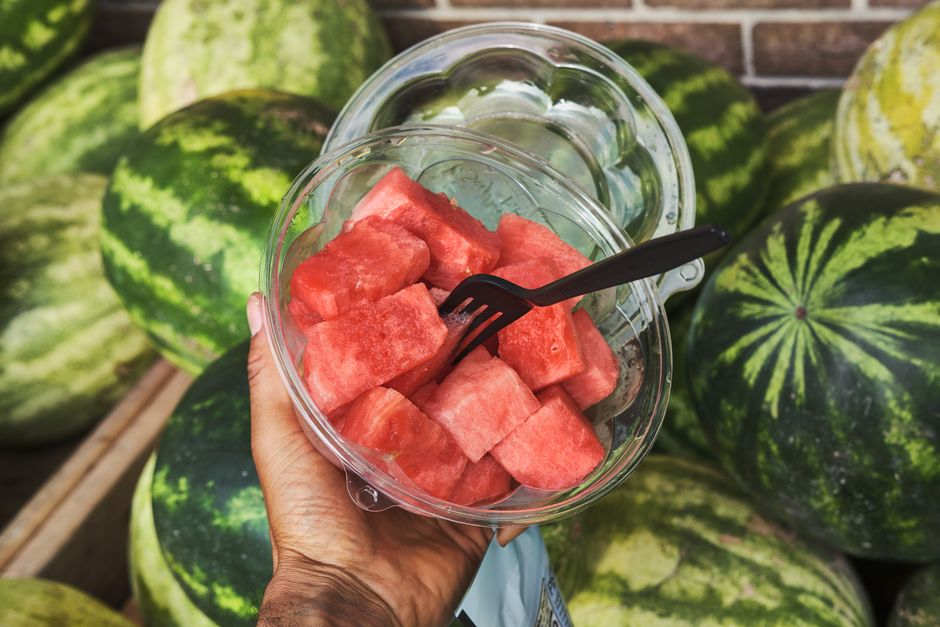
Candied watermelon rind is the old-fashioned Southern treat that turns something you usually throw away into something worth keeping. You take the thick white part of a watermelon rind, soak it in a salt brine, cook it in sugar syrup, and let it dry until it becomes chewy and sweet. The process takes time but the steps are simple, and the result is a unique candy that tastes like a mild, floral version of its pink center with a texture somewhere between a gummy bear and a dried apricot.
What Ingredients Do You Need for Candied Watermelon Rind?
The ingredient list is short and most items are already in your kitchen. You need one large watermelon with a thick rind, granulated sugar, water, salt, and fresh lemon juice. Some recipes add whole spices like cinnamon sticks, cloves, or star anise to the syrup. That is optional but it adds depth.
The exact amounts depend on how much rind you have. A good rule is equal parts sugar and water by volume for the syrup. For every four cups of chopped rind you will need about two cups of sugar and two cups of water. The salt brine uses one tablespoon of salt per four cups of water.
Do not use table salt with iodine or anti-caking agents. It can leave a chemical taste. Use kosher salt or pickling salt instead. The lemon juice is not just for flavor. The acid helps balance the sweetness and keeps the syrup from crystallizing as it cooks.
How Do You Prepare the Watermelon Rind?
Start by cutting the watermelon into thick slices about one inch across. Remove all the pink flesh with a sharp knife. Leave a thin layer of pink attached if you want. It adds color and a hint of watermelon flavor. Scrape off the dark green outer skin with a vegetable peeler or a paring knife. Only the white and light green parts should remain.
Cut the prepared rind into one-inch squares or strips about half an inch wide. Uniform size matters because pieces that are too different in thickness will cook at different rates. Some will be mushy while others stay crunchy. Take the extra minute to make them even.
Place the cut rind in a large bowl and cover it with the salt water brine. Let it sit at room temperature for at least six hours or overnight in the refrigerator. The salt pulls out moisture and firms up the texture. This step is not optional. Skip it and your rind will turn into mush during cooking.
How To Make Candied Watermelon Rind At Home Step by Step
After the brine soak, drain the rind and rinse it well under cold water. Place it in a large pot and cover it with fresh water. Bring it to a boil, then reduce the heat and let it simmer for about 15 minutes. Drain the rind again. This parboiling step removes excess salt and starts softening the rind so the syrup can penetrate evenly.
In the same pot, combine the sugar, water, and lemon juice. Add any whole spices you are using at this point. Stir over medium heat until the sugar dissolves completely. Add the drained rind and bring the syrup to a gentle simmer. Do not boil hard. A gentle bubble is all you need.
Let the rind cook in the syrup for 45 minutes to an hour. Stir occasionally to prevent sticking. The rind will turn translucent and the syrup will thicken. You will know it is ready when a piece of rind feels tender but still holds its shape when you press it with a fork. If it falls apart easily, you have cooked it too long.
Turn off the heat and let the rind cool in the syrup for at least two hours. This resting period allows the sugar to fully penetrate the pieces. Some recipes say you can stop here and store the rind in the syrup in the refrigerator. That is fine if you want a softer, wetter product. For classic candied rind, you need to dry it.





How Do You Dry and Store Candied Watermelon Rind?
Remove the rind pieces from the syrup with a slotted spoon and place them on a wire rack set over a baking sheet. Let them drain for about an hour. The syrup that drips off can be saved and used again for another batch or poured over pancakes or ice cream.
Once the pieces are mostly dry to the touch, you have a choice. You can leave them as is for a chewy, sticky candy. Or you can roll them in granulated sugar while they are still slightly tacky. The sugar coating adds a nice crunch and prevents the pieces from sticking together in storage.
Spread the sugared pieces on the rack and let them dry at room temperature for 12 to 24 hours. A cool, dry spot away from direct sunlight works best. Do not put them in the refrigerator while drying. The moisture in the fridge will make them sticky again. Once fully dried, store them in an airtight container at room temperature for up to two weeks. In the refrigerator they will last about a month. In the freezer they keep for up to six months.
One note on texture. The final candy will be chewier than store-bought gummy candy and less sticky than caramel. If you prefer a firmer bite, let the pieces dry for a full 24 hours. If you like them softer, pull them after 12 hours.
What Spices and Flavor Variations Work Best?
The basic recipe is mild and sweet on its own. But the rind absorbs flavors easily, so small additions make a big difference. Cinnamon stick, whole cloves, and star anise are the most traditional choices for a spiced version. Ginger slices add warmth and a slight heat. Vanilla bean or a teaspoon of vanilla extract added after cooking gives a softer, dessert-like flavor.
Some people add a few drops of rose water or orange blossom water during the last five minutes of cooking. This is common in Middle Eastern versions of candied fruit rind and it pairs well with watermelon’s natural floral notes. Start with a small amount. These flavors are strong and can become soapy if you use too much.
For a citrus twist, replace half the water in the syrup with fresh orange juice and add a strip of orange zest. The acidity and bitterness of the orange balance the sweetness in a way that lemon alone does not. This variation is especially good if your watermelon was not very sweet to begin with.
Common Mistakes and How to Avoid Them
The most common mistake is skipping the brine soak. People want to save time and the result is mushy, flavorless rind that disintegrates in the syrup. The salt brine is what gives the rind structure. Do not skip it and do not shorten the time below six hours.
Another mistake is boiling the syrup too hard. High heat causes the sugar to crystallize and the rind to cook unevenly. You end up with grainy candy and burnt syrup. Keep the heat at a gentle simmer. If you see the syrup bubbling aggressively, turn it down immediately.
Cutting the rind too thin is also common. Pieces smaller than half an inch will overcook before the syrup has time to penetrate. They turn tough and leathery. Stick to pieces that are at least half an inch thick and one inch long for the best texture.
| Mistake | Result | Fix |
|---|---|---|
| Skipping the brine soak | Mushy, flavorless rind | Soak at least 6 hours |
| Boiling syrup too hard | Grainy candy, burnt syrup | Keep at a gentle simmer |
| Cutting rind too thin | Tough, leathery pieces | Cut 1/2 inch thick minimum |
| Skipping the rest in syrup | Hard center, uneven flavor | Let cool in syrup 2 hours |
| Drying in the fridge | Sticky, never fully dries | Dry at room temperature |
Is Candied Watermelon Rind Actually Healthy?
This is candy. It is made mostly of sugar. A single piece contains about 30 to 50 calories depending on size, almost all from sugar. That does not make it bad. It just means you should treat it like any other dessert and eat it in small amounts.
The rind itself does contain some nutrients. Watermelon rind has small amounts of fiber, vitamin C, and the amino acid citrulline. Citrulline is the same compound found in the pink flesh that some studies suggest may support blood flow and reduce muscle soreness. Research published in the Journal of the Science of Food and Agriculture found that watermelon rind actually contains higher concentrations of citrulline than the flesh. But the amount in a single piece of candied rind is tiny. You would need to eat a lot of candy to get a meaningful dose, and the sugar from that much candy would cancel any potential benefit.
There is no evidence that candied watermelon rind has any special health properties beyond what the raw rind provides. Some online claims suggest it can lower blood pressure or improve digestion. As of 2026 there is no clinical evidence that candied watermelon rind in any amount has those effects. The raw rind has some potential benefits in much larger quantities. The candied version is a treat with a small nutritional upside and a lot of sugar.
Frequently Asked Questions
Can I use any watermelon for candied rind?
Yes but watermelons with thick rinds work best. Seedless varieties and large oblong melons typically have the most usable white rind.
Do I have to use lemon juice?
Not strictly but it helps prevent the sugar syrup from crystallizing and adds a subtle tang that balances the sweetness. Skip it only if you have no citrus on hand.
How long does candied watermelon rind last?
Stored in an airtight container at room temperature it stays good for about two weeks. In the refrigerator it lasts up to a month and in the freezer up to six months.
Can I reuse the leftover syrup?
Yes. Strain out any spices or rind pieces and store the syrup in the refrigerator for up to three weeks. Use it to sweeten tea, drizzle over pancakes, or make another batch of candied rind.
