
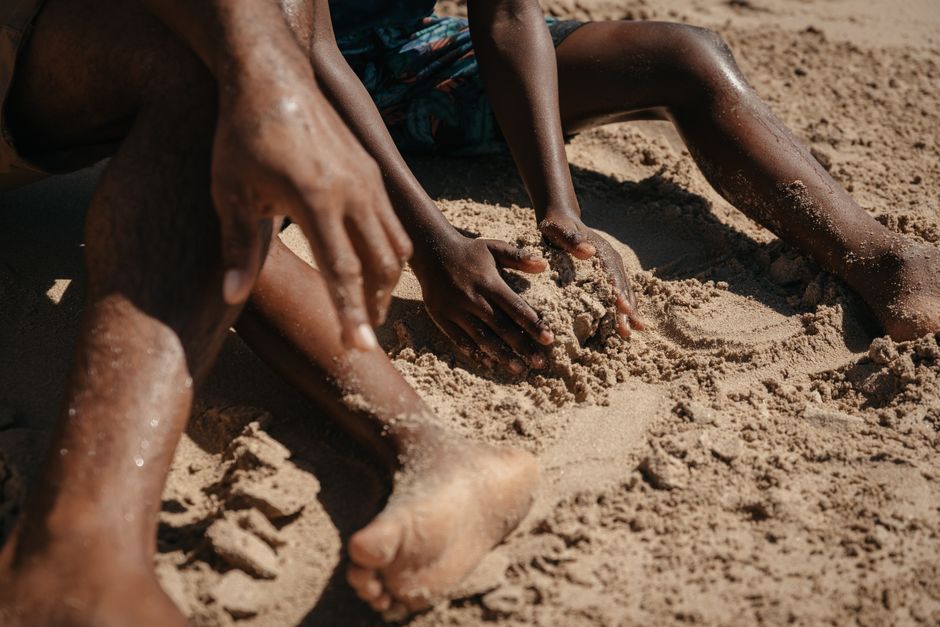
Building a sandcastle that survives more than a few minutes takes more than luck. The secret is water. Not damp sand, but saturated sand. When sand is packed with enough water to fill the spaces between grains, surface tension holds everything together like a natural glue. Dry sand collapses. Wet sand holds shape. Sand that is fully saturated — often called “castle sand” — can stand for hours if built correctly.
What Is the Best Sand-to-Water Ratio for Sandcastles?
The ideal mixture is about one part water to eight parts sand by volume. That is enough water to make the sand glisten but not pool on top. When you squeeze a handful, it should hold its shape firmly and leave a slight moisture mark on your palm.
If the sand is too dry, it crumbles the moment you release it. If it is too wet, it becomes soupy and slides off itself. The sweet spot is when the sand feels like stiff cookie dough. It should pack densely but not drip.
Test your mix before building. Grab a fistful and squeeze. Drop it from waist height. If it holds together on impact, you are ready. If it breaks apart, add water and mix again. This simple test takes ten seconds and prevents hours of frustration.
How To Make A Sandcastle That Actually Stays Standing
Start with a solid base. The base is the foundation of everything above it. Dig down until you hit firm, compacted sand — usually six to twelve inches below the surface. The top layer of beach sand is loose and full of air. Digging deeper gives you sand that has been packed by waves and weight.
Build your castle in layers. Each layer should be no more than six inches tall. Add a layer, pack it down hard with your hands or a flat tool, then add the next. Skipping the packing step creates air pockets. Air pockets are weak points that collapse when the structure dries or when someone bumps it.
Work from the center outward. The middle of your castle carries the most weight. If the center is weak, the walls will pull inward and collapse. Pack the core first, then shape the outer walls.
For tall towers, use a bucket or mold. Fill the mold with saturated sand, pack it down firmly, then flip it. Tap the sides gently to release the sand. Lift straight up — never tilt. Tilted lifting breaks the suction that holds the tower together.
Why Do Sandcastles Collapse?
Most collapses happen for one of three reasons: drying, weak foundations, or over-carving.
Drying is the number one killer. As water evaporates, the surface tension between sand grains weakens. The top of a castle dries fastest because it is exposed to sun and wind. Once the outer shell dries, it becomes brittle. A light breeze or a child’s hand can crumble it.
Weak foundations cause delayed collapses. A castle that looks solid for thirty minutes can suddenly sink or tilt when the base was never compacted properly. The weight of the upper structure slowly presses down, and the loose sand underneath gives way.
Over-carving is a beginner mistake. Carving removes sand that was doing structural work. Cutting deep windows, tunnels, or arches weakens the walls. The more you cut away, the less material holds the castle together.





How Do You Keep a Sandcastle From Drying Out?
Drying is inevitable, but you can slow it down significantly. Spray the castle with water every fifteen to twenty minutes. Use a spray bottle with a fine mist. Heavy streams of water will erode the surface and carve channels into your work.
Build in the shade if you can. Shade reduces evaporation dramatically. If no shade exists, build a simple windbreak with towels or a cooler. Wind accelerates drying by pulling moisture away from the surface.
Some builders mix a small amount of saltwater into the sand. Salt absorbs moisture from the air, which helps keep the castle damp longer. The effect is modest, but it does help in dry, sunny conditions. There is no evidence that adding other substances — like glue, cement, or egg whites — produces a better result, and most of these additives ruin the natural look and feel of the sand.
For serious builders, a misting system made from a garden sprayer works well. Set it to the finest setting and walk around the castle every few minutes. This is the single most effective way to extend the life of your structure.
What Tools Do You Actually Need?
You do not need expensive equipment. Most professional sandcastle builders use simple tools you can find at home or buy cheaply at a hardware store.
- Buckets — for hauling water and making base shapes
- A spray bottle — for keeping the castle moist
- A putty knife — for carving and smoothing surfaces
- A small trowel — for digging and shaping
- A straw — for blowing loose sand out of carved details
Plastic spatulas from the kitchen work surprisingly well for smoothing walls. A pastry brush removes loose sand from carved edges. The key is not the tool but the technique. A skilled builder with a single bucket can outperform a beginner with a full toolkit.
How Do You Carve Details Without Destroying the Structure?
Carve from the top down. Start with the highest point of the castle and work your way to the base. This prevents loose sand from falling onto areas you have already finished.
Carve while the sand is still wet. Wet sand cuts cleanly. Dry sand crumbles and chips. If your carving tool pulls chunks instead of slicing smoothly, the sand is too dry. Mist it and wait a minute before continuing.
Remove only small amounts at a time. Deep cuts weaken the structure. If you want a window or arch, carve it in stages. Remove a thin layer, mist the area, then remove another layer. This gives the sand time to redistribute its moisture and maintain strength.
Use a straw to blow away loose sand from delicate details. Blowing is gentler than brushing and removes debris without damaging edges.
How Long Can a Sandcastle Actually Last?
With constant misting and favorable conditions, a well-built sandcastle can last several hours. Competitions often run four to six hours, and serious competitors keep their structures standing for the full duration. Some elaborate competition castles last multiple days with continuous maintenance.
Without misting, most castles start showing signs of drying within thirty to sixty minutes. Cracks appear first, usually at the thinnest points. The top edges crumble. Eventually, the entire structure weakens and collapses under its own weight.
No sandcastle lasts forever. Tides, wind, and time all work against it. That is part of the appeal. A sandcastle is a temporary art form, and its impermanence is what makes it special.
What Are Common Mistakes Beginners Make?
The most common mistake is building on loose, dry surface sand. Dig down to the firm layer first. Building on top of soft sand is like putting a house on a foundation of pillows. It might look fine for a few minutes, then it sinks.
The second most common mistake is using too little water. Many people think a slightly damp bucket of sand will hold. It will not. The sand needs to be saturated. If you can see dry patches when you flip a bucket, the sand was not wet enough.
The third mistake is building too tall too fast. Tall towers need a wide base. A tower that is three feet tall needs a base at least eighteen inches in diameter. Skipping the wide base guarantees a collapse.
Finally, many beginners carve too aggressively. They want a detailed castle and start cutting windows and doors before the structure has set. Wait until the castle has had time to drain and firm up — usually ten to fifteen minutes — before carving fine details.
Frequently Asked Questions
What type of sand is best for sandcastles?
Sand with mixed grain sizes works best because smaller grains fill gaps between larger ones, creating a denser structure. Fine, uniform sand like desert sand does not hold shape as well as beach sand with varied grain sizes.
How much water do you add to sand for a sandcastle?
Use roughly one part water to eight parts sand by volume. The sand should glisten and hold a firm shape when squeezed but should not drip water.
Why does my sandcastle keep collapsing?
Most collapses come from building on loose surface sand, using too little water, or carving too deeply. Dig to firm sand, saturate your mix, and carve only small amounts at a time.
Can you make a sandcastle last overnight?
With continuous misting and protection from wind, some competition castles last multiple days. Without maintenance, most sandcastles begin deteriorating within an hour.
