
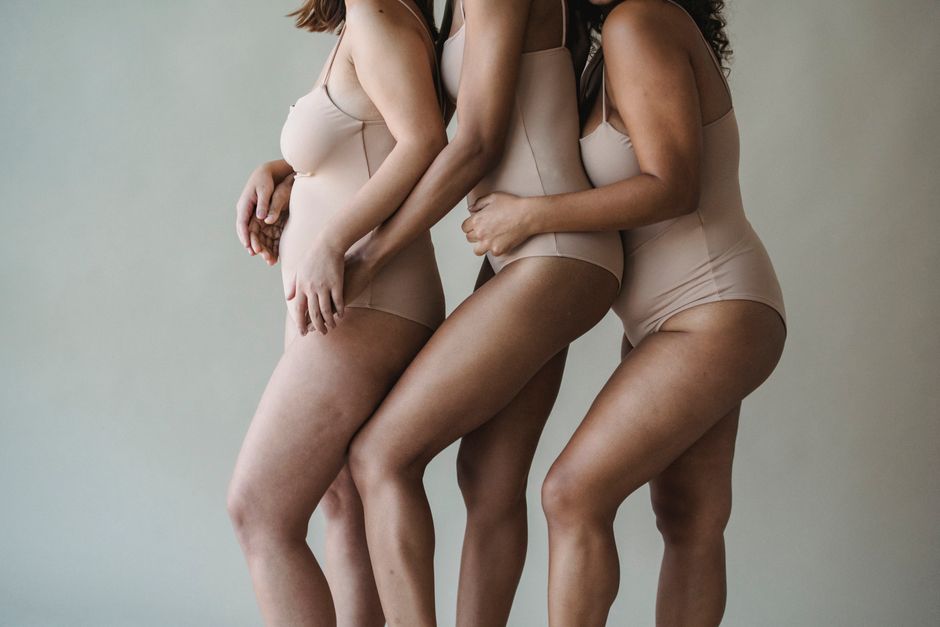
Loving your body image starts with separating what your body does from what it looks like. Your body carries you through your day, lets you hug the people you love, and allows you to experience the world. When you shift focus from appearance to function, appreciation and gratitude naturally follow. This is not about forcing positivity or ignoring insecurities. It is about building a more complete, accurate view of who you are as a physical person.
Why Does Body Image Affect More Than Just Appearance?
Body image is not a surface-level concern. It is the mental picture you hold of your body and the feelings you attach to that picture. When that picture is distorted or negative, it influences behavior, mood, and even physical health.
Research consistently shows that poor body image is linked to lower self-esteem, higher rates of depression, and disordered eating patterns. It also affects daily decisions. People with negative body image may avoid exercise, skip social events, or postpone medical care because they feel uncomfortable in their skin. These behaviors compound over time and create real health consequences beyond simple dissatisfaction.
The brain processes body image through multiple pathways. Visual input, social comparison, past experiences, and internal sensations all merge into one cohesive sense of self. When you change only the visual component — like losing weight or changing clothes — the other pathways remain unchanged. That is why appearance-based fixes rarely produce lasting body satisfaction. The underlying mental framework stays the same.
How To Love Your Body Image Beyond How It Looks?
The most effective way to build a healthier body image is to expand your definition of what your body is for. Start by noticing what your body does for you each day without judgment about how it performs that task.
A practical exercise is to keep a short list of body functions you appreciate. This could be as simple as “my legs carried me up three flights of stairs” or “my hands prepared a meal for my family.” The goal is to train your attention toward function rather than form. Over weeks, this repetition builds new neural pathways that make functional appreciation more automatic.
Another evidence-based approach is body neutrality. Unlike body positivity, which asks you to love your appearance, body neutrality asks you to simply accept your body as a vessel for your life. You do not need to think your body is beautiful. You only need to acknowledge that it is yours and it serves you. Many people find this more achievable and honest than forced positivity.
What Role Does Social Media Play in Body Dissatisfaction?
Social media creates a comparison environment that did not exist for previous generations. Algorithms prioritize content that generates engagement, and idealized body imagery generates strong emotional responses. This means your feed is not a random sample of humanity. It is a curated stream of the most visually extreme bodies, often edited or filtered.
Studies have found that even brief exposure to idealized images on social media can increase body dissatisfaction. The effect is stronger in people who already struggle with body image. The mechanism involves upward social comparison — measuring yourself against people who appear to have better bodies — which reliably lowers self-evaluation.
What you can do is curate your feed intentionally. Unfollow accounts that make you feel worse about yourself. Follow accounts that represent diverse body types, including people with disabilities, older adults, and those who discuss body image honestly. Research on media literacy suggests that understanding how images are edited and why they are selected reduces their negative impact.





How Does Exercise Change Body Image?
Exercise has a well-documented positive effect on body image, but the type of exercise matters. Research indicates that exercise focused on how the body feels — such as yoga, dance, or strength training performed with attention to movement quality — improves body image more than exercise focused on appearance outcomes like burning calories or building muscle.
The distinction is between internal and external motivation. When you exercise to feel strong, energized, or calm, you reinforce a functional relationship with your body. When you exercise primarily to change how you look, you reinforce the appearance focus that drives dissatisfaction. Both types produce physical changes, but only the internally motivated approach reliably improves body image.
Exercise also provides immediate sensory feedback that counters negative mental imagery. Feeling your heart rate increase, noticing your muscles engage, and experiencing the post-exercise mood lift are all direct experiences of your body as capable. These experiences accumulate over time and gradually reshape your internal body picture.
Can Changing Your Eating Habits Improve Body Image?
Eating habits and body image share a bidirectional relationship. Poor body image often drives restrictive or chaotic eating. In turn, chaotic eating worsens body image by creating feelings of loss of control and guilt.
Intuitive eating is the approach with the strongest evidence for improving body image. Intuitive eating means eating when you are hungry, stopping when you are full, and giving yourself unconditional permission to eat without labeling foods as good or bad. Research has found that intuitive eating is consistently associated with higher body appreciation and lower body dissatisfaction.
The mechanism appears to be about trust. When you eat intuitively, you learn to trust your body’s signals. That trust generalizes beyond eating. If your body can tell you when it needs fuel, perhaps it can also tell you when it needs rest, movement, or medical attention. This trust-based relationship replaces the adversarial stance many people take toward their bodies.
What Is the Difference Between Body Positivity and Body Neutrality?
Body positivity emerged as a movement challenging narrow beauty standards. It encourages people to love and celebrate their bodies regardless of size, shape, or ability. While this movement has helped many people, it has also created a new pressure: the pressure to feel positive when you do not.
Body neutrality offers an alternative framework. Instead of requiring love or admiration for your body, it asks for acceptance. Your body is not an object to be judged. It is the vehicle through which you experience life. You can feel neutral about your body the way you feel neutral about your kitchen table — it serves a purpose, and you do not need to evaluate its aesthetic qualities constantly.
Therapists and researchers have increasingly adopted body neutrality as a more sustainable goal than body positivity. Forcing positive thoughts about something you genuinely dislike often backfires, creating a cycle of failure and self-criticism. Neutrality removes the emotional charge from body evaluation entirely, freeing mental energy for other pursuits.
When Should You Seek Professional Help for Body Image Issues?
Some body image distress is common and manageable with self-directed strategies. But when body image concerns interfere with daily functioning, professional help is warranted. Signs that professional support may be needed include avoiding work or school because of appearance concerns, refusing to eat in public, compulsive exercise, or significant weight changes from restrictive eating.
Body image issues frequently co-occur with clinical conditions such as body dysmorphic disorder, eating disorders, and depression. These conditions require professional treatment and do not resolve with self-help alone. Cognitive behavioral therapy has the strongest evidence base for body image concerns. It works by identifying and challenging distorted thoughts about appearance and gradually reducing avoidance behaviors.
If you are unsure whether your concerns warrant professional attention, consider this question: Is your body image concern costing you more than a few minutes of discomfort per day? If it is shaping your schedule, your relationships, or your health decisions, that is a sign to seek help. No clinical guideline suggests that severe body image distress should be managed alone.
Frequently Asked Questions
How long does it take to improve body image?
Improvement typically takes weeks to months of consistent practice rather than days. Research suggests that structured programs lasting 8 to 12 weeks produce measurable changes in body image satisfaction.
Can men struggle with body image issues?
Yes, men experience body image concerns at significant rates, though they are less likely to seek help. Men’s concerns often focus on muscularity and leanness rather than thinness, which can lead to different behaviors like excessive gym use or steroid use.
Does aging make body image worse?
Aging does not automatically worsen body image, but it changes the issues involved. Some research suggests body satisfaction can improve with age as appearance becomes less central to self-worth, though the aging process itself brings new appearance-related concerns.
Is body dissatisfaction a mental illness?
Body dissatisfaction alone is not a mental illness, but it is a risk factor for several conditions. When dissatisfaction becomes severe enough to cause distress or impair functioning, it may meet criteria for body dysmorphic disorder or an eating disorder.
