
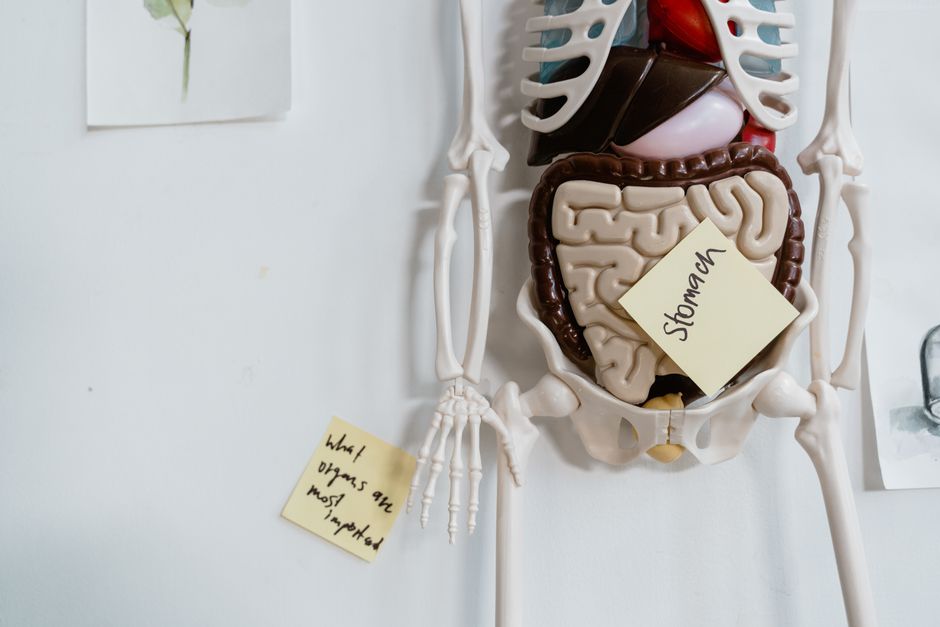
Learning all 11 body systems feels like a lot of memorization. But you do not need to study them as a random list. You can group them by what they do, which makes them much easier to recall. The 11 body systems are the skeletal, muscular, nervous, endocrine, cardiovascular, lymphatic, respiratory, digestive, urinary, reproductive, and integumentary systems. A practical way to remember them is to sort them into four jobs: support and movement, control and communication, transport and defense, and processing and elimination.
How To Remember The 11 Body Systems And Their Functions?
The simplest memory strategy is to think of the body as a city. A city needs a structure, a government, roads, utilities, and waste management. Your body runs the same way. When you attach each system to a city job, the names and functions start to stick.
Here is the breakdown:
- Skeletal and muscular systems are the city’s buildings and cranes — they provide structure and movement.
- Nervous and endocrine systems are the mayor and the postal service — they send messages and coordinate activity.
- Cardiovascular and lymphatic systems are the roads and the garbage collectors — they transport materials and remove waste.
- Respiratory, digestive, urinary, and reproductive systems are the power plant, the food supply, the sewage plant, and the new housing development — they exchange gases, process nutrients, eliminate waste, and create new life.
- Integumentary system is the city wall — it protects everything inside.
Once you see the systems as a working city, you can recall all 11 by asking what job each one performs.
Why Grouping The Systems Makes Them Easier To Remember
Your brain remembers categories better than isolated facts. If someone asks you to name 11 random objects, you will struggle. If they ask you to name objects in a kitchen, a bathroom, and a bedroom, you can list them easily. The same logic applies to anatomy.
Group the systems by their main function:
- Structure and movement: skeletal, muscular
- Control and communication: nervous, endocrine
- Transport and immunity: cardiovascular, lymphatic
- Exchange and elimination: respiratory, digestive, urinary
- Protection and reproduction: integumentary, reproductive
These five groups cover all 11 systems. When you need to recall them, start with the groups, then name the systems inside each group.
Mnemonic Devices That Work For Anatomy
Mnemonic devices are memory tools that link new information to something familiar. For the body systems, a sentence mnemonic is one of the most effective options.
A common mnemonic uses the first letter of each system. One version is:
“Sally Made Nice Eggs, Carol Liked Ripe Dates, Usually Rarely.”
This stands for:
- Skeletal
- Muscular
- Nervous
- Endocrine
- Cardiovascular
- Lymphatic
- Respiratory
- Digestive
- Urinary
- Reproductive
- Integumentary
You can also make your own sentence. The key is that the sentence is easy to picture or say out loud. Weird or silly sentences are easier to remember than logical ones because your brain pays more attention to unusual things.
Another approach is a story chain. Imagine a skeleton walking into a gym. The skeleton lifts weights with its muscles. A nerve fires, telling a hormone to travel through the blood. The blood carries oxygen from the lungs and nutrients from the stomach. The kidneys filter the waste. The skin covers it all, and a new cell is created for reproduction. This story touches every system in a natural order.





A Simple Breakdown Of Each System’s Job
Knowing the function of each system is just as important as knowing its name. Here is a quick reference for what each system actually does.
Skeletal system: Provides framework, protects organs, stores calcium, and produces blood cells in the bone marrow. An adult human has 206 bones.
Muscular system: Enables movement, maintains posture, and generates body heat. There are over 600 muscles in the human body, including skeletal, smooth, and cardiac muscle.
Nervous system: Controls and coordinates body activities. It detects changes in the environment, processes information, and sends signals through the brain, spinal cord, and nerves.
Endocrine system: Produces hormones that regulate metabolism, growth, reproduction, and mood. Glands include the thyroid, pancreas, adrenal glands, and pituitary gland.
Cardiovascular system: Pumps blood through the body, delivering oxygen and nutrients to tissues and removing carbon dioxide and waste. It includes the heart, blood, and blood vessels.
Lymphatic system: Returns fluid to the bloodstream and defends the body against infection. It includes lymph nodes, the spleen, tonsils, and lymph vessels.
Respiratory system: Brings oxygen into the body and removes carbon dioxide. It includes the nose, trachea, lungs, and diaphragm.
Digestive system: Breaks down food into nutrients the body can absorb and eliminates solid waste. It includes the mouth, esophagus, stomach, intestines, liver, and pancreas.
Urinary system: Filters blood to remove waste and excess water, producing urine. It includes the kidneys, ureters, bladder, and urethra.
Reproductive system: Produces sex cells and hormones and supports human reproduction. In females it includes the ovaries, uterus, and fallopian tubes. In males it includes the testes and associated structures.
Integumentary system: Protects the body from the outside environment. It includes the skin, hair, nails, and sweat glands. The skin is the body’s largest organ.
How The Systems Work Together In Real Life
Memorizing systems as separate items is only half the job. The body never works one system at a time. Every action you take involves multiple systems at once.
Take something as simple as taking a drink of water. Your nervous system sends the signal to lift the glass. Your muscular system moves your arm. Your digestive system absorbs the water into your bloodstream. Your cardiovascular system carries that water to your kidneys. Your urinary system filters it and decides how much to keep or excrete. Your integumentary system releases some of it as sweat if you are warm.
When you study the systems this way, you stop memorizing facts and start understanding physiology. That understanding is what makes the information stick for the long term.
One point that surprises many people: the lymphatic system has no pump. Unlike the cardiovascular system, which has the heart, the lymphatic system relies on muscle movement and breathing to push fluid through its vessels. This is why regular movement matters for immune function. When you are sedentary, lymphatic fluid moves more slowly.
Common Mistakes When Learning The Body Systems
Most people confuse the lymphatic system with the cardiovascular system because both involve fluid transport. The difference matters. The cardiovascular system moves blood in a closed loop. The lymphatic system moves excess fluid from tissues back into the bloodstream and filters it through lymph nodes along the way.
Another common mistake is mixing up the endocrine and nervous systems. Both are communication systems, but they work at different speeds. The nervous system sends fast electrical signals that act in milliseconds. The endocrine system sends chemical signals through hormones that act over minutes, hours, or days.
People also forget the integumentary system because it is not an internal organ system like the others. But it counts as one of the 11, and it performs vital jobs including temperature regulation and vitamin D production.
Study Techniques That Actually Improve Recall
Active recall is more effective than rereading. After you study a list of systems, close your notes and write down as many as you can remember. Then check what you missed. This process strengthens memory more than passive review.
Spaced repetition also works. Review the systems after one hour, then again the next day, then again in three days. Each review interval gets longer because the memory gets stronger.
Drawing the systems can help too. You do not need artistic skill. A rough sketch of the body with labels for each system forces your brain to connect the name with a location. Visual learners benefit most from this technique.
Teaching someone else is another powerful method. When you explain the systems out loud to another person, you find the gaps in your own knowledge. If you cannot explain a system clearly, you probably do not know it well enough yet.
Why This Knowledge Matters Beyond Tests
Understanding the body systems is not just for passing an anatomy exam. It helps you make better health decisions. When you understand that the cardiovascular system delivers oxygen and nutrients to every cell, you understand why regular exercise strengthens your heart and blood vessels. When you understand that the lymphatic system relies on movement, you understand why a sedentary day leaves you feeling sluggish.
This knowledge also helps you talk to your doctor. When you can describe which system is bothering you, you can have a more productive conversation about your health. For example, saying “I have shortness of breath when I climb stairs” gives your doctor more useful information than saying “I feel tired.”
Health claims on social media often target people who do not understand basic physiology. Knowing how your body actually works makes it easier to spot marketing that does not match biological reality. If a product claims to “detoxify” your body, you can ask which system it targets. Your liver, kidneys, and lymphatic system already perform detoxification. No supplement has been shown to improve on those natural processes.
Frequently Asked Questions
What is the easiest way to memorize all 11 body systems?
Group them by function into five categories: structure and movement, control, transport, processing, and protection. Then use a first-letter mnemonic sentence to recall the order.
How many bones are in the adult human body?
There are 206 bones in the adult human body. Babies are born with around 300 bones that fuse together as they grow.
What is the difference between the nervous and endocrine systems?
The nervous system sends fast electrical signals that act in milliseconds, while the endocrine system sends slower chemical signals through hormones. Both coordinate body functions but at different speeds.
Why is the skin considered an organ system?
The skin is the body’s largest organ and makes up the integumentary system. It protects against infection, regulates temperature, and produces vitamin D from sunlight.
