
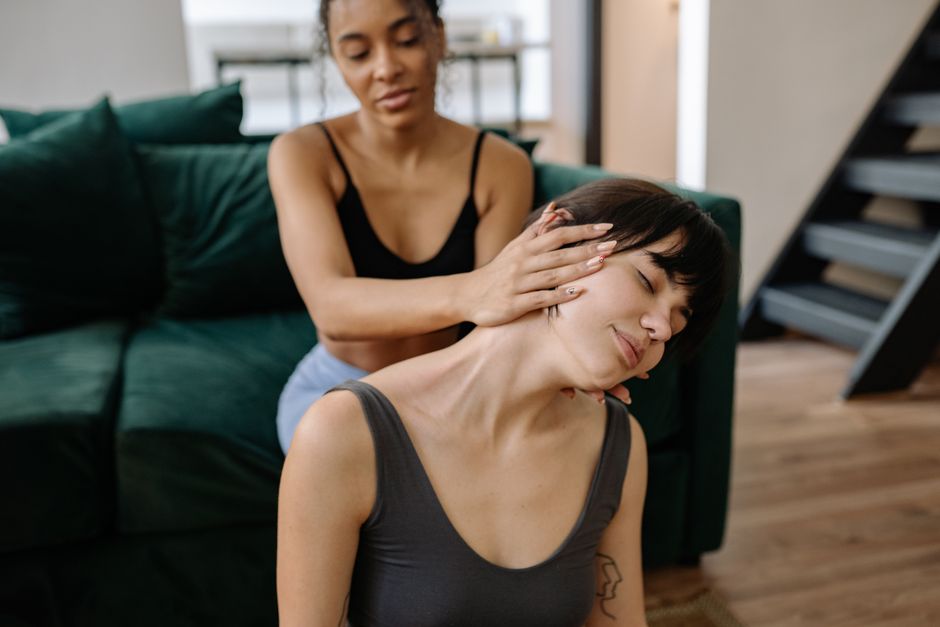
Feeling unsafe in your own body is not just a thought problem. It is a physical state driven by your nervous system. When your brain detects a threat, your body reacts before you can reason with it. The good news is that you can signal safety to your system through deliberate actions. Grounding techniques, slow breathing, and gentle movement tell your brain that the danger has passed. These methods work because they target the body first, not the thoughts.
Why Your Body Feels Unsafe Even When You Are Safe
Your nervous system has one main job: keep you alive. It constantly scans for danger through a process called neuroception. This happens below your conscious awareness. Your heart rate, breathing, and muscle tension all change based on what your system detects.
After trauma, chronic stress, or prolonged anxiety, this alarm system can get stuck. Your body starts responding to reminders of past danger as if the danger is happening right now. This is not a character flaw. It is a survival response that has gone into overdrive.
The key insight is that safety is not a thought. It is a physiological state. You cannot talk yourself into feeling safe if your body is still in fight-or-flight mode. You have to change the body’s state first.
How To Feel Safe In Your Body Nervous System Tips: Start With Your Breath
Breathing is the fastest way to influence your nervous system because it is the only automatic function you can also control consciously. When you slow your exhale, you activate the vagus nerve. This nerve is the main highway of your parasympathetic system, which is responsible for rest and digestion.
A simple pattern is extended exhale breathing. Inhale for four counts, then exhale for six to eight counts. The longer exhale tells your brain that you are not being chased. Your heart rate naturally slows in response.
Try this for two to three minutes when you notice tension building. You do not need to be in a crisis to practice. Regular practice makes the skill easier to access when you actually need it.
Research consistently shows that slow breathing at around six breaths per minute has measurable effects on heart rate variability, which is a marker of nervous system flexibility. A flexible nervous system can shift between alert and calm states more easily.
Grounding Techniques That Reconnect You To The Present
Grounding works by pulling your attention away from internal alarms and toward external reality. Your body cannot tell the difference between a real threat and an imagined one. Grounding gives it concrete evidence that you are safe right now.
The 5-4-3-2-1 method is widely used in clinical settings. Name five things you can see. Then four things you can touch. Three things you can hear. Two things you can smell. One thing you can taste. This forces your brain to process sensory information from your current environment instead of replaying past threats.
Physical grounding also works. Press your feet firmly into the floor. Hold a cold object in your hands. Run water over your wrists. These sensations travel to your brain through fast nerve pathways and interrupt the slower panic signals.
Some clinicians recommend carrying a small object with different textures to use as a grounding anchor. The goal is not to distract yourself. The goal is to remind your nervous system where you are and when you are.





Vagus Nerve Stimulation: What Works And What Does Not
The vagus nerve has become a popular topic in wellness content, and some claims have outpaced the evidence. What is clear is that the vagus nerve transmits information about your internal state to your brain and helps regulate your heart, lungs, and digestive system.
Several safe activities can stimulate vagal tone. Cold water on your face triggers the dive reflex, which slows your heart rate. Humming and singing create vibrations that may stimulate the nerve where it passes near your vocal cords. Gargling water vigorously works on the same principle.
These techniques are generally safe and low risk. The evidence for their effectiveness is still developing. Some studies suggest benefits for mood and stress regulation, but large human trials have not confirmed specific protocols.
One clarification matters: vagus nerve stimulation devices that you can buy online are not the same as the medical implants used for epilepsy and depression. The medical devices require surgery and a prescription. The consumer devices have limited evidence behind them. If you are considering one, discuss it with your doctor first.
Movement And Posture: How Your Body Talks To Your Brain
The connection between your body and your brain runs both directions. Your brain tells your body to move, but your body also sends signals back to your brain about your emotional state. This is called embodied cognition.
When you are anxious, your posture often collapses. Your shoulders round forward, your chest tightens, and your gaze drops. Changing this posture can change the signals your brain receives. Standing tall with your shoulders back and your head level sends a different message than slouching.
Slow, rhythmic movement also helps regulate the nervous system. Walking, stretching, or swaying at a gentle pace can be calming. The key is the rhythm. Your nervous system responds to predictable patterns. Erratic, jerky movement can increase arousal. Smooth, repetitive movement tends to decrease it.
Trembling or shaking is another natural release mechanism. Animals in the wild shake after escaping a predator. Humans do the same after stressful events, but we often suppress it. If you notice your body trembling after a difficult experience, letting it happen in a safe space can help your system discharge excess energy.
Creating A Safe Environment: What Your Senses Tell Your System
Your nervous system gathers information from every sense. A room that feels chaotic can keep your alarm system active even when nothing is wrong. You can design your environment to support calm.
Sound matters. Sudden loud noises trigger the startle response. Background noise at a steady, low volume is less activating than silence punctuated by unpredictable sounds. Some people find white noise or nature sounds helpful for this reason.
Lighting also affects your nervous system. Bright, harsh light can feel alerting. Warm, dim light tends to be calming. This is partly because your brain associates darkness with rest and bright light with daytime activity.
Touch is another channel. Weighted blankets are popular for good reason. Deep pressure stimulation has been shown to activate calming pathways in some studies. The effect is not universal, but many people find firm pressure comforting.
Scent can trigger powerful responses because smell pathways connect directly to the limbic system, which processes emotion. Lavender is the most studied scent for relaxation, but the evidence is mixed. What matters most is your personal association. A scent you associate with safety will be more effective than one you do not.
When To Seek Professional Help
Self-regulation techniques are useful, but they are not a replacement for professional care. If you experience panic attacks, flashbacks, persistent hypervigilance, or difficulty functioning in daily life, these are signs that you may need more support.
Therapy approaches with strong evidence include trauma-focused cognitive behavioral therapy and eye movement desensitization and reprocessing, commonly called EMDR. Both have been studied extensively for trauma-related conditions.
Medication can also play a role. Antidepressants and anti-anxiety medications are well-studied options, but they require a prescription and careful monitoring. A psychiatrist or primary care doctor can help you weigh the risks and benefits.
The line between normal stress and a treatable condition is not always clear. A good rule is to seek help if your symptoms interfere with sleep, work, or relationships for more than a few weeks. There is no benefit to waiting until you are in crisis.
What To Expect: A Timeline For Feeling Safe Again
There is no fixed timeline for nervous system regulation. Some people notice a difference with their first breathing practice. Others need weeks or months of consistent work before their baseline shifts.
What is predictable is that the process is not linear. You will have good days and bad days. A setback does not mean you are failing. It means your nervous system is still learning a new pattern, and learning takes repetition.
The goal is not to feel calm all the time. That is not a realistic target. The goal is to expand your window of tolerance, which is the range of intensity you can handle without becoming overwhelmed. A wider window means you can experience stress without your system shutting down.
Practice matters more than perfection. A few minutes of deliberate regulation each day is more effective than an occasional hour of intense work. Your nervous system learns from repeated experiences, not from single dramatic moments.
Frequently Asked Questions
How long does it take for nervous system regulation techniques to work?
Some techniques like extended exhale breathing can shift your state within minutes. Lasting changes to your baseline usually take weeks of consistent daily practice.
Can you rewire your nervous system at any age?
Yes, the nervous system remains changeable throughout life due to neuroplasticity. Older adults may need more repetition, but the capacity for change does not disappear with age.
What is the fastest way to calm a racing heart from anxiety?
Slow exhale breathing is the fastest reliable method. Inhale for four counts and exhale for six to eight counts for two to three minutes to activate your calming response.
Do weighted blankets actually help with anxiety?
Some studies suggest deep pressure can be calming, but results vary by person. If you find the weight comforting, it is a reasonable tool, though it is not a treatment for anxiety disorders.
