
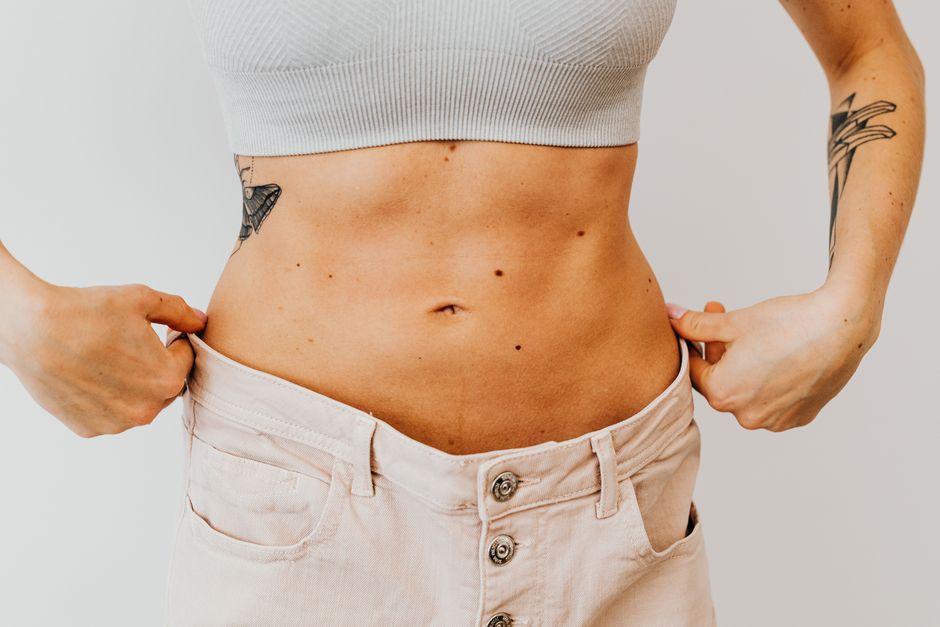
Losing menopause stomach fat comes down to two things: managing the hormonal shift that pushes fat toward your middle, and building habits that protect muscle while creating a modest calorie deficit. No single food, supplement, or exercise burns belly fat on its own. The steps that help are consistent and unglamorous — strength training, adequate protein, sleep, and stress control — but the evidence behind them is real.
What makes menopause different is that the rules change. Fat that used to settle on your hips and thighs starts collecting around your organs instead. Understanding why that happens makes the practical steps easier to follow and harder to abandon.
Why does menopause cause belly fat?
Estrogen affects where your body stores fat. Before menopause, estrogen tends to direct fat toward the hips and thighs — what researchers call a gynoid pattern. As estrogen levels fall during the menopausal transition, fat storage shifts toward the abdomen. This is a well-documented change, not a matter of willpower.
The shift happens even if the scale doesn’t move. Many women notice their weight stays roughly the same while their waistband tightens. That’s because fat is redistributing, and visceral fat — the fat packed around internal organs — is increasing. Visceral fat is more metabolically active than fat under the skin, and higher amounts are linked to insulin resistance and cardiovascular risk.
Two other forces work alongside the hormonal change. Muscle mass declines with age, and muscle burns more calories at rest than fat does. Less muscle means a lower resting metabolic rate. On top of that, sleep disruption from hot flashes and night sweats affects the hormones that regulate appetite. Research consistently shows that short sleep increases hunger and cravings for calorie-dense foods.
One clarification worth making: menopause doesn’t make fat loss impossible. It makes it slower and less forgiving of habits that used to be harmless. The same principles still work — they just need more consistency.
How to lose menopause stomach fat with strength training
Strength training is the most important physical activity for this stage of life. It builds and preserves muscle, which supports your resting metabolism and helps offset the muscle loss that accelerates with age. Studies have found that resistance training in midlife women improves body composition and reduces fat mass.
You don’t need a gym. Bodyweight squats, step-ups, push-ups against a counter, resistance bands, and carrying groceries all count. Two to three sessions a week that work the major muscle groups is a reasonable starting point. The key is progressive overload — gradually increasing weight, repetitions, or difficulty so your muscles keep adapting.
Cardiovascular exercise matters too, but for different reasons. It supports heart health, which becomes more important after menopause as cardiovascular risk rises. It also burns calories. What cardio does not do is spot-reduce belly fat. No exercise can target fat on a specific body part. Crunches strengthen abdominal muscles but won’t remove the fat covering them.
The most effective approach combines both. Some research indicates that combined aerobic and resistance training produces better body composition outcomes than either alone. If you’re new to exercise, start with what you can sustain and build from there.
What should you eat to reduce menopause belly fat?
There is no menopause-specific diet that targets belly fat. The fundamentals of fat loss are the same at any age: you need to take in fewer calories than you burn, while eating in a way that preserves muscle and keeps you satisfied. What changes after menopause is that your margin for error narrows.
Protein deserves priority. Higher protein intake helps preserve muscle during weight loss and tends to increase satiety. Some studies suggest that protein needs may be higher in older adults than the standard recommendation, though exact targets for menopausal women are still debated. Good sources include fish, poultry, eggs, dairy, beans, lentils, and tofu.
Fiber from vegetables, fruit, legumes, and whole grains supports fullness and blood sugar stability. Healthy fats from olive oil, nuts, and fatty fish round out a pattern that’s sustainable rather than restrictive.
What to limit is familiar: added sugar, refined carbohydrates, and heavily processed foods. These are easy to overeat and provide little satiety. Alcohol is worth mentioning specifically — it adds calories, disrupts sleep, and some evidence links moderate to heavy drinking with increased abdominal fat.
Very low-calorie diets tend to backfire at this stage. They accelerate muscle loss, which lowers your resting metabolism further. A modest deficit you can maintain for months does more than an aggressive one you abandon in weeks.





Why sleep and stress affect belly fat after menopause
This is not soft advice — it’s physiology. Short sleep and chronic stress both raise cortisol, and cortisol promotes fat storage in the abdominal region. They also increase appetite and make high-calorie foods more tempting.
Menopause disrupts sleep for many women through night sweats, hot flashes, and insomnia. That’s a real obstacle, not a character flaw. Practical steps that help include keeping the bedroom cool, limiting caffeine and alcohol in the evening, and keeping a consistent sleep and wake time. If sleep problems are persistent and affecting your daily functioning, talking to a clinician is reasonable — sleep disorders are common and treatable.
For stress, the method matters less than the consistency. Walking, breathing exercises, yoga, gardening, or time with people you enjoy all help. Research on stress and weight is complex, and no single intervention has strong evidence for reducing belly fat specifically. What the evidence does support is that managing stress supports the behaviors — sleep, eating, activity — that do affect body composition.
Does hormone therapy help with menopause belly fat?
The evidence here is mixed, and it’s important to be honest about that. Some studies have found that menopausal hormone therapy is associated with less accumulation of abdominal fat, particularly visceral fat. Other studies show smaller or inconsistent effects.
What’s clearer is that hormone therapy is not a weight-loss treatment. It is prescribed for relief of menopausal symptoms such as hot flashes and night sweats, and its risks and benefits are individual. Whether it helps with body composition is a secondary consideration, not a primary reason to take it. Anyone considering hormone therapy should discuss the tradeoffs with a clinician who knows their history.
Supplements marketed for menopause belly fat are a different story. No clinical evidence currently confirms that any over-the-counter supplement reliably reduces abdominal fat. Claims about “hormone-balancing” or “belly-blasting” products are marketing, not medicine.
What realistic results should you expect?
Fat loss after menopause tends to be slower than it was in your thirties. That’s normal, and it doesn’t mean your efforts aren’t working. A rate of roughly one to two pounds per week is often cited as a sustainable pace for weight loss in general, but the honest expectation is that progress may be uneven and slower than you’d like.
Waist measurements and how clothes fit can be more useful than the scale, because muscle gain can mask fat loss. Progress photos taken monthly tell a clearer story than daily weigh-ins.
Some things are outside your control. Genetics influence where you store fat. Some medical conditions and medications affect weight. If you’ve made consistent changes for several months with no results, or if you notice rapid unexplained weight change, that’s worth raising with a clinician.
The habits that reduce menopause stomach fat — strength training, protein, sleep, stress management, and a sustainable calorie deficit — are the same habits that protect your heart, bones, and muscle as you age. The belly is one visible marker. The underlying health is the bigger prize.
Frequently Asked Questions
Can you lose menopause belly fat without exercise?
Diet alone can produce weight loss, but it tends to include muscle loss, which lowers your resting metabolism over time. Strength training helps preserve muscle while you lose fat, which makes results easier to maintain.
How long does it take to lose menopause belly fat?
There is no fixed timeline, and it varies widely between individuals. Sustainable fat loss is generally gradual, and waist measurements often change more slowly than the scale.
Do crunches or ab exercises burn belly fat?
No. Spot reduction does not work — no exercise can target fat on a specific area of the body. Crunches strengthen abdominal muscles but do not remove the fat covering them.
Is hormone therapy a treatment for menopause belly fat?
No. Some studies suggest hormone therapy may be linked to less abdominal fat accumulation, but the evidence is mixed and it is not prescribed for weight loss. It is used for symptom relief, and risks and benefits are individual.
