
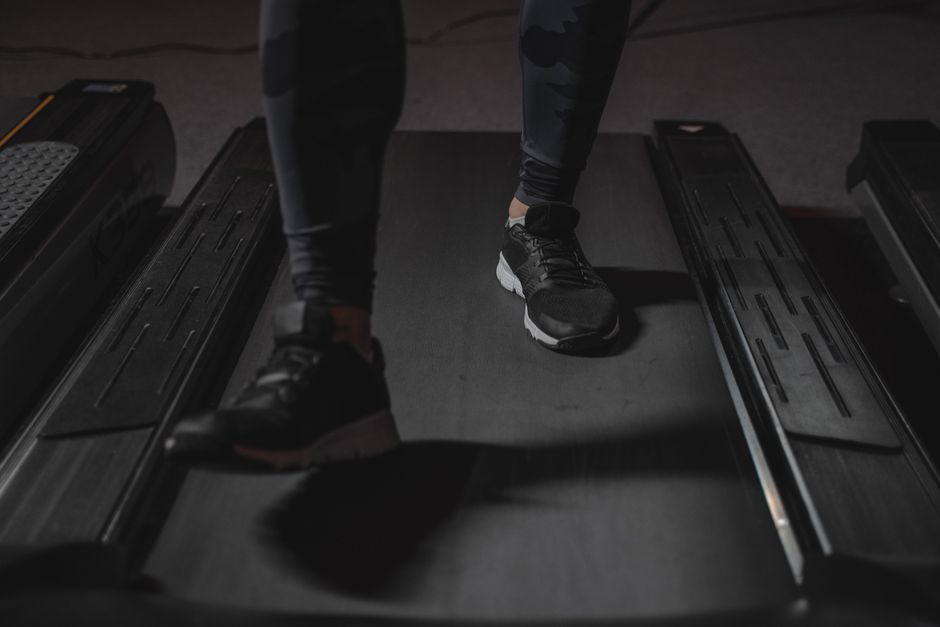
Walking on a treadmill burns calories, and burning more calories than you eat leads to fat loss over time. But no exercise can target fat on your stomach specifically. Spot reduction — the idea that working a body part shrinks the fat over it — has been tested and repeatedly fails to hold up. Treadmill walking can help you lose fat from your whole body, including your belly, as part of an overall calorie deficit. It cannot choose where that fat comes off first or fastest.
What Does “Burning Stomach Fat” Actually Mean?
Fat is stored energy. When you eat more calories than your body needs, the excess gets stored as fat in adipose tissue. When you consistently use more energy than you take in, your body pulls from those stores.
Here is the part most fitness marketing skips: your body does not decide where to take fat from based on which muscle you are moving. Fat is broken down throughout the body, and the pattern of where you lose it is largely determined by genetics, sex, and hormones — not by your workout choice.
This is why two people on identical walking programs can end up with different results. One loses from the waist first. The other loses from the face and arms before the belly budges. Both are losing fat correctly. Their bodies are just drawing from different storage sites.
So when someone asks whether treadmill walking burns stomach fat, the accurate answer is: it burns fat, and some of that fat may come from your midsection. But it is not selective, and it is not guaranteed to come from there first.
Does Spot Reduction Work? What the Research Shows
Spot reduction does not work. This is one of the more settled questions in exercise science, and it has been tested directly.
In a well-known study, researchers had participants train only one leg — often the non-dominant one — for several weeks. When they measured fat loss, they found the trained leg did not lose more fat than the untrained leg. The muscles got stronger. The fat loss was distributed by the body’s own logic, not by which limb was working.
Other studies on abdominal exercise reached similar conclusions. Doing hundreds of crunches does not strip fat from the belly any faster than other activity. It strengthens the abdominal muscles underneath, which can change how your midsection looks and functions, but it does not preferentially burn the fat layer sitting on top.
What this means for treadmill walking is straightforward. Walking is excellent for burning calories and improving cardiovascular fitness. It is not a targeted fat-removal tool, and no treadmill program can make it one.
Why Does Belly Fat Seem Harder to Lose?
Belly fat is not actually harder to lose in a biological sense — but it often appears to be, for a few reasons.
First, visceral fat. This is the fat stored deep inside the abdomen, wrapped around organs like the liver and intestines. It behaves differently from the fat just under your skin (subcutaneous fat). Visceral fat is more metabolically active and is more strongly linked to health risks like type 2 diabetes and cardiovascular disease. It also tends to respond to overall fat loss rather than to any specific exercise.
Second, perception. Many people judge their progress by looking at their stomach, which is one of the last places the body tends to release stored fat for many people. You might be losing fat from your back, thighs, and arms while your midsection looks unchanged. That does not mean the walking is not working.
Third, hormones and genetics. Where your body stores fat and in what order it releases it is heavily influenced by factors you do not control. Men often store more fat in the abdomen; women often store more in the hips and thighs, especially before menopause. These patterns shift with age and hormonal changes, but they are not something a treadmill setting can override.




How Walking on a Treadmill Helps With Fat Loss
Treadmill walking helps with fat loss by increasing your daily calorie expenditure. That is the mechanism, and it is well established.
The math is simple in principle: create a calorie deficit, and your body draws on stored fat for energy. Walking contributes to that deficit. How much depends on your body weight, walking speed, incline, and duration. A heavier person burns more calories walking the same distance as a lighter person, because moving more mass takes more energy.
Incline walking raises the calorie burn noticeably compared with walking on a flat surface at the same speed. This is one reason incline treadmills are popular for fat-loss programs. The added effort increases energy expenditure without requiring you to walk faster.
Walking also has advantages that matter for consistency:
- It is low-impact, which makes it easier to sustain than running for many people, especially those with joint issues.
- It can be done at a moderate intensity that most healthy adults can maintain for 30 minutes or more.
- It fits easily into a daily routine, which matters because total weekly activity is what drives results.
Physical activity guidelines for adults generally recommend at least 150 minutes of moderate-intensity aerobic activity per week, or 75 minutes of vigorous activity, along with muscle-strengthening activity on two or more days per week. Walking on a treadmill counts toward the aerobic portion. Meeting these guidelines supports cardiovascular health and helps with weight management, though weight loss specifically still depends on your overall calorie balance.
Cardio Alone Rarely Shrinks the Waist
This is where a lot of people get frustrated. They walk on the treadmill faithfully for weeks, and their stomach looks the same.
The reason is usually not the walking. It is that exercise alone, without changes to eating, tends to produce modest fat loss. The body has a way of compensating — you might move less later in the day, feel hungrier, or eat a bit more without noticing. Over time, these adjustments can cancel out a chunk of the calories you burned.
Research on exercise-only weight loss consistently shows smaller results than programs that combine activity with dietary changes. This is not a flaw in walking. It is how energy balance works.
Strength training adds another piece. Building muscle does not burn fat directly, but it supports a higher resting metabolic rate over time and helps preserve lean mass during weight loss. A program that combines treadmill walking, resistance training, and a reasonable calorie deficit tends to produce better body composition changes than cardio alone.
None of this is a reason to skip the treadmill. It is a reason to see walking as one part of a larger picture rather than a standalone fix for belly fat.
What Actually Moves the Needle on Stomach Fat
Sustained fat loss across your whole body is what reduces stomach fat. There is no shortcut around that, and no exercise selection that changes the order in which fat comes off.
The factors that reliably matter:
- Calorie deficit. Eating somewhat less than you burn is the underlying requirement for fat loss. How you achieve that deficit — through diet, activity, or both — matters less than that it exists.
- Consistent activity. Regular walking, along with other aerobic exercise, increases your weekly energy expenditure and supports cardiovascular health.
- Strength training. Helps maintain muscle mass while you lose fat, which affects how your body looks and functions as the weight comes off.
- Sleep and stress. Poor sleep and chronic stress are associated with higher abdominal fat in observational research, though the exact mechanisms are still being studied. Getting adequate sleep is a reasonable part of any fat-loss effort.
- Patience. Fat loss is gradual. Changes that happen over weeks and months are the ones that tend to stick.
Visceral fat — the deep abdominal fat linked to metabolic risk — does respond to overall fat loss and regular physical activity. Some research suggests it may respond relatively well to consistent aerobic exercise compared with subcutaneous fat, though the evidence is not uniform across all studies.
Is Walking on a Treadmill Enough on Its Own?
Walking on a treadmill is a genuinely useful form of exercise. It improves cardiovascular fitness, supports mood, helps with weight management, and is accessible to most people. But as a standalone strategy for losing stomach fat, it has limits.
If your goal is a leaner midsection, walking works best as part of a plan that includes dietary changes and some form of resistance training. If your goal is general health and fitness, walking on its own is a solid choice that meets a meaningful portion of physical activity guidelines.
The honest position is this: treadmill walking helps you burn calories, and burning calories contributes to fat loss. It does not target your stomach, and no amount of incline or duration will change that. What it can do is support the overall process — and that process is what actually reduces belly fat.
Frequently Asked Questions
Can walking on a treadmill reduce belly fat?
Yes, indirectly. Treadmill walking burns calories, which contributes to the overall calorie deficit needed to lose fat from your whole body, including your belly. It cannot target belly fat specifically.
How long do you need to walk to lose stomach fat?
There is no specific duration that guarantees stomach fat loss, because fat loss depends on your total calorie balance, not just walking time. General physical activity guidelines recommend at least 150 minutes of moderate-intensity aerobic activity per week for health benefits.
Does incline walking burn more belly fat?
Incline walking burns more calories than flat walking at the same speed, which can support a larger calorie deficit. It does not change the fact that fat loss is distributed across the body rather than targeted to the stomach.
Why am I not losing belly fat even though I walk every day?
Exercise alone often produces modest fat loss because the body compensates in various ways, and dietary intake usually plays a larger role in creating a calorie deficit. Belly fat also tends to be one of the last areas many people lose from, regardless of how much they exercise.
