

Losing 50 pounds is a large goal, and the honest answer is that it takes time, consistency, and a plan you can actually live with. Most clinical guidance treats safe weight loss as roughly 1 to 2 pounds per week, which means 50 pounds typically takes somewhere between six months and a year or more. There is no shortcut that produces lasting results, but the strategies below are the ones with real evidence behind them.
How To Lose 50 Lbs: What Actually Works
Lasting weight loss comes down to a sustained calorie deficit. You take in fewer calories than your body uses, and over time your body draws on stored fat for energy.
That principle is not controversial. What varies is how people create that deficit, and whether they can maintain it long enough to lose 50 pounds.
Three approaches have the strongest evidence behind them:
- Eating fewer calories while keeping protein and fiber high enough to stay full
- Increasing physical activity, especially a mix of aerobic exercise and resistance training
- Changing eating patterns in ways that reduce intake without requiring constant tracking
Most people who succeed combine more than one. The method matters less than whether you can keep doing it for months, not weeks.
How Many Calories Should You Eat to Lose 50 Pounds?
There is no single number that fits everyone. Your calorie needs depend on your current weight, height, age, sex, and activity level.
What is well established is the energy content of body fat. A pound of body fat stores roughly 3,500 calories. That figure is a rough planning tool, not a precise biological law, because the body adapts as you lose weight. Still, it helps explain the math behind a safe rate of loss.
A deficit of about 500 to 1,000 calories per day is generally associated with losing 1 to 2 pounds per week. That range is widely cited in clinical guidance as a safe pace.
Going far below that is not automatically better. Very low calorie diets can produce faster short-term loss, but they require medical supervision and are harder to sustain. They also raise the risk of losing muscle and of nutritional gaps.
Rather than guessing, you can estimate your maintenance calories using an online calculator based on the Mifflin-St Jeor equation, then subtract 500 to 1,000. If you are unsure, a registered dietitian can help set a target that fits your health history.
What Should You Eat to Lose 50 Pounds?
No single food or diet produces weight loss on its own. What matters is total calories and whether the eating pattern keeps you satisfied enough to stick with it.
That said, some food choices make a deficit easier to maintain:
- Protein — helps preserve muscle during weight loss and tends to reduce appetite
- Fiber — from vegetables, fruit, beans, and whole grains, slows digestion and adds bulk
- Water-rich foods — soups, salads, and produce can fill you up for fewer calories
- Fewer ultra-processed foods — these tend to be calorie-dense and easy to overeat
Protein deserves a specific mention. When you lose weight, some of it comes from muscle unless you protect it. Eating adequate protein and doing resistance training are the two most reliable ways to limit muscle loss.
You do not need to eliminate carbs, fat, or any whole food group. Diets that cut entire food groups often work in the short term because they reduce calories, not because the excluded nutrient was the problem.



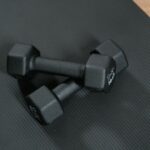

Do You Need Exercise to Lose 50 Pounds?
You can lose weight through diet alone. But exercise matters a great deal for how you lose it and whether you keep it off.
Resistance training — weights, bands, or bodyweight work — helps preserve muscle while you are in a calorie deficit. That matters because muscle burns more energy at rest than fat does, and because losing muscle can slow your metabolism over time.
Aerobic activity, such as brisk walking, cycling, or swimming, adds to your daily calorie burn. It also supports heart health, which is a major reason to lose weight in the first place.
One practical note: exercise burns fewer calories than most people assume. A 30-minute walk might burn a few hundred calories, which is easy to erase with a snack. This is why diet usually drives weight loss and exercise helps sustain it.
Current physical activity guidelines for adults call for at least 150 minutes of moderate-intensity aerobic activity per week, plus muscle-strengthening activity on two or more days per week. Those targets support health broadly. More activity may be needed for weight maintenance after significant loss.
Why Is Weight Loss So Hard After the First Few Weeks?
Early weight loss is often fast, then it slows. This is normal and expected, not a sign of failure.
Part of the early drop is water, not fat. As you eat less, your body releases stored glycogen, and glycogen holds water. When that water leaves, the scale moves quickly. Fat loss itself is slower.
The body also adapts. As you lose weight, you burn fewer calories at rest because there is less of you to carry around. Appetite hormones shift in ways that increase hunger. This is a well-documented biological response, not a lack of willpower.
Knowing this helps you plan for it. Plateaus are common. The response is usually to reassess your calorie intake, since your needs have changed, and to keep activity consistent.
What About Weight Loss Medications and Surgery?
For some people, lifestyle changes alone are not enough, and medical options play a legitimate role.
Prescription weight loss medications have become more effective in recent years, and some are approved for chronic weight management. They are generally considered for people with a body mass index of 30 or higher, or 27 or higher with at least one weight-related condition such as type 2 diabetes or high blood pressure. These medications require a prescription and medical monitoring.
Bariatric surgery is another option, typically reserved for people with a BMI of 40 or higher, or 35 or higher with related health conditions. It can produce substantial and lasting weight loss for some people, but it carries real risks and requires permanent dietary changes.
Neither option is a shortcut. Both work best alongside the same diet and activity changes described above. If you are considering either, the decision belongs with a doctor who knows your full health picture.
How Do You Keep 50 Pounds Off?
Maintaining weight loss is a distinct challenge from losing it. The same biology that slows loss also pushes toward regain.
People who maintain significant weight loss tend to share a few habits. They stay physically active, often more than the minimum guidelines. They keep monitoring their weight or eating patterns rather than stopping entirely. And they treat the change as permanent rather than temporary.
A common mistake is returning to old eating habits once the goal is reached. The calorie needs that maintained your higher weight will cause regain at your lower weight. Maintenance requires its own plan.
This is not meant to sound discouraging. It is meant to be honest. Losing 50 pounds is achievable, and keeping it off is achievable too, but both take ongoing effort rather than a one-time fix.
Small Habits That Add Up
Big goals are built from small, repeatable actions. None of these is dramatic on its own, but together they create the deficit you need.
- Eat protein at breakfast to reduce hunger later in the day
- Fill half your plate with vegetables at most meals
- Drink water instead of sugary drinks
- Take the stairs and walk when you can
- Weigh yourself regularly to catch drift early
- Plan meals ahead so hunger does not decide for you
Consistency beats intensity. A modest plan you follow for a year will outperform an extreme plan you abandon in a month.
Frequently Asked Questions
How long does it take to lose 50 pounds?
At a safe rate of 1 to 2 pounds per week, 50 pounds typically takes about six months to a year or more. Loss often slows over time, so the longer end of that range is common.
Can you lose 50 pounds without exercise?
Yes, weight loss is driven mainly by calorie intake, so diet alone can produce it. Exercise helps preserve muscle and supports maintenance, which matters for keeping the weight off.
Is it safe to lose 50 pounds on your own?
For many people, gradual weight loss through diet and activity is safe without medical supervision. If you have a health condition, take medication, or plan a very low calorie diet, talk with a doctor first.
Why am I not losing weight in a calorie deficit?
Your calorie needs drop as you lose weight, so a deficit that worked early on may no longer be a deficit. Tracking accuracy and changes in activity can also affect results.
