
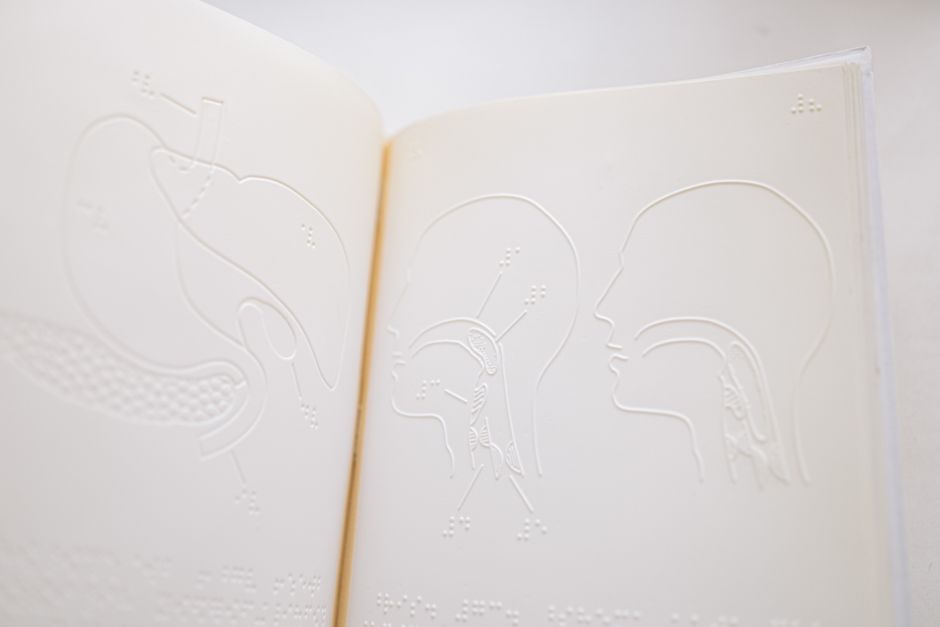
Learning to read braille as an adult can feel intimidating, but it is a practical skill that most people can master with daily practice. The process involves memorizing the braille cell, which is a six-dot grid that represents letters, numbers, and punctuation. Unlike sight-reading, braille relies on touch, so your brain must build new pathways between your fingertips and your language centers. Beginners typically start by learning the alphabet, then move to contractions, which are shorthand symbols that make reading faster and more efficient.
What Is Braille and How Does It Work?
Braille is not a language. It is a tactile code that represents the letters and symbols of written language. The system was invented by Louis Braille in the 1820s and has remained largely unchanged because it works well.
Each braille character, called a cell, is made up of six dots arranged in two vertical columns of three. The dots are numbered 1 through 6, starting from the top left. Different combinations of raised dots create different letters. For example, the letter A is just dot 1. The letter B is dots 1 and 2. The letter C is dots 1 and 4.
When you read braille, your index fingers do the work. You move them lightly across the line of raised dots, feeling the patterns. Most readers use both index fingers, with one finger starting on the left side of the line and the other meeting it in the middle. This technique takes time to develop, but it doubles your reading speed once mastered.
How To Learn To Read Braille For Beginners: Start With the Alphabet
The first step is memorizing the ten letters that use only the top four dots of the cell. These letters are A through J. Once you know these, you can learn the next ten letters, K through T, which add dot 3 to the previous patterns. The final six letters, U through Z, add both dots 3 and 6.
This logical structure is your advantage. You are not memorizing random shapes. You are learning a system where each new letter builds on the one before it. Spend one to two weeks on the alphabet before moving on. Use flashcards, label items around your home, or write notes to yourself in braille.
Practice reading with your fingers, not your eyes. This is the hardest habit to break. New learners often want to look at the dots as they feel them. Resist this urge. Close your eyes or use a blindfold if necessary. Your sense of touch will sharpen with repetition.
What Equipment Do You Need to Start?
You do not need expensive technology to begin. A slate and stylus is the traditional tool for writing braille by hand. It is a small metal or plastic board with a grid of cells. You place paper inside, then press the stylus into the dots from right to left. When you flip the paper over, the dots face up and read left to right.
A braille writer, sometimes called a Perkins Brailler, is a machine with six keys, one for each dot. Pressing combinations of keys embosses dots onto paper. These machines are sturdy and last for decades, but they are heavier and more expensive than a slate.
For reading practice, you can order braille books from libraries or purchase braille labels and flashcards online. Many organizations for the blind offer free introductory materials. Some smartphone apps also provide braille practice with haptic feedback, though nothing replaces physical paper for developing real tactile sensitivity.





How Long Does It Take To Learn Braille?
Most adults can learn the alphabet and basic reading in about two to three months of daily practice. Reading fluency, however, takes longer. Expect six months to a year before you can read at a comfortable pace without stopping to identify every letter.
Your age and previous experience matter less than your consistency. Practicing for 20 minutes every day produces better results than practicing for two hours once a week. The brain needs frequent, repeated exposure to build the tactile recognition pathways.
People who lose their vision later in life often learn more slowly than children do. This is not a failure. Adult brains are more efficient at some tasks but less plastic for others. Be patient with yourself and set small, achievable goals. Reading one line of braille without hesitation is a victory in the early weeks.
What Are Braille Contractions and When Should You Learn Them?
Contractions are shortened forms of common words or letter combinations. For example, the word “and” has its own single-cell symbol, and the word “the” does too. There are about 180 standard contractions in English braille, and they are divided into three grades.
Grade 1 braille uses no contractions. Every letter is written out in full. This is what beginners learn first. Grade 2 braille uses contractions and is the standard for published books and most everyday reading. Grade 3 is a shorthand system used for personal notes, and it is not standardized.
Do not rush into contractions. Master Grade 1 reading first. When you can read simple sentences without sounding out every letter, begin learning the most common contractions. Words like “and,” “for,” “of,” “the,” and “with” appear so frequently that memorizing their contractions immediately speeds up your reading.
What Is the Best Way To Practice Reading Braille?
Consistent, varied practice is the only method that works. Reading the same material repeatedly builds confidence, but reading new material builds skill. Start with children’s books, which use simple vocabulary and short sentences. Move to magazines and newspapers as your speed improves.
Label physical objects in your home with braille. Put a label on the salt shaker, the coffee canister, and the light switch. This integrates braille into your daily life and forces you to read without the pressure of sitting down to study.
Read aloud. Speaking the words as you feel them reinforces the connection between the tactile pattern and the spoken language. It also slows you down, which is useful when you are still learning. Speed will come later.
Consider joining a braille reading group, either in person or online. Reading with others provides accountability and exposes you to materials you might not choose on your own. Some learners find that teaching someone else what they have learned accelerates their own mastery.
Common Mistakes New Braille Readers Make
The most common mistake is using too much pressure. You do not need to press hard. Light, gliding touches are more sensitive and faster. Pressing down flattens your fingertip and reduces your ability to feel the dots clearly.
Another mistake is reading with only one finger. Both index fingers should work together, scanning the line in opposite directions. This takes practice, but it is the technique used by fast, fluent readers.
Many beginners also try to memorize the position of words on the page instead of reading each cell. This works for short passages but fails on longer texts. Always read the dots, not the layout.
Finally, do not skip the contractions. Some learners avoid them because they seem complicated. But contractions are not optional if you want to read real books. Published braille is almost always Grade 2, so avoiding contractions means limiting yourself to specially prepared materials.
Is Braille Still Relevant in the Digital Age?
Yes. Audio books and screen readers are useful tools, but they do not replace literacy. Research consistently shows that braille readers have higher employment rates and greater independence than those who rely only on audio. Reading braille is literacy in the same way that reading print is literacy.
Braille is also becoming more accessible through technology. Refreshable braille displays connect to computers and phones, allowing you to read digital text in braille. These devices are expensive, but prices have dropped in recent years. For beginners, however, physical paper remains the best learning tool because it is inexpensive and does not break.
Learning braille is not about rejecting technology. It is about having another option. A screen reader can tell you what a sign says, but only braille lets you read it yourself, at your own pace, in your own mind.
Frequently Asked Questions
Can adults learn to read braille?
Yes. Adults can learn braille at any age, though it typically takes longer than it does for children. Daily practice for 20 to 30 minutes is more effective than longer, less frequent sessions.
How long does it take to memorize the braille alphabet?
Most beginners memorize the alphabet within two to four weeks of daily practice. The system is logical, with letters building on previous patterns, which makes memorization easier than it first appears.
Do I need to learn Grade 2 braille?
Grade 2 braille is necessary for reading most published books and materials. Learn Grade 1 first, then add common contractions once you can read simple sentences without hesitation.
Is it better to learn braille with a teacher or on my own?
Both approaches work. A teacher provides structured feedback and can correct your hand position and technique. Self-study works well for motivated learners who use flashcards, labeled objects, and consistent daily practice.
