
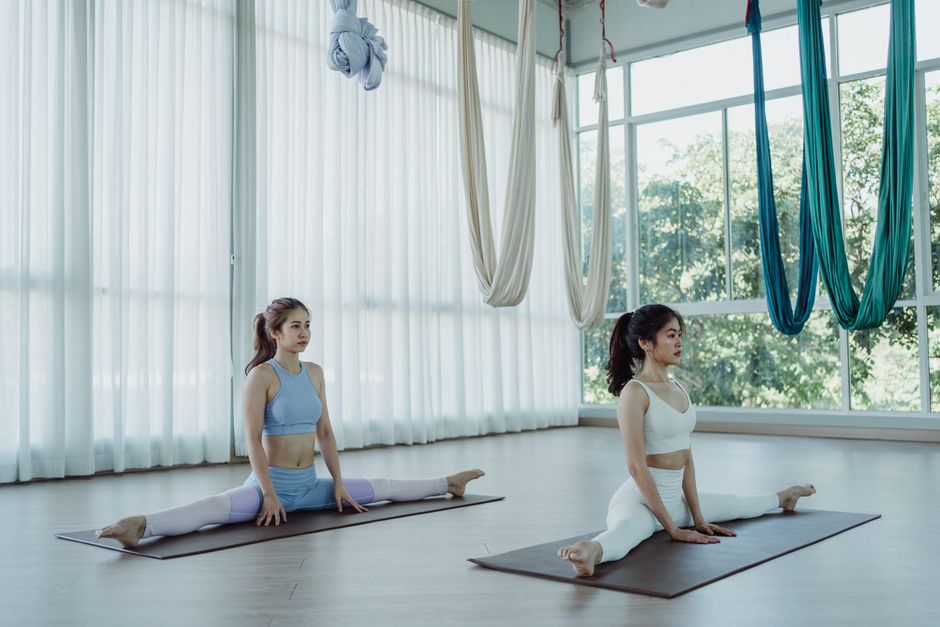
Learning the splits is a gradual process of increasing your flexibility and training your nervous system to tolerate a deep stretch. It requires consistent practice over weeks or months, not force or pain. The most effective approach combines daily stretching for your hamstrings, hip flexors, and inner thighs with strength training in those same extended positions.
How Long Does It Take To Learn The Splits?
There is no fixed timeline. Some people achieve the splits in a few weeks, while others need six months or longer. Your starting flexibility, age, training frequency, and genetics all play a role.
What matters more than the timeline is consistency. Stretching for 10 to 15 minutes daily is more effective than stretching for an hour once a week. Your body adapts to regular, repeated signals, not occasional intense ones.
Progress is rarely linear. You may improve quickly at first, then plateau for weeks. That is normal. Plateaus usually mean your muscles and connective tissue need more time to adapt, not that you are doing something wrong.
What Muscles Actually Limit Your Splits?
Different split positions target different muscle groups. Knowing which muscles are tight helps you stretch the right ones.
For the front split, the limiting muscles are typically the hamstrings on the front leg and the hip flexors on the back leg. The hamstrings run along the back of your thigh, and the hip flexors sit at the front of your hip where your thigh meets your pelvis.
For the middle split, the main limiters are the adductors, commonly called the inner thigh muscles, along with the groin muscles. The middle split requires these muscles to lengthen significantly on both sides at once.
The glutes and calf muscles also contribute, especially in the front split. Tight calves can pull on the hamstrings through the connective tissue network, making the stretch feel harder than it needs to be.
How To Learn The Splits: A Step-By-Step Approach
Start with a proper warm-up. Cold muscles are less elastic and more prone to injury. Spend at least five minutes doing light cardio like jogging in place, jumping jacks, or brisk walking until you feel warm.
Follow the warm-up with dynamic stretching. Leg swings forward and sideways, walking lunges, and hip circles prepare your joints and muscles for deeper work. Dynamic stretching means moving through a range of motion repeatedly, not holding a position.
After dynamic work, move to static stretches. Hold each stretch for 30 to 45 seconds. Research consistently shows that holding a stretch for at least 30 seconds is needed to improve flexibility. Shorter holds may feel good but produce less lasting change.
Perform these core stretches regularly:
- Low lunge with a twist: Opens the hip flexors on the back leg.
- Seated forward fold: Targets the hamstrings.
- Butterfly stretch: Opens the inner thighs and groin.
- Half split: One leg extended forward, the other bent behind you.
- Pigeon pose: Deepens hip and glute flexibility.
End your session with the actual split position, even if you cannot go all the way down. Sit at your edge of discomfort and hold for 30 to 60 seconds. Over time, your range will slowly increase.





Why Strength Training Matters For Splits
Flexibility alone is rarely enough. You also need strength in the stretched position. This is called active flexibility, and it is what allows you to control the split rather than just fall into it.
Your nervous system has a protective reflex that contracts a muscle when it is stretched too far or too fast. This is the stretch reflex. Strength training in extended positions teaches your nervous system that the position is safe, reducing that protective contraction.
Try these strength exercises alongside your stretching:
- Slow negatives: Lower yourself into a split position over 10 seconds, then use your hands to push back up.
- Lifted leg raises: Stand and slowly lift your leg onto a chair or low table, then lower it with control.
- Isometric holds: In a half split position, press your legs into the floor for 10 seconds, then release and sink deeper.
Some research suggests that combining stretching with strengthening produces better flexibility gains than stretching alone. The strength work also protects your joints by building the muscles that support them.
Common Mistakes That Slow Your Progress
Bouncing in the stretch is one of the most common errors. Ballistic stretching, or bouncing, triggers the stretch reflex and can cause micro-tears in muscle tissue. It may feel productive, but it usually sets you back.
Pushing through sharp pain is another mistake. A stretch should feel like strong tension or mild discomfort. Sharp pain, especially in the groin or hip, is a warning sign. The hip joint has limited range of motion, and forcing past it can strain the ligaments or labrum.
Neglecting one side is also common. Most people have one side that is tighter. Always stretch both sides equally, even if one side is easier. Imbalances can lead to poor posture and increased injury risk.
Skipping rest days is a less obvious mistake. Muscle tissue adapts during recovery, not during the stretch itself. Stretching daily is fine, but if you feel excessive soreness, take a day off. Your muscles need time to rebuild.
How To Tell If You Are Making Progress
Use measurable markers instead of guessing. Take a photo of your split attempt every two weeks from the same angle. Photos reveal small changes you might not notice day to day.
You can also measure the distance from your hips to the floor. Sit in a split position with your hands on the floor and have someone measure the gap. A decreasing gap means real progress, even if it is only a centimeter at a time.
Another sign of progress is how the stretch feels. The same position that felt intense last month should feel more manageable now. This means your nervous system is adapting, which is an important part of flexibility.
Keep a simple log of your sessions. Note the date, how deep you went, and how the stretch felt. Reviewing the log after a few weeks often reveals progress you did not notice while it was happening.
Is The Splits Safe For Everyone?
Most healthy adults can work toward the splits safely with gradual training. However, some people should be cautious or avoid the position entirely.
If you have a history of hip injuries, groin strains, or lower back problems, consult a physical therapist before starting. The splits place significant stress on the hip joint and lumbar spine. A professional can assess whether the position is appropriate for your specific situation.
Pregnant women should avoid deep stretching that was not part of their routine before pregnancy. The hormone relaxin increases joint laxity during pregnancy, which can make it easier to overstretch and injure yourself.
Older adults can learn the splits, but progress may be slower. Tendons and connective tissue become less elastic with age, and the risk of injury increases. Starting slowly and prioritizing strength work becomes even more important.
If you experience persistent pain in the groin, hip, or lower back during your training, stop and seek medical advice. A muscle strain usually heals with rest, but a labral tear or ligament injury requires proper diagnosis and treatment.
Frequently Asked Questions
How many minutes a day should I stretch for the splits?
Stretch for 10 to 15 minutes daily for best results. Consistency matters more than duration, and daily short sessions beat weekly long ones.
Can I learn the splits if I am not naturally flexible?
Yes, most people can improve significantly with consistent training. Natural flexibility helps, but regular stretching and strength work produce real gains over time.
Should the splits hurt?
You should feel strong tension, not sharp pain. Sharp pain, especially in the groin or hip, is a sign to stop and reassess your approach.
How often should I practice the splits?
Practice five to seven days per week if you are not overly sore. Take a rest day if you feel excessive soreness or joint pain.
