
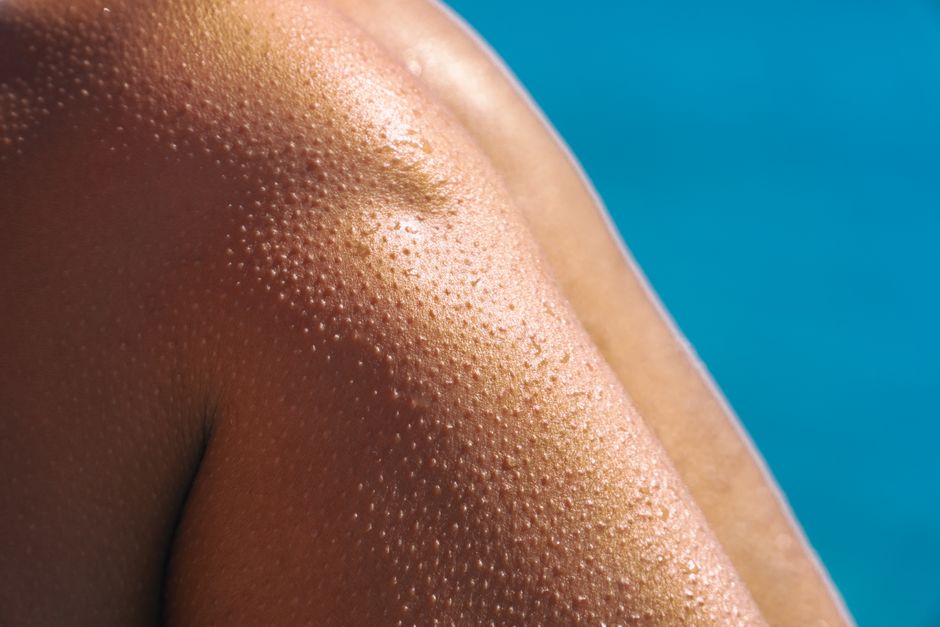
Getting tanning spray off your skin is not about harsh scrubbing. It is about breaking down the DHA, the color agent in self-tanner, which sits on the top layer of your skin. The fastest way is to use an oil-based remover, because oil dissolves the DHA bond. If you do not have a commercial remover, a mix of baby oil and baking soda works well. For stained palms, a little toothpaste or rubbing alcohol can lift the color quickly.
Why Is Tanning Spray So Hard To Remove?
Self-tanner does not stain your skin the way paint does. The active ingredient, dihydroxyacetone (DHA), reacts with amino acids in the dead skin cells on the surface. This reaction creates a brown pigment called melanoidin. That pigment is not deep in your skin. It sits on the outermost layer, the stratum corneum.
Because it is bound to dead skin cells, the color fades as those cells naturally shed. That process takes about five to seven days. To remove it faster, you have to either dissolve the pigment or speed up the shedding of those dead cells.
Water alone will not do it. DHA is not water-soluble once it has reacted with the skin. Soap and water will only remove the surface oil, not the color. You need an ingredient that can break down the melanoidin or gently exfoliate the layer holding it.
What Is The Fastest Way To Remove Tanning Spray?
The fastest method is a combination of oil and physical exfoliation. Oil breaks down the DHA pigment, and the exfoliation lifts the dead skin cells that hold the color. You can do this in about five minutes.
Here is the most effective home method:
- Apply baby oil, coconut oil, or olive oil generously to the tanned area.
- Let it sit for two to three minutes. The oil needs time to penetrate and break down the pigment.
- Add a handful of baking soda to create a paste.
- Gently rub the paste in circular motions for one to two minutes.
- Rinse with warm water and wash with a mild soap.
Baking soda is a mild abrasive. It is not harsh enough to damage healthy skin, but it is effective at lifting the dead cells that hold the color. If you have sensitive skin, use a soft washcloth instead of a scrub mitt.
Commercial tan removers work on the same principle. Most contain oils, citric acid, or glycolic acid. They are formulated to break the DHA bond without irritating the skin. If you tan often, a dedicated remover is worth the cost because it is less drying than home remedies.
How To Get Tanning Spray Off Your Hands And Palms
Palms are the most common problem area. The skin on your palms is thicker and absorbs more product. The color also tends to settle into the creases, making it look dirty rather than tanned.
For stained palms, rubbing alcohol is the fastest fix. Soak a cotton ball with isopropyl alcohol and rub it over the palms. The alcohol dissolves the DHA quickly. Wash your hands with soap afterward to prevent dryness.
Toothpaste is a gentler alternative. White toothpaste, not gel, contains mild abrasives and baking soda. Rub a pea-sized amount into the palms for one minute, then rinse. This works well for light stains but may take two applications for darker ones.
Lemon juice mixed with sugar is another option. The citric acid breaks down the pigment, and the sugar acts as an exfoliant. This can be irritating if you have cuts or dry skin, so use it only on the palms.
To prevent palm staining in the future, wash your hands immediately after applying tanning spray. Use a small amount of soap and pay attention to the areas between your fingers and around your nails.



How To Remove Tanning Spray From Your Face
Facial skin is thinner and more sensitive than the rest of your body. Harsh scrubs and rubbing alcohol are not appropriate here. They can strip the skin barrier and cause redness or peeling.
The safest facial remover is a gentle oil cleanser. Massage it into the skin for one to two minutes, then rinse with warm water. Follow with your regular facial cleanser to remove any oily residue. This method is effective because the oil breaks down the DHA without the need for physical scrubbing.
If you have a stubborn patch, use a soft washcloth with a gentle cream cleanser. Rub in small circles for about 30 seconds. Do not press hard. The goal is to lift the dead cells, not to scrub the skin raw.
For the hairline and eyebrows, use a cotton swab dipped in micellar water. This removes the color precisely without affecting the surrounding skin. Avoid getting remover in your eyes. If that happens, rinse with plain water immediately.
After removing the tan, apply a moisturizer. Oil-based removers and exfoliation both strip natural oils from the skin. A fragrance-free moisturizer restores the barrier and prevents flaking.
How To Fix A Patchy Or Uneven Tan
Patchiness happens when tanner is applied unevenly or when some areas shed faster than others. The fix depends on how bad the patchiness is.
For minor patchiness, exfoliate the darker areas only. Use a gentle body scrub in the shower, focusing on the patches that are too dark. This evens out the color without removing the entire tan. Moisturize afterward, since hydrated skin holds tanner more evenly.
For major patchiness, remove the tan completely and start over. Trying to layer more tanner over a blotchy base will make it worse. The new layer will stick to the lighter patches and slide off the darker ones, creating more unevenness.
If the patchiness is on your legs, dry skin is often the cause. DHA binds unevenly to dry patches. Exfoliate and moisturize for two to three days before reapplying tanner. This gives your skin time to recover and creates a smooth base.
How To Remove Tanning Spray From Clothes And Sheets
Tanning spray can transfer to fabric while it is still developing. The color is not permanent on fabric, but it can be stubborn if it sets.
For fresh stains, rinse the fabric with cold water immediately. Then apply a small amount of dish soap directly to the stain and rub gently. Wash as usual. Cold water is important because hot water sets the stain.
For dried stains, pre-treat with a mixture of white vinegar and water. Soak the stained area for 15 minutes, then wash with your regular detergent. This usually lifts the color without damaging the fabric.
Bleach works on white fabrics but should be tested first. DHA can react with bleach in unpredictable ways. Test on an inconspicuous area before applying it to the stain.
To prevent transfer, wait until the tanner is completely dry before getting dressed. This usually takes five to ten minutes. Wearing loose clothing for the first hour also helps, since tight fabrics rub against the skin and pick up the color.
Common Mistakes That Make Removal Harder
Using hot water is a common error. Hot water opens the pores and can push the pigment deeper into the skin. Warm water is fine, but hot water makes removal take longer.
Scrubbing too hard is another mistake. Aggressive scrubbing irritates the skin and causes micro-tears. The irritation can lead to hyperpigmentation, which is darker than the tan you are trying to remove. Gentle pressure is more effective because it lifts the dead cells without damaging the living ones underneath.
Skipping moisturizer after removal is also a problem. Dry skin holds onto the pigment longer. If you remove the tan and do not moisturize, the remaining color will look patchy as the skin sheds unevenly.
One more mistake is trying to remove the tan with makeup remover wipes. Most wipes are not oily enough to break down DHA. They will smear the color around and make the patchiness worse.
How To Make Your Tan Last Longer Before Removal
If you want to keep your tan instead of removing it, the key is hydration. DHA fades as dead skin cells shed. Moisturized skin sheds slower, so the tan lasts longer.
Apply a fragrance-free moisturizer twice a day. Fragrances often contain alcohol, which dries the skin and speeds up fading. Look for moisturizers with ceramides or hyaluronic acid, which hold water in the skin.
Avoid long hot showers. Heat and steam accelerate cell shedding. Keep showers short and lukewarm, and pat your skin dry instead of rubbing it with a towel.
Chlorine and salt water both break down DHA faster. If you swim, apply a water-resistant sunscreen over the tanned areas. This creates a barrier between the water and the tan.
Exfoliating before you apply tanner is the best prevention. Removing dead skin cells creates a smooth, even base. The tanner will last longer and fade more evenly because it is not sitting on uneven layers of dead skin.
Frequently Asked Questions
Does lemon juice remove tanning spray?
Yes, lemon juice can help remove tanning spray because the citric acid breaks down the DHA pigment. Mix it with sugar or baking soda to add gentle exfoliation, but avoid it on sensitive skin or open cuts.
How long does it take for tanning spray to fade naturally?
Tanning spray naturally fades in five to seven days as your skin sheds dead cells. Exfoliating and using oil-based removers speeds up the process significantly.
Can I use makeup remover to get tanning spray off?
Most makeup removers are not effective because they lack the oil content needed to break down DHA. An oil-based cleanser or dedicated tan remover works much better for removing self-tanner.
Will rubbing alcohol damage my skin if I use it to remove tan?
Rubbing alcohol is safe for small areas like palms but is too drying for larger body areas or the face. Use it sparingly and wash with soap afterward to prevent excessive dryness.
