
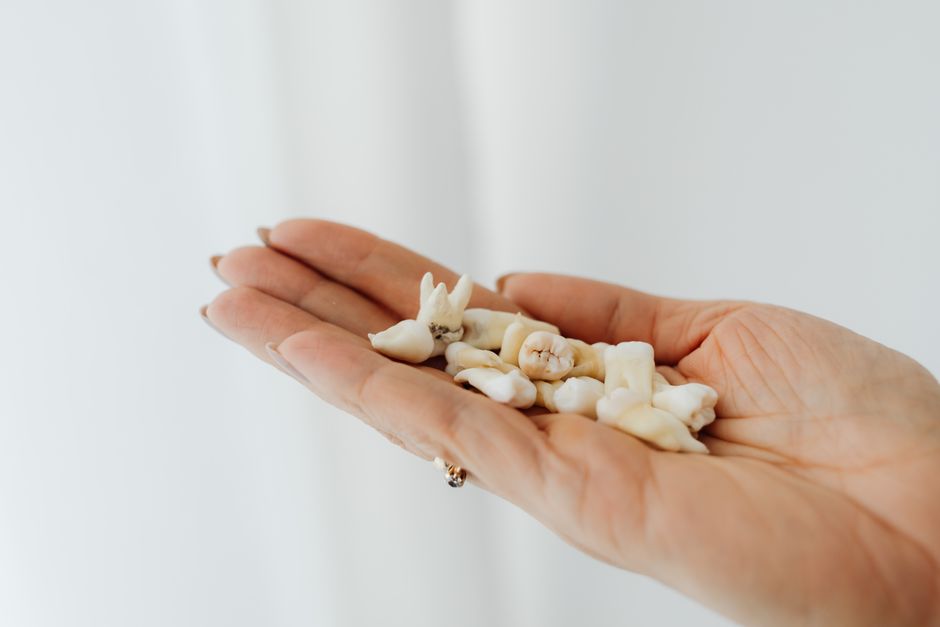
Wisdom teeth usually make themselves known between ages 17 and 25. You may feel pressure or soreness at the very back of the jaw, notice the gum behind your last molar is swollen, or feel a hard bump under the tissue. Some people have no symptoms at all and only find out from a dental X-ray. There is no reliable way to confirm it on your own — a dentist or oral surgeon can see what is happening with an exam and imaging.
The tricky part is that wisdom teeth symptoms overlap with several other dental problems. A sore spot at the back of the mouth could be a wisdom tooth pushing through, an infection, or something else entirely. Knowing what to look for helps you decide how soon to get it checked.
What Are Wisdom Teeth and Why Do They Cause Problems?
Wisdom teeth are the third and final set of molars. They sit at the very back of each side of the upper and lower jaw, and they are the last teeth to develop. Most people have four, but it is normal to have fewer — or none at all.
The trouble is space. The human jaw is often too small to fit a third set of molars comfortably. When a wisdom tooth does not have room to come through normally, dentists call it impacted. It may stay fully buried in the bone, come in at an angle, or break through only partway.
A partially erupted wisdom tooth creates a flap of gum tissue over the back of the tooth. Food and bacteria get trapped under that flap, and the area becomes hard to clean. This is where most wisdom tooth problems start.
What Does It Feel Like When Wisdom Teeth Are Coming In?
A mild, dull ache or pressure at the back of the jaw is the most common sensation. Many people describe it as a feeling of fullness or tightness rather than sharp pain. The gum over the area may feel tender or swollen for a few days at a time.
Normal eruption discomfort tends to come and go. It may flare up for a few days as the tooth moves, then settle down. Symptoms that build steadily and do not ease are a different matter.
Watch for these signs:
- Aching or pressure at the very back of the upper or lower jaw
- Swelling or redness in the gum behind the last molar
- A hard lump you can feel under the gum tissue
- Jaw stiffness or soreness when opening wide
- A bad taste or odor in the back of the mouth
- Swollen lymph nodes under the jaw or in the neck
The last two on that list matter more than the rest. A bad taste or odor combined with swollen glands often points to infection rather than simple eruption. That deserves prompt attention.
How Can You Tell If a Wisdom Tooth Is Impacted?
You usually cannot tell on your own. An impacted tooth may cause no symptoms whatsoever, or it may cause the same vague ache as a tooth that is coming in normally. The only reliable way to know is imaging.
Dentists typically use a panoramic X-ray, which shows all four wisdom teeth at once along with their position in the jaw and their relationship to nearby nerves and other teeth. This is the standard tool for assessing wisdom teeth. A routine bitewing X-ray does not show the full picture.
Impacted wisdom teeth fall into a few broad categories:
- Fully buried — the tooth stays inside the jawbone and never breaks through the gum
- Partially erupted — part of the crown comes through, but gum tissue still covers the rest
- Angled — the tooth leans toward the molar in front of it, away from it, or straight into the bone
Partial eruption is the pattern most often linked to infection and decay, because that gum flap traps debris. Fully buried teeth are often quiet, though they can sometimes form a cyst around the crown. That is uncommon but worth knowing if an X-ray shows one.





When Is It Something More Serious?
Pain that spreads, swelling in the face or jaw, fever, or difficulty opening your mouth or swallowing are not ordinary eruption symptoms. These suggest an infection that has moved beyond the tooth itself.
An infection around a partially erupted wisdom tooth is called pericoronitis. It happens when bacteria build up under the gum flap. Early on it causes localized soreness and a bad taste. If it progresses, the swelling can spread into the cheek, under the jaw, or down the neck.
Swelling that affects your ability to swallow or breathe is a medical emergency. So is swelling that closes your eye or spreads rapidly. In those situations, seek urgent care rather than waiting for a dental appointment.
One clarification worth making: a wisdom tooth pushing on its neighbors does not “crowd” the front teeth in the way many people believe. The idea that wisdom teeth cause front-teeth crowding is widely repeated, but the research on this is mixed and does not support it as a settled fact. Orthodontists have studied this for decades without a clear answer. If your front teeth are shifting, wisdom teeth are an unlikely sole cause.
How Do Dentists Confirm What’s Happening?
An exam plus imaging is the standard approach. The dentist looks at the back of your mouth, checks the gum tissue, and probes for pockets around the tooth where bacteria can collect. Then they take an X-ray to see the tooth’s position and the surrounding bone.
Sometimes a dentist will recommend a cone-beam CT scan. This gives a three-dimensional view and is used mainly when a tooth sits close to a major nerve or when surgery is being planned. It is not routine for every wisdom tooth.
What the dentist is looking for:
- Whether the tooth has room to come through
- Whether the gum flap is trapping food or showing signs of infection
- Whether the tooth is damaging the molar next to it
- Whether decay has started on the wisdom tooth or its neighbor
- How close the roots sit to the nerves in the lower jaw
Do Wisdom Teeth Always Need to Come Out?
No. Not every wisdom tooth needs removal. A tooth that has come through fully, sits in a normal position, is painless, and can be cleaned properly can often stay.
Removal is generally considered when a tooth is impacted, repeatedly infected, causing decay in the neighboring molar, or showing signs of a cyst. The decision is made case by case, and the evidence on removing symptom-free impacted teeth is genuinely debated among clinicians.
What is clear is that the timing of removal matters. Younger patients tend to recover faster and have fewer complications, because the roots are not fully formed and the bone is more forgiving. Some clinicians recommend removing problematic wisdom teeth earlier rather than later for this reason. That is common clinical practice rather than a hard rule backed by uniform trial evidence.
If you are told you need a wisdom tooth out, it is reasonable to ask why — what the X-ray shows, what the risk of leaving it is, and what the risks of surgery are for your specific tooth position. A lower wisdom tooth with roots wrapped near the nerve carries a different risk profile than an upper one. A good clinician will explain that difference.
What Can You Do While You Wait for an Appointment?
Manage discomfort and keep the area clean. Rinse gently with warm salt water, brush carefully at the back of the mouth, and use over-the-counter pain relief as directed on the label if you need it.
Do not ignore worsening symptoms. If you develop facial swelling, fever, or trouble opening your mouth, call your dentist promptly or seek urgent care. Those signs mean an infection is spreading and should not wait.
And if you have no symptoms at all, that does not mean your wisdom teeth are fine. Many impacted teeth cause no trouble until they suddenly do. Routine dental visits with X-rays are how most wisdom tooth problems get caught early — often before they cause any pain.
Frequently Asked Questions
At what age do wisdom teeth usually come in?
Most wisdom teeth emerge between ages 17 and 25, though the range varies widely. Some people never develop them at all, which is normal.
Can you feel a wisdom tooth coming in under the gum?
You may feel pressure or a hard bump under the gum as the tooth moves upward. That sensation alone cannot confirm the tooth’s position — only an X-ray can show that.
How do I know if my wisdom tooth is infected?
A bad taste or odor, swollen glands, and pain that keeps getting worse point toward infection rather than normal eruption. Facial swelling, fever, or trouble swallowing means you should seek urgent care.
Can wisdom teeth come in without any pain?
Yes, and this is common, especially with fully impacted teeth that never break through the gum. That is why routine dental X-rays matter even when nothing hurts.
