
Many parents hear their child complain of aching legs at night and wonder if the pain is real or just a bid for attention. Growing pains are real, but they are not caused by growth. The name is misleading. The discomfort is genuine, and it follows a recognizable pattern that doctors have documented for decades.
What Are Growing Pains Exactly?
Growing pains are a type of musculoskeletal pain that occurs in children, most commonly between the ages of 3 and 12. The pain typically strikes in the late afternoon or evening, and it often wakes a child from sleep. By morning, the child is usually fine and running around with no limp or discomfort.
The pain usually affects both legs, most often in the calves, shins, or behind the knees. It can move from leg to leg. The joints themselves are not swollen, red, or warm. If those signs are present, the problem is something else.
Doctors have used the term for over a century, but the exact cause remains unclear. The leading theory is muscle fatigue from the day’s activity. Children run, jump, and climb constantly. Their muscles may tire in ways that produce nighttime cramping or aching. Another theory points to a lower pain threshold in some children, meaning they feel ordinary muscle discomfort more intensely than others.
Why Is the Name Misleading?
Growth itself does not hurt. Bones grow slowly and steadily. There is no evidence that the rate of bone growth correlates with pain episodes. If growth caused the pain, the discomfort would track with growth spurts, and it does not.
Some research suggests that children with growing pains may have slightly reduced bone strength or flexibility compared to peers, but these findings are not consistent across studies. The research is limited, and no single mechanism has been proven.
The name persists because it is familiar and convenient, not because it is scientifically accurate. Many pediatricians prefer the term “benign nocturnal limb pain of childhood” because it describes what actually happens without implying a cause.
How Can Parents Tell Growing Pains Apart from Something Serious?
This is the question that matters most. Most leg pain in children is harmless, but some causes require medical attention. The pattern of symptoms is the key differentiator.
Growing pains follow a predictable pattern. They occur only in the evening or at night. They affect both legs, usually the muscles rather than the joints. The child has no limp during the day, no fever, no swelling, and no redness. The pain resolves on its own or with simple comfort measures.
Red flags that suggest a more serious problem include pain that persists during the day, pain that wakes a child repeatedly at the same time each night, limping, joint swelling or warmth, fever, weight loss, or pain that follows a specific injury. Pain in a single limb that does not shift is also more concerning.
If any of these signs are present, a doctor’s evaluation is warranted. Blood tests and imaging are not needed for typical growing pains, but they may be ordered if the presentation is unusual.





What Actually Helps When the Pain Hits?
Growing pains resolve on their own, but that does not mean parents should do nothing. Simple comfort measures are effective and safe.
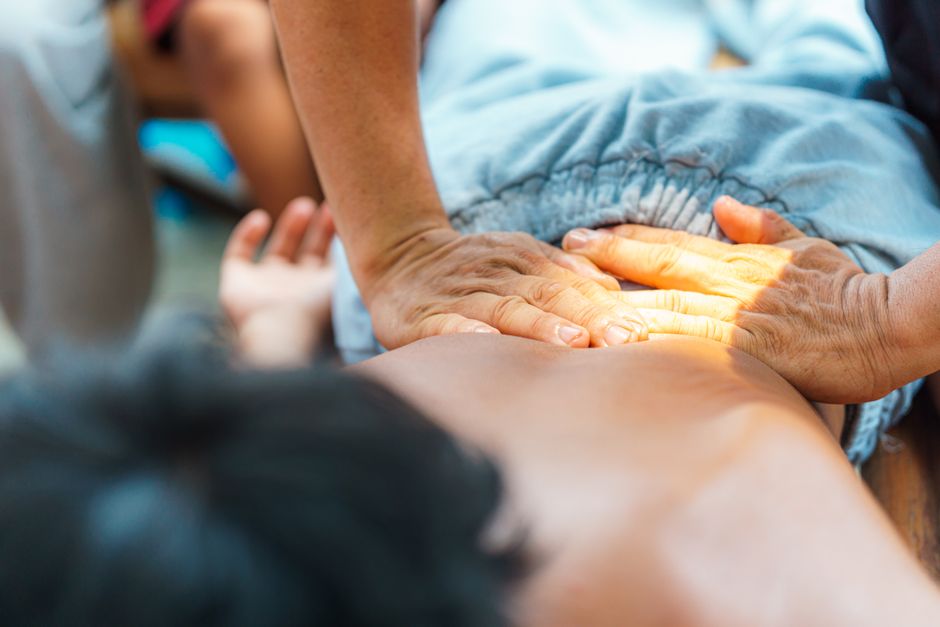
Gentle massage of the affected muscles often provides relief. Stretching the calf and hamstring muscles before bed may reduce the frequency of episodes, though the evidence for this is largely based on clinical experience rather than controlled trials. A warm bath before sleep can relax tired muscles. Over-the-counter children’s acetaminophen or ibuprofen can be used for particularly uncomfortable nights, but only at the dose recommended on the package for the child’s age and weight.
What does not help is applying heat or cold for extended periods, which can damage young skin. What also does not help is dismissing the pain. Reassurance is a legitimate treatment. A child who is told the pain is real and temporary often copes with it better than one who is told it is nothing.
Are Growing Pains Linked to Any Long-Term Problems?
No. Children who experience growing pains do not have a higher risk of developing arthritis, bone disease, or any chronic condition later in life. The condition is self-limiting, and most children outgrow it by their early teens.
Some studies have explored a possible link between growing pains and restless legs syndrome. The two conditions share some features, including nighttime leg discomfort that improves with movement or massage. The evidence is preliminary, and no causal relationship has been established. Most children with growing pains do not go on to develop restless legs syndrome.
Parents should also know that growing pains are not a sign of a nutritional deficiency. Routine vitamin or mineral supplementation has not been shown to prevent or treat the condition. A balanced diet is always good practice, but no specific nutrient has been identified as a cure.
When Should Parents See a Doctor?
A single episode of nighttime leg pain does not require a medical visit. The condition becomes worth discussing with a pediatrician when episodes are frequent, when they disrupt sleep multiple times per week, or when parents are uncertain about the diagnosis.
A doctor can confirm the diagnosis based on the history and a normal physical exam. If the presentation is classic, no tests are needed. If something is off, the doctor will order appropriate investigations. It is always reasonable to ask for an evaluation when a child’s pain does not fit the typical pattern.
Parents should trust their instincts. They see their children every day. If something feels wrong beyond a simple muscle ache, a professional opinion is the right call.
Frequently Asked Questions
Can growing pains affect only one leg?
Growing pains typically affect both legs, but the pain can shift from one leg to the other. Pain that consistently affects only one leg deserves a medical evaluation.
At what age do growing pains stop?
Most children outgrow growing pains by age 12 or early adolescence. Some children stop experiencing them sooner.
Can adults get growing pains?
No. The condition is specific to children. Adults with similar nighttime leg pain may have a different condition, such as restless legs syndrome or cramping, and should discuss it with a doctor.
Do growing pains happen during growth spurts?
No evidence links growing pains to growth spurts. The pain does not track with periods of rapid bone growth, which is why the name is considered a misnomer.
