

Knowing your blood type matters most in emergencies, during pregnancy, and before certain medical procedures. If you have never had a blood test or lab report, there are a few ways to find out without drawing blood. The most reliable method is checking your medical records, followed by a home testing kit. Blood type is inherited, so you can sometimes narrow down your possible types using your parents’ blood types, but this method only gives you a shortlist, not a definitive answer. The only way to know your exact blood type with certainty is through a test that examines your blood directly.
Why Your Blood Type Matters
Your blood type refers to the antigens on the surface of your red blood cells. Antigens are proteins and sugars that trigger an immune response. The two main systems are the ABO system and the Rh system. You can be type A, B, AB, or O, and each type can be Rh positive or Rh negative. That gives eight possible blood types: A+, A-, B+, B-, AB+, AB-, O+, and O-.
These differences matter because your immune system treats foreign blood types as invaders. If you receive incompatible blood during a transfusion, your body can mount a severe reaction that destroys red blood cells. This is why hospitals always verify blood type before transfusions. During pregnancy, an Rh-negative mother carrying an Rh-positive baby can develop antibodies that affect future pregnancies. Medical staff need to know your type to manage this safely.
For everyday life, your blood type has no proven effect on your personality, diet needs, or athletic performance. Claims that certain blood types require special diets are not supported by clinical research. Your blood type is purely a biological marker for compatibility purposes.
Check Your Medical Records First
Before considering any other method, look at your existing medical records. Blood typing is a routine part of prenatal care, so anyone who has given birth in a hospital likely has their type documented. Surgical patients are also routinely typed before operations. Blood donations are always typed as well. If you have ever donated blood, your donor card or the blood bank’s records will list your type.
You can access these records through patient portals at hospitals and clinics. If you do not have portal access, contact the hospital’s medical records department directly. Blood banks can also provide your type if you have donated. Many people discover their blood type this way without any new testing.
If you have had blood work done for any reason, the lab report may include blood type. It is not always included in standard panels, but it is worth checking. Ask your primary care provider to review your chart for any previous typing.
Using a Home Blood Typing Kit
Home blood typing kits are available at pharmacies and online. These kits contain small cards with antibodies that react to your blood. You prick your finger, place a drop of blood on each section, and observe whether clumping occurs. Clumping indicates the presence of the corresponding antigen.
These kits are generally accurate when used correctly. However, they require careful technique. The blood sample must be large enough, and the reactions must be read within the specified time frame. Incorrect readings are more likely if you are rushed or the lighting is poor. Some kits test only the ABO group, while others include the Rh factor. Check the package to confirm what you are getting.
A home kit gives you a direct result, which is more definitive than guessing from family history. Still, errors can happen. If your result matters for a medical procedure, a laboratory test remains the gold standard. Home kits are best for personal knowledge, not for clinical decisions.




What Your Parents’ Blood Types Tell You
Blood type inheritance follows predictable genetic rules. You receive one gene from each parent. The A and B genes are co-dominant, meaning both can express together. The O gene is recessive, so you only have type O if you inherit two O genes.
If both parents are type O, you must be type O. If one parent is type AB and the other is type O, you can be type A or type B, but never AB or O. These patterns can eliminate possibilities, but they rarely give you a single answer. For example, if both parents are type A, you could be A or O. You cannot determine which one without a test.
The Rh factor follows a similar inheritance pattern. Rh positive is dominant. Two Rh-negative parents will always have Rh-negative children. If even one parent is Rh positive, the child could be positive or negative depending on the parent’s genetic makeup.
This method is useful for narrowing down your possible types, but it can never confirm your exact type. Unless your parents’ types point to only one possibility, you are left with a list of candidates. Even when only one type is possible, a direct test is the only way to be certain.
Blood Donation Centers Offer Free Typing
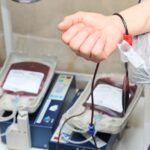
Donating blood is one of the most reliable ways to learn your blood type at no cost. Every donation is typed and screened. After your first donation, the blood bank will typically provide your type on your donor card or through their online portal. This service is free, and your donation can save lives.
Blood donation centers follow strict protocols for typing. Their results are reliable and verified. The process also includes health screening, so not everyone is eligible to donate. If you are ineligible due to health conditions, travel history, or medication use, this route will not work for you.
Donating simply to learn your blood type is a reasonable approach if you are healthy and meet the eligibility criteria. It provides a clinical-grade result without the cost of a laboratory test.
Can You Tell Blood Type From Physical Signs?
No physical sign reliably indicates blood type. Some online sources claim that certain body features correlate with blood type, but these claims have no scientific basis. Your blood type is not visible in your skin, hair, eyes, or any other outward characteristic. There are no symptoms of having a particular blood type because blood type is not a condition; it is a normal biological variation.
Some people believe that blood type influences dietary needs or disease risk. Research on these associations is limited and mixed. No clinical guideline recommends changing your diet or lifestyle based on blood type. If a website claims to determine your blood type from your appearance or personality, treat that claim as false.
The Only Definitive Method Is a Laboratory Test
Every method described above has limits. Medical records only help if you have been tested before. Home kits are accurate but require careful use. Parental blood types only narrow down possibilities. Blood donation is reliable but not available to everyone.
If you need to know your blood type for a medical reason, ask your doctor to order a blood typing test. This is a simple blood draw sent to a laboratory. The lab uses standardized reagents and procedures, and the result is documented in your medical record. This is the only method that provides a complete, verified answer.
For personal curiosity, a home kit or a blood donation is sufficient. For anything that affects medical care, rely on a laboratory result.
Frequently Asked Questions
Can I determine my blood type from my parents’ blood types?
You can narrow down your possible blood types, but you cannot always determine the exact type. If both parents are type O, you will be type O, but most parent combinations leave more than one possibility.
Are home blood typing kits accurate?
Home kits are generally accurate when instructions are followed precisely. They require a proper blood sample and careful reading of reactions, so errors are possible with rushed or poor technique.
Is there a free way to find out my blood type?
Donating blood at a blood bank provides free, reliable typing. You can also check your medical records if you have had prior blood work, surgery, or prenatal care.
Does my blood type affect my diet or health?
No clinical evidence supports blood type-specific diets or lifestyle changes. Blood type matters only for blood transfusions and certain pregnancy situations.
