
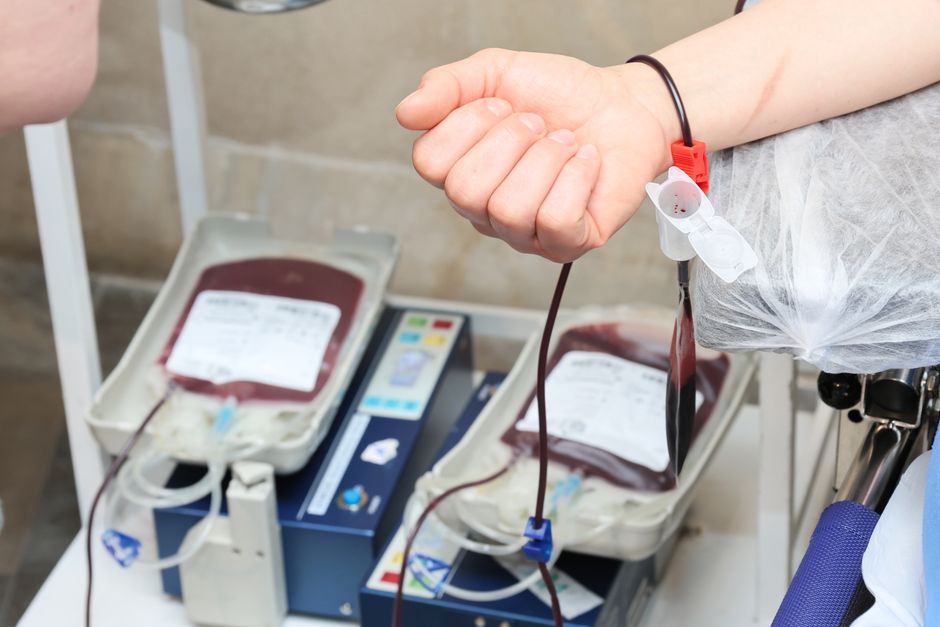
If your blood type is written as A negative, B negative, AB negative, or O negative, you are Rhesus negative. The “negative” refers to the Rhesus (Rh) factor — a protein found on the surface of red blood cells. If you have that protein, you are Rh positive. If you do not, you are Rh negative.
So “Rhesus negative” is not a blood type on its own. It is one half of your blood type. The other half is your ABO group (A, B, AB, or O) plus a positive or negative Rh status. Around 15% of people in the United States are Rh negative, though the exact share varies by ancestry.
What Does the Rhesus Factor Actually Mean?
The Rhesus factor is a protein called the D antigen. It sits on the outer surface of red blood cells in people who are Rh positive. Your immune system uses antigens like this as ID tags. If your body sees a D antigen it does not recognize as its own, it can build antibodies against it.
This matters most during pregnancy and blood transfusion. Your Rh status is inherited. You get it from your parents the same way you get eye color or height. Being Rh negative is not a disorder and it does not mean anything is wrong with your blood. It is simply a normal genetic variation.
The Rh system is more complicated than just positive or negative. There are actually dozens of Rh antigens, but the D antigen is the one that matters most for clinical decisions. That is why standard blood typing focuses on whether D is present or absent.
What Type Of Blood Is Rhesus Negative?
Rhesus negative describes any of the four main ABO blood types when the D antigen is absent. That gives you four possible Rh negative blood types:
- A negative (A−) — A antigens present, D antigen absent
- B negative (B−) — B antigens present, D antigen absent
- AB negative (AB−) — both A and B antigens present, D antigen absent
- O negative (O−) — neither A nor B antigens present, D antigen absent
Each of these is a distinct blood type. They are not interchangeable for transfusion purposes. The ABO group and the Rh status together determine who can safely receive your blood and whose blood you can safely receive.
O negative blood is often called the universal donor type for red blood cells. That is because O negative red cells carry no A, B, or D antigens that could trigger a reaction in a recipient. This is why O negative blood is used in emergencies when there is no time to match a patient’s exact type. It is worth noting that “universal donor” applies specifically to red blood cells — for plasma, the situation is reversed, and AB types are the preferred donors.
How Common Is Each Rhesus Negative Blood Type?
Rh negative status is far less common than Rh positive. The frequency also differs significantly by population. People of European descent are more likely to be Rh negative than people of African, Asian, or Indigenous American descent.
Among Rh negative people in the United States, the distribution roughly follows the same pattern as the general ABO distribution, but with lower overall numbers. O negative is the most common Rh negative type, followed by A negative, then B negative, and AB negative is the rarest of all.
AB negative is often cited as the rarest blood type overall, affecting a very small fraction of the population. Exact percentages vary by source and by the population studied, so it is more accurate to say AB negative is rare rather than to quote a single universal figure.





Why Does Rh Status Matter During Pregnancy?
Rh status matters during pregnancy because of a condition called Rh incompatibility. This happens when an Rh negative mother carries an Rh positive baby. The baby’s Rh positive blood cells can cross into the mother’s bloodstream, often during delivery or other events.
When this happens, the mother’s immune system may treat the D antigen as foreign and begin making antibodies against it. These antibodies usually do not harm a first pregnancy, because the exposure typically occurs near delivery. The concern is with later pregnancies. If the mother becomes sensitized, her antibodies can attack the red blood cells of a subsequent Rh positive baby.
This can lead to hemolytic disease of the newborn — a serious condition in which the baby’s red blood cells are destroyed faster than the body can replace them. Modern medicine prevents most cases through a treatment called Rh immune globulin, often known by the brand name RhoGAM. It is given to Rh negative mothers at specific points during pregnancy and after delivery.
Rh immune globulin works by blocking the mother’s immune system from reacting to the baby’s Rh positive cells before sensitization occurs. Because of this preventive treatment, severe Rh disease has become uncommon in countries with routine prenatal care. This is one of the clearest examples of how understanding blood types has directly saved lives.
How Does Rh Status Affect Blood Transfusions?
Rh status is critical for safe blood transfusions. If an Rh negative person receives Rh positive blood, their immune system may produce antibodies against the D antigen. This first exposure might cause no obvious problem, but it primes the immune system for a serious reaction if Rh positive blood is given again.
For this reason, Rh negative patients are generally given Rh negative blood whenever possible. The exception is emergency situations where O negative blood is used because the patient’s exact type is unknown.
Rh positive patients, by contrast, can usually receive either Rh positive or Rh negative blood. Because they already carry the D antigen, receiving more of it does not trigger the same immune response.
| Recipient | Can typically receive |
|---|---|
| Rh negative | Rh negative blood (Rh positive only in specific circumstances) |
| Rh positive | Both Rh positive and Rh negative blood |
This is a simplified view. In practice, ABO matching and crossmatching are also required, and clinicians follow detailed protocols. Blood banks screen and match units carefully to avoid reactions.
Can Rhesus Negative Blood Types Change?
Your blood type does not change. It is set by your genes and stays the same for life. What can change is whether your blood contains certain antibodies. An Rh negative person who has been exposed to Rh positive blood may develop anti-D antibodies that were not there before.
This is why blood banks test not just your ABO and Rh type, but also screen for unexpected antibodies. A person can be Rh negative and still have anti-D antibodies from a past pregnancy or transfusion. That information affects which blood products are safe to give them.
There are rare situations where a person’s blood type appears to change. These are usually due to conditions like certain cancers, bone marrow transplants, or errors in testing. A bone marrow transplant can actually change a person’s blood type because the new marrow produces blood cells with the donor’s type. These cases are uncommon and managed by specialists.
Do Rh Negative People Have Different Health Risks?
For most people, being Rh negative has no effect on day-to-day health. It does not make you more prone to illness or affect how your body functions in ordinary circumstances. The main health implications are the pregnancy and transfusion situations described above.
Some research has explored possible links between Rh status and various conditions, including certain infections and autoimmune diseases. The evidence for most of these associations is limited and inconsistent. It would be inaccurate to say Rh negative people have meaningfully different overall health outcomes outside of pregnancy and transfusion contexts.
One area that has received attention is a possible connection between Rh status and susceptibility to certain infections. Some studies have suggested associations, but results have varied and no strong clinical guidance has emerged from this work. This remains an area of ongoing research rather than an established risk factor.
How Do You Find Out Your Rhesus Status?
A simple blood test tells you your Rh status. It is usually done as part of a routine blood type test, often called an ABO/Rh typing. The test checks for the presence of the D antigen on your red blood cells.
You might have this test done before surgery, during pregnancy, before a transfusion, or when donating blood. Blood donation centers type every unit they collect. If you have ever donated blood, you may be able to find your blood type through the donation center.
Home blood typing kits are available, but their accuracy varies. A laboratory test performed by a healthcare provider is the reliable way to know your type. If your result matters for a medical decision — especially pregnancy — confirm it with a clinical test rather than a home kit.
What Should Rh Negative People Know Before Pregnancy?
Rh negative people should tell their healthcare provider about their blood type early in pregnancy. This lets the provider check the baby’s Rh status and plan for Rh immune globulin if needed.
Rh immune globulin is generally given at specific times, and the schedule is determined by clinical guidelines and the individual situation. It is also given after events that can cause mixing of blood, such as miscarriage, amniocentesis, or abdominal trauma during pregnancy. Following the recommended schedule is important because the treatment only works before sensitization occurs.
If you are already sensitized — meaning you have anti-D antibodies from a previous pregnancy or transfusion — the approach is different and requires specialist care. This is why knowing your Rh status and your antibody status matters before and during pregnancy.
Frequently Asked Questions
Is O negative the same as Rhesus negative?
No. O negative is one specific blood type that is Rhesus negative, but there are other Rh negative types too, including A negative, B negative, and AB negative. Rhesus negative describes the Rh status, not the ABO group.
What blood type is the rarest?
AB negative is widely considered the rarest of the main blood types, though exact frequency varies by population. Some rare subtypes within the Rh system are even less common.
Can two Rh negative parents have an Rh positive child?
It is possible but uncommon. Rh positive is generally dominant, so an Rh negative parent usually passes on an Rh negative gene, but genetics are more complex than a single pair of genes, and exceptions occur.
Does being Rhesus negative affect your health?
For most people, being Rh negative has no effect on everyday health. The main concerns are during pregnancy and blood transfusions, where Rh matching matters.
