
Getting tested for a sexually transmitted disease usually means giving one of three samples: blood, urine, or a swab. Each sample type works best for different infections, and no single test screens for everything. Blood tests look for antibodies or genetic material in your bloodstream. Urine tests catch infections in the urinary tract. Swabs collect cells or fluid directly from the spot where an infection would live, such as the throat, rectum, cervix, or a sore. Your clinician picks the sample types based on which infections you might have been exposed to, your symptoms, and your anatomy.
How Does STD Testing Work Blood Urine Swabs?
Each sample type detects different infections because different germs live in different parts of the body. Blood carries antibodies and sometimes the pathogen itself. Urine passes through the urethra and can carry bacteria or viral DNA from that area. Swabs collect material directly from a surface where an infection is likely to be.
Blood tests are the standard for HIV, syphilis, and hepatitis B and C. These infections circulate in the blood, so a blood sample is the reliable way to find them. Urine testing is the standard for chlamydia and gonorrhea in people without symptoms, though it only detects infections in the urethra or cervix. Swabs are used for chlamydia and gonorrhea at other sites like the throat or rectum, for herpes sores, and for trichomoniasis in some cases.
One important point: a urine test cannot detect HIV, syphilis, or hepatitis. And a blood test cannot reliably detect chlamydia or gonorrhea. This is why a full screening often involves more than one sample type. The idea that one test covers everything is a common myth.
What Can a Blood Test Detect That Urine and Swabs Cannot?
Blood testing is the only reliable way to screen for several serious infections. HIV, syphilis, and hepatitis B and C all have established blood-based tests that are widely used in clinical practice.
For HIV, modern tests look for both antibodies and a viral protein called p24. These combination tests can detect infection earlier than older antibody-only tests. Some labs use nucleic acid tests that detect the virus’s genetic material directly, which shortens the window period further. The window period is the time between exposure and when a test can reliably detect infection. During that window, a person can be infected and contagious but still test negative.
Syphilis testing typically uses two steps. A first test screens for antibodies. If positive, a second test confirms the result. Syphilis antibodies can take weeks to appear after exposure, so timing matters.
Hepatitis B and C tests also rely on blood. They may look for antibodies, viral proteins, or viral genetic material depending on the test and the stage of infection.
Blood tests do not detect chlamydia or gonorrhea well. Those bacteria stay in mucosal surfaces, not the bloodstream, so a blood sample misses them.
When Is a Urine Test the Right Choice?
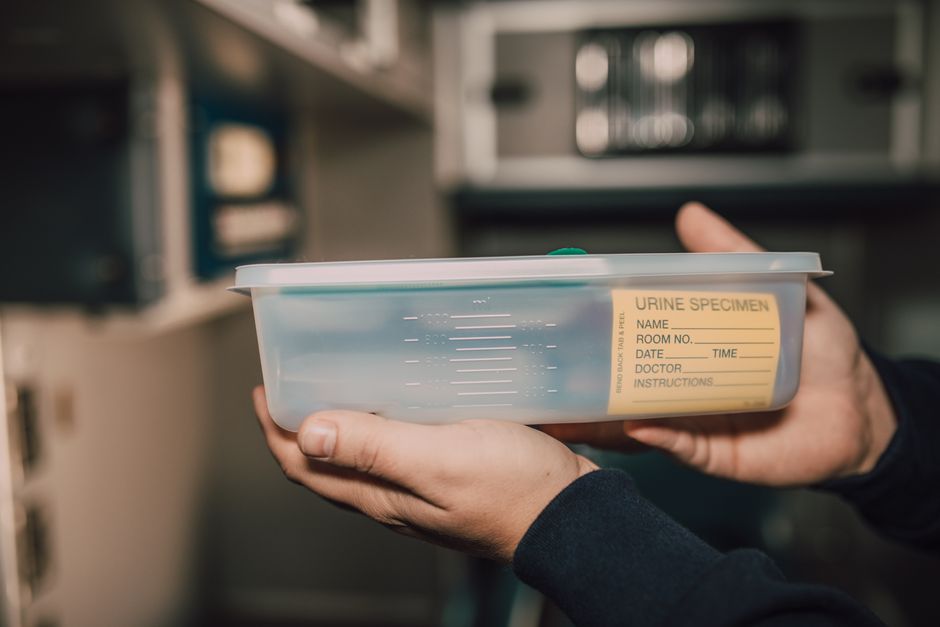
Urine testing is the preferred method for detecting chlamydia and gonorrhea in people who have no symptoms. It is painless, private, and does not require a swab.
For people with a penis, a first-catch urine sample is standard. “First-catch” means the first part of the urine stream, which flushes out bacteria that have collected in the urethra. For people with a vagina, urine testing can detect chlamydia and gonorrhea, but a vaginal swab is often more sensitive. Many clinics offer self-collected vaginal swabs, which are as accurate as clinician-collected swabs for these infections.
Urine testing is not useful for HIV, syphilis, or hepatitis. It also cannot detect infections in the throat or rectum. If you have had receptive anal or oral sex, a urine test alone may miss an infection at those sites.
Trichomoniasis can sometimes be detected in urine, but sensitivity varies. A swab or a specialized test may be needed for a clear answer.





What Do Swab Tests Actually Collect?
A swab is a small tool that collects cells or fluid from a specific body site. The type of swab and the site depend on what the clinician is looking for.
For chlamydia and gonorrhea, swabs can be taken from the cervix, vagina, urethra, throat, or rectum. These swabs collect epithelial cells where the bacteria live. The sample is then tested using nucleic acid amplification, which detects the bacteria’s genetic material. This method is highly sensitive and specific.
For herpes, a swab is taken from an active sore or blister. The sample is tested for herpes simplex virus DNA. Herpes blood tests also exist, but they detect antibodies and cannot tell you when you were infected or whether you have an active outbreak.
For syphilis, a swab from a sore can sometimes detect the bacteria directly, but this is less common than blood testing. Blood tests remain the standard for syphilis screening and diagnosis.
Swab collection can be uncomfortable but is usually quick. Some clinics now offer self-collected swabs for the vagina, throat, and rectum, which many people find easier and more private.
How Accurate Are These Tests, and What Is the Window Period?
Accuracy depends on the infection, the test type, and how long it has been since exposure. Most modern tests for chlamydia, gonorrhea, HIV, and syphilis are highly accurate when used correctly and at the right time.
The window period is the main reason a test can be negative even when infection is present. For HIV, combination antibody/p24 tests can usually detect infection within a few weeks of exposure, but a negative result at that point may need to be confirmed with a follow-up test. Nucleic acid tests shorten the window further. For syphilis, antibodies may take several weeks to appear. For chlamydia and gonorrhea, nucleic acid amplification tests can detect infection within a few days to a couple of weeks after exposure, depending on the site.
No test is perfect. False negatives can happen if you test too soon. False positives can happen but are less common with modern tests. If a result does not match your symptoms or history, your clinician may recommend a repeat or confirmatory test.
This is why some guidelines recommend repeat testing after a known exposure. The exact timing depends on the infection and the test used. Your clinician can tell you when to retest.
What Happens After You Give a Sample?
Once your blood, urine, or swab reaches the lab, it is processed according to the test ordered. Blood samples are usually spun in a centrifuge to separate serum or plasma, which is then tested for antibodies, antigens, or viral genetic material.
Urine samples are tested directly, often using nucleic acid amplification. Swabs are placed in a transport medium and processed the same way.
Results typically come back within a few days. Some rapid tests, like those for HIV or syphilis, can give results in 20 to 30 minutes in a clinic setting. Other tests may take longer if they require culture or specialized processing.
If a result is positive, your clinician will discuss treatment options. Bacterial infections like chlamydia, gonorrhea, and syphilis are treatable with antibiotics. Viral infections like HIV and herpes are manageable with antiviral medication, though they are not curable. Early treatment improves outcomes and reduces transmission.
If a result is negative, that is reassuring but not a guarantee if you tested during the window period. Your clinician may recommend retesting based on your exposure history.
Why the Right Sample Type Matters
Using the wrong sample type can miss an infection. A urine test will not detect HIV. A blood test will not detect chlamydia in the throat. A swab from the cervix will not detect an infection in the rectum.
This is why a thorough sexual health screening often involves multiple sample types. The specific tests you need depend on your anatomy, your sexual practices, and your risk factors. A clinician can help you decide which tests are appropriate.
Some people avoid testing because they are worried about discomfort or privacy. Self-collected swabs and urine tests have made testing easier and more accessible. Many clinics offer confidential testing, and some provide free or low-cost options.
Testing is not a judgment. It is a practical step that protects your health and the health of your partners. Knowing how each sample type works helps you understand what your results mean and what they do not.
Frequently Asked Questions
Can a urine test detect all STDs?
No. Urine testing is only reliable for a few infections, mainly chlamydia and gonorrhea. It cannot detect HIV, syphilis, or hepatitis, which require a blood test.
How long after exposure should I get tested?
Timing depends on the infection. Some tests can detect infection within days, while others may need several weeks. Your clinician can tell you the best time to test based on your exposure.
Are swab tests more accurate than urine tests?
For chlamydia and gonorrhea, swabs from the vagina or rectum are often more sensitive than urine. Urine testing is still accurate for urethral infections in people with a penis.
Can I test for STDs at home?
Yes, some home test kits are available for HIV, syphilis, and other infections. However, the accuracy and reliability vary, and a positive result should be confirmed by a healthcare provider.
