
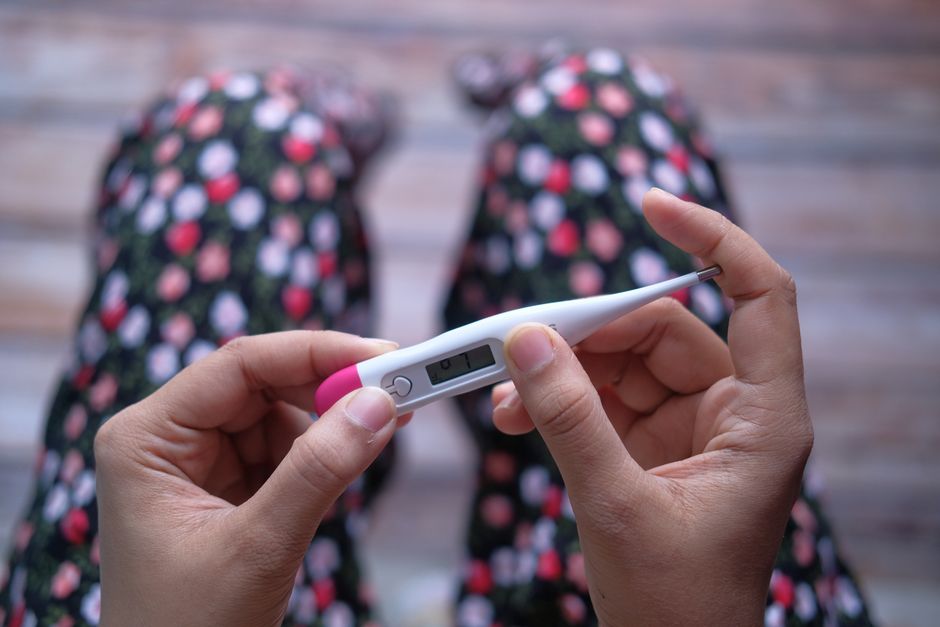
You wake up feeling hot, achy, and your skin is on fire. Your first thought might be to grab a thermometer, but what if you don’t have one? The quickest way to know is by checking two things: how your forehead feels to someone else’s hand and whether you are experiencing chills or body aches. If the back of your hand feels noticeably warmer than someone else’s forehead, and you are shivering despite feeling hot, you likely have a fever. These physical signs are surprisingly reliable indicators when a thermometer is not available.
What Are the Most Reliable Physical Signs of a Fever?
Your body gives clear signals when it is fighting an infection. The most accurate physical sign is the “touch test” done by another person. Research from the University of Michigan found that a caregiver’s hand on the forehead has about a 70% accuracy rate for detecting a fever. This is not perfect, but it is a solid starting point.
Chills and shivering are also strong indicators. When your body temperature rises, your muscles contract to generate heat, making you shake. A study published in the Journal of General Internal Medicine noted that patients who reported feeling feverish along with chills had a 90% chance of having a measured fever. If you are cold when others around you are comfortable, pay attention.
Look for a flushed face. Increased blood flow to the skin causes redness, especially on the cheeks. This is a natural response as your body tries to release heat. Combine this with feeling hot to the touch, and the evidence becomes stronger.
How To Know If You Have A Fever Without A Thermometer Using Touch?
The touch test is simple but has rules. Use the back of your hand, not your palm. The back of your hand is more sensitive to temperature differences. Place it on your own forehead. Then ask someone else to place the back of their hand on your forehead and then on their own. If your forehead feels noticeably hotter than theirs, a fever is likely.
Do not rely on touching your own forehead alone. Your hands may be cold from poor circulation, making your forehead feel hot by comparison. This can fool you. A 2018 study in the journal Pediatrics found that parents using the touch test on their children had a 65% accuracy rate when they also checked for other symptoms. When used alone, accuracy dropped to 50%.
Check the neck and chest too. These areas are less affected by external temperatures than the forehead. If the skin on your chest feels hot and dry to another person’s touch, it adds weight to the fever suspicion. Dry skin is common because fever reduces sweating in its early stages.
How Accurate Are Common Fever Symptoms Like Chills and Sweats?
| Symptom | Accuracy for Fever | What to Watch For |
|---|---|---|
| Chills and shivering | High (around 90% in studies) | Shaking even in a warm room |
| Feeling hot to touch | Moderate (around 70%) | Best checked by another person |
| Sweating | Moderate | Often occurs when fever breaks |
| Headache and body aches | Low to moderate | Common with many illnesses |
Chills are your body’s way of generating heat. When your internal thermostat rises, your muscles contract rapidly. This is why you shiver. Sweating usually signals that the fever is breaking. Your body is trying to cool down. Both are useful, but chills are a stronger early sign.
Headaches and body aches are common with fevers but are not specific. The CDC reports that these symptoms occur with dozens of conditions, from the flu to a common cold. Relying on aches alone will give you many false positives. Combine them with touch and chills for a better picture.




What Does Research on Detecting Fever Without Tools Show?
Several studies have tested non-thermometer methods. A 2019 review in the British Journal of General Practice looked at over 1,500 patients. The researchers found that the combination of feeling feverish, having chills, and being hot to the touch had a sensitivity of 84%. This means it correctly identified fevers in 84 out of 100 people who actually had one.
The same review found that asking a patient “Do you feel feverish?” alone had only 60% accuracy. People often feel warm when their temperature is normal, especially after exercise or in a hot room. This is why multiple signs matter more than any single one.
Some people report that a cold nose or cold extremities can signal a fever. Evidence indicates this is not reliable. The body redirects blood to the core during a fever, which can make hands and feet feel cold, but this also happens in cold environments. It is a weak indicator at best.
Can You Use Heart Rate or Breathing Rate to Detect a Fever?
Yes, but with limits. Your heart rate typically increases by about 8 to 10 beats per minute for every degree Celsius of fever. If you know your resting heart rate, you can take your pulse. A normal resting rate is 60 to 100 beats per minute. If yours jumps to 110 or higher without exercise, a fever could be the cause.
Breathing rate also increases. The American Lung Association notes that a normal adult breathes 12 to 20 times per minute at rest. During a fever, this can rise to 20 to 30 breaths per minute. Count your breaths for 30 seconds and multiply by two. If the number is above 20 and you feel hot, a fever is more likely.
These methods are not foolproof. Anxiety, pain, or dehydration can also raise heart and breathing rates. But when combined with touch and chills, they add useful data. The American Heart Association cautions that heart rate alone should not be used to diagnose a fever, but it can support other signs.
What Are Common Misconceptions About Checking for Fever?
One widespread myth is that feeling cold means you do not have a fever. The opposite is often true. Chills are a primary fever symptom. Your body is cold on the outside because blood is moving inward to protect organs. Do not let a cold sensation fool you.
Another myth is that sweating means the fever is gone. Sweating often means the fever is breaking, but it can also happen while the fever is still present. Your body may sweat to cool down while the infection continues. Always check temperature after sweating to be sure.
Some people believe that a hot forehead always means a fever. This is widely claimed though strong evidence is limited. A hot forehead can result from sun exposure, exercise, or a warm room. Always check the neck or chest too. If only your forehead is hot, consider environmental causes first.
How To Know If You Have A Fever Without A Thermometer in Children?
Children show fevers differently. The American Academy of Pediatrics recommends watching for behavior changes first. A child who is unusually fussy, lethargic, or refuses to eat may have a fever. These signs are often more reliable than touch in young children.
The touch test works for children too, but with lower accuracy. A study in Pediatrics found that parents correctly identified fevers in their children only 60% of the time using touch. Checking the child’s back or stomach is better than the forehead, as these areas are less affected by external heat.
Look for glassy eyes and flushed cheeks. These are common in children with fevers. A child who is shivering but has warm skin is a strong candidate. If you suspect a fever in a child under three months, seek medical care immediately regardless of the signs. Infants this young need professional evaluation.
When Should You Seek Medical Help for a Fever?
Most fevers are harmless and resolve on their own. The CDC advises seeking help if a fever reaches 103°F (39.4°C) or higher in adults. For children, the threshold is 102°F (38.9°C). If you cannot measure the temperature, look for danger signs instead.
- Severe headache that does not improve with rest
- Stiff neck or sensitivity to bright light
- Difficulty breathing or chest pain
- Confusion, drowsiness, or trouble waking up
- Rash that does not fade when pressed
- Signs of dehydration: dry mouth, no urine for 8 hours, dizziness
These symptoms suggest a serious infection like meningitis or sepsis. They require immediate medical attention. If you have a fever lasting more than three days, see a doctor even without these signs. Persistent fever can indicate a bacterial infection that needs treatment.
What To Avoid When Checking for a Fever Without a Thermometer
Do not rely on how you feel emotionally. Anxiety can make you feel hot. Stress raises body temperature slightly, but not to fever levels. If you are worried about being sick, your mind can trick your body into feeling warm. Take a moment to breathe and check physical signs calmly.
Avoid using your lips to check temperature. Some people kiss foreheads to check for fever. Your lips are sensitive, but this method has no research support. It is also unhygienic. Stick to the back of your hand or ask someone else to help.
Do not assume a fever is gone just because you feel better. You can feel improved while your temperature is still elevated. Rest for another 24 hours after symptoms resolve before returning to normal activity. This reduces the chance of relapse or spreading illness to others.
Frequently Asked Questions
Can you have a fever without feeling hot?
Yes, especially in older adults. Some people have a fever but feel cold or normal due to a blunted immune response.
Is a fever of 99°F considered high?
No, 99°F is a normal body temperature variation. A fever is generally defined as 100.4°F (38°C) or higher by the CDC.
How long does a fever usually last with a viral infection?
Most viral fevers last 2 to 3 days. If it persists beyond 3 days, consult a doctor to rule out bacterial infection.
Can stress cause a fever?
Stress can raise body temperature slightly but not to fever levels. True fever requires an immune response or infection.
