
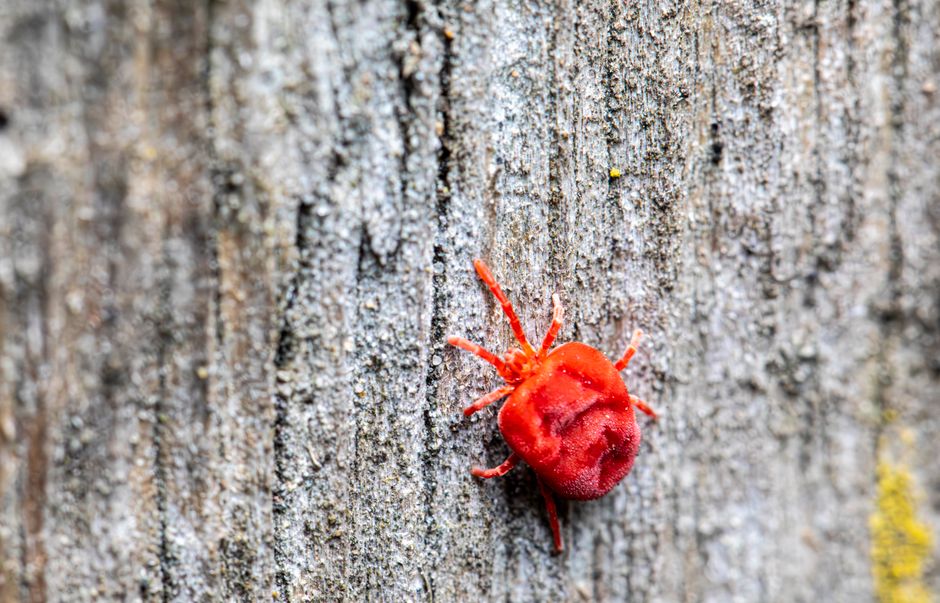
Chiggers are the larval stage of certain mites, and their bites cause intense itching that can last for days. You can keep them away by using a proven repellent on your skin, treating your clothes with permethrin, and making your yard less inviting to them. The most effective strategy combines these three layers of protection before you head outside.
What Are Chiggers and Where Do They Live?
Chiggers are nearly invisible to the naked eye. They are not insects; they are arachnids, related to spiders and ticks. Only the larval stage bites humans. The larvae climb onto grass blades or leaf tips and wait for a host to brush past.
They prefer areas with tall grass, weeds, and thick underbrush. You are most likely to encounter them at the edges of forests, around berry patches, and in overgrown fields. They are most active in the late spring and early summer when the ground temperature is between 60 and 99 degrees Fahrenheit.
Contrary to popular belief, chiggers do not burrow into your skin. They insert a small feeding tube and inject digestive enzymes that break down skin cells. They feed for a few hours before dropping off. The intense itching comes from your body’s allergic reaction to those enzymes, not from the chigger itself.
What Repellent Actually Works Against Chiggers?
DEET is the most studied and reliable repellent for chiggers. Products containing DEET should be applied to exposed skin. Concentrations of 20 to 30 percent are effective for several hours. Lower concentrations need more frequent reapplication.
Picaridin is another effective option. It is less greasy than DEET and does not damage plastics or synthetic fabrics. Some studies suggest picaridin works as well as DEET against chiggers, though DEET has a longer track record of proven efficacy.
Oil of lemon eucalyptus is a plant-based repellent that has shown effectiveness in some research. It works but needs more frequent reapplication than DEET or picaridin. It is not recommended for children under three years old.
Avoid relying on wristbands, ultrasonic devices, or home remedies like essential oil blends. These have not been shown to reliably repel chiggers in controlled studies. Stick with products that list an active ingredient registered with the Environmental Protection Agency.
How To Treat Your Clothes for Chigger Protection
Permethrin-treated clothing is the single best defense against chiggers. Permethrin is a synthetic chemical that kills and repels mites and ticks on contact. It is not a skin repellent; it is applied to fabric only.
You can buy pre-treated clothing or treat your own. To treat your own, buy a 0.5 percent permethrin spray designed for clothing. Lay the garments flat in a well-ventilated area and spray both sides until damp. Allow them to dry completely before wearing. The protection lasts through several washes, usually around six washes or up to six weeks.
Permethrin is highly toxic to cats while wet. Keep treated clothing away from cats until completely dry. Once dry, the risk is significantly reduced, but it is still wise to store treated gear where pets cannot chew on it.
Wear long sleeves and long pants tucked into socks when you are in high-risk areas. This creates a physical barrier. Chiggers climb upward once they get on you, so tucking your shirt into your pants and your pants into your socks stops them from reaching your skin.





How To Keep Chiggers Out of Your Yard
Chiggers thrive in damp, shaded areas with dense vegetation. Your yard maintenance routine can make your property significantly less attractive to them.
Mow your lawn regularly and keep it short. Chiggers prefer tall grass because it offers shade and moisture. A well-maintained lawn with short grass is not an ideal habitat.
Trim back overgrown shrubs, bushes, and tree branches. This increases sunlight penetration and reduces humidity at ground level. Chiggers dry out easily, so they avoid sunny, dry areas.
Remove leaf litter, brush piles, and weeds from around your home. These provide hiding spots and moisture. Pay special attention to the edges of your yard where your lawn meets woods or fields.
Consider creating a barrier of wood chips or gravel between your lawn and any wooded areas. This dry, sunny strip is uninviting to chiggers and makes it harder for them to migrate into your yard.
What About Yard Sprays for Chiggers?
Chemical sprays can reduce chigger populations in your yard, but they are not a permanent solution. Sprays kill the mites present at the time of application but do not prevent new ones from moving in from surrounding areas.
If you choose to spray, look for a product labeled for chigger control. Bifenthrin, permethrin, and carbaryl are active ingredients commonly found in these products. Follow the label instructions exactly. Apply to grass, weeds, and the lower branches of shrubs where chiggers are likely to be.
Focus your spraying on the areas where you actually spend time. Spraying your entire property is wasteful and unnecessary. Treat the perimeter of your lawn, areas around patios and play sets, and the edges of garden beds.
Yard sprays are not a substitute for personal protection. Even with spraying, you should still use a skin repellent and treat your clothes when spending extended time outdoors.
What To Do Immediately After Being Outdoors
Taking a hot shower with soap as soon as you come inside can remove chiggers that have not yet attached or begun feeding. Scrub your skin briskly with a washcloth. Pay attention to areas where clothing fits tightly, such as ankles, waistbands, and armpits.
Wash your clothes in hot, soapy water. This kills any chiggers still on the fabric. If you cannot wash immediately, place the clothes in a sealed plastic bag until you can.
If you develop bites, do not scratch them. Scratching can break the skin and lead to a secondary bacterial infection. Over-the-counter anti-itch creams containing hydrocortisone or calamine lotion can help. Oral antihistamines like diphenhydramine may reduce the itching, especially at night.
The itching from chigger bites can last for one to two weeks. The red bumps may take several days to appear after the bite occurs. If you notice signs of infection, such as increasing redness, warmth, or pus, see a healthcare provider.
Frequently Asked Questions
Does bug spray with DEET work on chiggers?
Yes, DEET is proven to repel chiggers. Apply a product with 20 to 30 percent DEET to exposed skin and reapply according to the label.
Can chiggers live in your bed?
Chiggers cannot complete their life cycle indoors and do not infest homes or beds. The bites you notice after sleeping are likely from something else, such as bed bugs or fleas.
How long do chigger bites last?
The intense itching typically lasts for one to two weeks. The red bumps can take several days to appear after the bite and may leave dark spots that fade over time.
Does vinegar or bleach kill chiggers?
These home remedies are not proven to prevent or treat chigger bites. They can irritate your skin and are not recommended. Stick with registered repellents and standard anti-itch treatments.
