
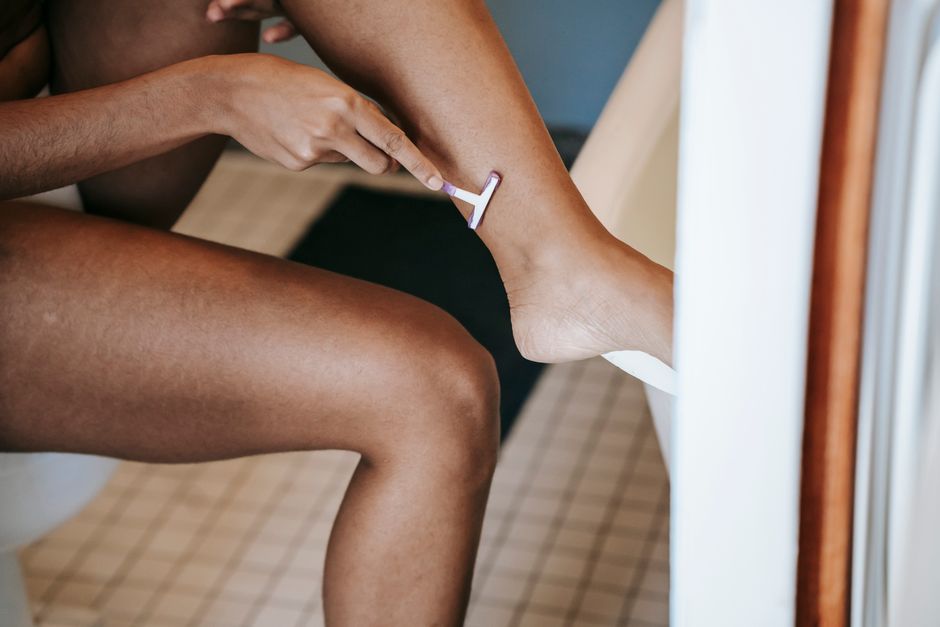
Razor bumps usually start to improve within 2 to 5 days after you stop shaving the irritated area. For most people, visible healing takes about one to two weeks. The bumps fade as the trapped hairs grow out and the inflammation goes down. Some cases clear up faster, and some take longer depending on your skin and how you treat the bumps.
What Exactly Causes Razor Bumps?
Razor bumps are not pimples. They are ingrown hairs. When you shave, the sharp tip of a cut hair curls back and grows into your skin. Your body sees this as an intruder. It sends inflammation to fight it. That red bump is your immune system doing its job.
This happens most often in areas where hair is curly or coarse. The neck, beard, bikini line, and underarms are common spots. Men get them more than women because facial hair is thicker. But anyone who shaves can get razor bumps.
Research shows that shaving too close to the skin is the main cause. When a razor cuts the hair below the skin surface, the hair has nowhere to go but sideways. It then burrows into the skin. This is why electric razors that leave a little stubble often cause fewer bumps than blades.
How Long Does It Take Razor Bumps To Go Away on Average?
For mild cases, razor bumps clear up in 3 to 7 days. The trapped hair works its way out, and the redness fades. For moderate bumps, expect 1 to 3 weeks. The inflammation needs time to settle. Severe cases with infection can last a month or more.
The timeline depends on how deep the hair is trapped. A hair just under the surface comes out faster. A hair that has grown deep into the follicle takes longer. Your body has to push it out like a splinter.
If you keep shaving the area, you reset the clock. Each shave creates new cuts and new opportunities for hairs to grow inward. Stopping shaving for at least two weeks gives your skin a real chance to heal. This is the single most effective thing you can do.
What Makes Razor Bumps Last Longer?
Several factors slow down healing. Shaving over existing bumps is the biggest one. It irritates the skin more and pushes the ingrown hair deeper. Tight collars, helmets, or anything that rubs against the area also prolongs the problem.
Bacterial infection can turn a simple bump into a longer ordeal. If the area gets hot, swollen, or oozes pus, the healing time doubles or triples. Scratching or picking at the bumps introduces more bacteria and damages the skin further.
Some people are simply more prone to razor bumps. If you have naturally curly hair, your hair is more likely to curl back into the skin. Darker skin types also tend to get more post-inflammatory hyperpigmentation, which are dark spots that last weeks after the bump itself is gone.
Current research suggests that using products with alcohol or heavy fragrances on razor bumps can actually slow healing. These ingredients dry out the skin and increase irritation. Plain warm water and a gentle moisturizer work better.





What Treatments Actually Speed Up Healing?
Stop shaving. This is not a treatment. It is the treatment. Everything else is secondary. Give your skin 10 to 14 days of rest. The bumps will resolve on their own in most cases.
Warm compresses help. Apply a clean cloth soaked in warm water for 10 minutes twice a day. This softens the skin and helps the trapped hair find its way out. It also reduces inflammation naturally.
Exfoliate gently. Use a soft washcloth or a mild scrub once a day after the warm compress. Do not scrub hard. The goal is to remove dead skin cells blocking the hair, not to scrape off the bump.
| Treatment | How It Helps | Time to See Results |
|---|---|---|
| Stop shaving | Prevents new ingrown hairs | 3-7 days for improvement |
| Warm compresses | Softens skin, releases hairs | 2-3 days |
| Gentle exfoliation | Removes dead skin barrier | 3-5 days |
| Hydrocortisone cream | Reduces inflammation | 1-2 days for redness |
| Salicylic acid lotion | Unclogs pores, reduces bumps | 5-7 days |
Over-the-counter hydrocortisone cream can reduce redness and swelling fast. Use it for no more than 3 to 5 days. Longer use thins the skin and makes things worse. Salicylic acid or glycolic acid lotions help by keeping the skin surface clear so hairs do not get trapped.
Some people report that aloe vera gel or tea tree oil helps. The evidence for these is weak, but they are unlikely to cause harm if used correctly. Tea tree oil must be diluted with a carrier oil. Full strength can burn the skin.
What Should You Avoid When Treating Razor Bumps?
Do not pick or squeeze them. This is the most common mistake. Squeezing a razor bump does not release a hair. It damages the follicle and invites infection. The bump gets bigger and lasts longer.
Avoid harsh scrubs with beads or shells. These create micro-tears in the skin that make inflammation worse. Stick to chemical exfoliants like salicylic acid or gentle physical exfoliation with a soft cloth.
Do not use alcohol-based aftershaves or toners. They sting, but that does not mean they are cleaning anything. Alcohol strips the skin of its natural oils and delays healing. The stinging is irritation, not sterilization.
Avoid shaving against the grain. This is the fastest way to get more razor bumps. Shave in the direction the hair grows. It will not be as close a shave, but it will cut down on bumps significantly.
Do not use dull blades. A dull razor pulls at the hair instead of cutting it cleanly. This leaves a jagged tip that is more likely to grow into the skin. Change your blade after every 5 to 7 shaves.
When Should You See a Doctor for Razor Bumps?
Most razor bumps are harmless and heal on their own. But some cases need medical attention. If the bumps are painful, hot to the touch, or oozing yellow or green pus, you may have a bacterial infection. This requires prescription antibiotics.
If you get razor bumps every time you shave, and they leave dark spots or scars, talk to a dermatologist. There are prescription creams like tretinoin that speed up skin cell turnover and prevent ingrown hairs. Laser hair removal is another option. It destroys the hair follicle so there is no hair to grow inward.
Some people have a condition called pseudofolliculitis barbae. This is the medical name for severe, chronic razor bumps. It is common in men with curly facial hair. A dermatologist can recommend a treatment plan that goes beyond home care.
As of 2026, there is no cure for razor bumps. But there are effective ways to manage them. If bumps last longer than 4 weeks despite stopping shaving and using proper care, see a doctor. Something else may be going on, like a fungal infection or contact dermatitis.
Frequently Asked Questions
Can razor bumps go away overnight?
No. Razor bumps do not disappear overnight. Even mild bumps take at least 24 to 48 hours to show improvement.
Does toothpaste help razor bumps go away faster?
No. There is no evidence that toothpaste helps razor bumps. It can actually irritate the skin and make healing slower.
How can I tell if a bump is a razor bump or a pimple?
Razor bumps usually appear in areas you shave and have a visible hair trapped under the skin. Pimples have a white or black head and no visible hair.
Is it safe to pop a razor bump?
No. Popping a razor bump increases the risk of infection and scarring. Let the hair work its way out naturally or use a warm compress to help it.
