
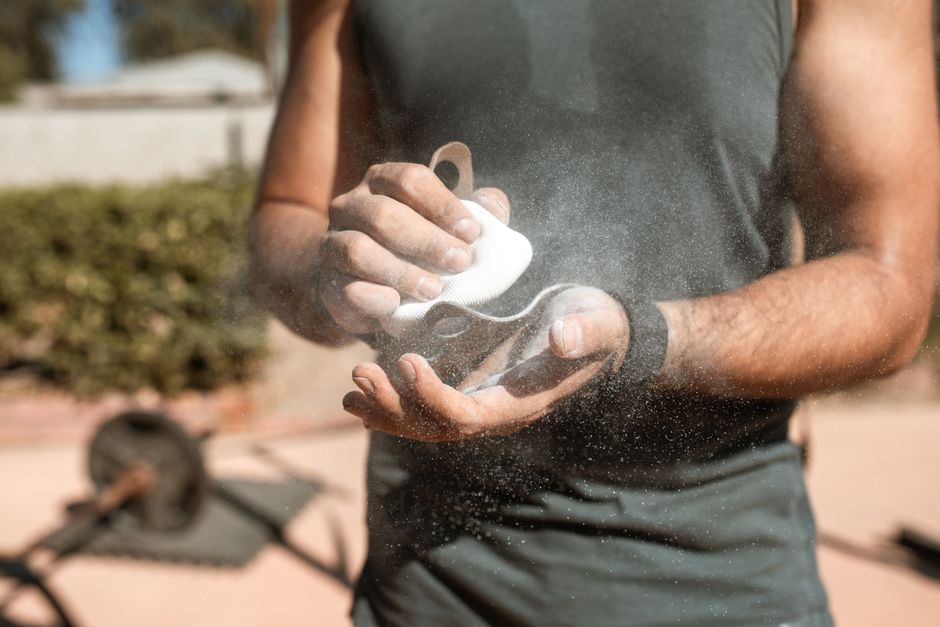
Grip strength often decides whether a deadlift succeeds or fails. Your back and legs may be ready to pull a heavy bar, but if your hands open first, the lift stops there. The fix is not one trick. It is a combination of dedicated grip training, smarter use of straps, and correcting the way you set your hands on the bar. Most lifters can improve grip noticeably within a few weeks of consistent, targeted work.
Why Does Grip Fail Before Your Back and Legs Do?
In a heavy deadlift, the muscles that close your fingers and thumb are working near their limit while your larger pulling muscles are not. That mismatch is why the bar slips before your hips or back give out.
The muscles doing the holding are the forearm flexors, which run from the elbow down to the fingers and curl the digits closed. They are small compared with the glutes, hamstrings, and spinal erectors that drive the lift. When the load climbs, the small muscles reach their ceiling first.
There is a second factor people miss. Grip is not just raw squeezing force. It is also how well your hand resists the bar rolling out of your fingers. A deadlift bar wants to peel open your hand, and the thumb and the skin of the palm have to fight that. This is why chalk, bar diameter, and hand position matter as much as muscle.
Grip strength also has a strong neural component. A big part of early gains is your nervous system learning to recruit more of those forearm motor units at once. That is good news. It means you do not need months of hypertrophy before the bar stops slipping.
How To Increase Grip Strength For Deadlifts: The Core Methods
Four training methods carry most of the load. Use them together rather than picking one.
Hold the bar longer. After your last deadlift rep, keep holding the bar at lockout for time. Start with a weight you can hold for a solid stretch and add seconds or load over weeks. This trains the exact position you fail in.
Train the deadlift without straps on warm-up and moderate sets. If you strap up for every set, your hands never get the stimulus. Pull your lighter and mid-range sets with a bare grip and save straps for your heaviest work. This keeps grip progressing alongside the lift.
Add dedicated grip work. Farmer carries, heavy dumbbell holds, and thick-handled holds all build the forearm flexors and the thumb. Do them after your main lift so they do not sap your deadlift performance.
Use a mixed grip or hook grip strategically. Both reduce the demand on the rolling bar. A mixed grip (one palm forward, one back) stops the bar from rolling, but it loads the biceps of the underhand arm and can create asymmetry over time. The hook grip wraps the thumb under the fingers and is more symmetrical, though it takes time to tolerate on the thumb.
One clarification worth knowing. Grip strength gained from squeezing a hand gripper does not transfer perfectly to holding a heavy barbell. The deadlift hold is a sustained, heavy, open-hand position. Train the position you actually fail in.
How Often Should You Train Grip?
Two to three focused grip sessions per week is a reasonable starting point for most lifters. Grip recovers faster than large muscle groups, so it tolerates frequent work, but the tendons and joints in the hands and elbows need time to adapt.
The forearm flexors are small and the tendons around the elbow are easily irritated by sudden increases in volume. Build up gradually. If your elbows or the base of your thumb start to ache, back off rather than pushing through.
A practical split looks like this:
- Grip work at the end of your deadlift session, two to three times per week.
- One heavy hold or carry day and one longer-duration hold day.
- Bare-grip deadlift sets on lighter days to keep the hands working.
Do not stack heavy grip work right before a max deadlift attempt. Fatigued forearms will cost you the pull. Keep the hardest grip training after the lift or on a separate day.


Does Chalk, Bar Diameter, and Hand Position Really Matter?
Yes, and the effect is larger than most people expect. A standard Olympic barbell is 28 to 29 millimeters in diameter, and a deadlift bar is typically thinner at 27 millimeters. A thinner bar is easier to wrap your hand around, which is one reason deadlift bars exist.
Chalk removes moisture and oil from your hands and the bar, which raises friction and reduces slipping. For most lifters it is the single cheapest grip upgrade available. Gym rules vary on chalk use, so check before you rely on it.
Hand position matters too. Set the bar in the crease where your fingers meet your palm, not out toward the fingertips. A bar sitting deep in the palm is more stable and less likely to roll open. Grip the bar hard before you initiate the pull, not as you lift.
A hook grip changes the mechanics by locking the thumb under the fingers, which effectively turns your hand into a strap-free hook. It is uncomfortable at first. Most lifters who commit to it adapt over a few weeks of lighter sets.
When Should You Use Straps?
Straps are a tool, not a shortcut. They let you train the back and legs at loads your grip cannot yet match, which is genuinely useful for building the deadlift itself.
The problem is using them on every set. If straps handle all your pulling, your grip never gets trained and it stays the weak link. A common approach is to pull warm-up and moderate sets bare-handed, then strap up only for your heaviest working sets or when grip is the specific limiter you are trying to push past on that day.
Competitive powerlifters cannot use straps in competition, so raw grip has to be trained directly. If you compete, treat strap use as a training tool that supports your raw numbers, not a replacement for them.
What Role Do Forearm and Wrist Exercises Play?
Direct forearm work helps, but it is a supplement to holding a heavy bar, not a substitute. Wrist curls, reverse wrist curls, and wrist roller work build the forearm flexors and extensors that support a strong grip.
Thumb strength deserves attention because the thumb is what stops the bar from rolling. Pinch holds and thick-handle work load the thumb harder than a standard barbell does. Some lifters find their thumb is the true weak point on a mixed or hook grip.
Keep forearm isolation work at the end of sessions and in moderate volume. It adds support, but the deadlift hold itself remains the most specific and important exercise for this goal.
How Long Until Grip Strength Improves?
Many lifters notice better holds within a few weeks of consistent training, largely from neural adaptation. Meaningful strength gains in the forearm muscles themselves take longer, typically building over a couple of months of steady work.
Progress is not linear. Grip can plateau, and it is sensitive to fatigue, sleep, and how much pulling volume you are already doing. Track your holds by time or load so you can see the trend rather than judging by a single bad session.
Do not expect grip to match your back and leg strength overnight. Those larger muscles have a head start. The goal is to close the gap steadily so the bar stops being the reason a lift fails.
Frequently Asked Questions
How can I increase my grip strength for deadlifts fast?
Hold the bar at lockout for time after your last rep and pull your lighter sets without straps. These two habits train the exact position you fail in and often produce noticeable gains within a few weeks.
Should I use straps to improve my deadlift grip?
Use straps only for your heaviest sets, not every set. Strapping up for all pulling means your grip never gets trained and stays the weak link.
Is mixed grip or hook grip better for deadlift grip?
Both reduce bar roll, but the hook grip is more symmetrical while the mixed grip loads the underhand biceps. Many lifters use a mixed grip for heavy singles and train the hook grip separately.
Do grip trainers and hand grippers help deadlift grip?
They build squeezing strength but transfer imperfectly to holding a heavy barbell. Bar holds, carries, and thick-handle work are more specific to the deadlift.
