
Grip strength is one of the clearest signals of how well your body is aging. It predicts everyday independence better than many lab tests, and it improves with the right kind of training. Building it comes down to three things: train your hands and forearms directly, train the big pulling muscles they depend on, and do it consistently two to three times a week.
Most people never train grip on purpose. They lift weights, they carry groceries, and they assume their hands get strong along the way. That works to a point. Then it stops. The fix is simple and does not require special equipment.
Why Does Grip Strength Matter More Than You Think?
Your hands are the last link in a chain that starts at your shoulders and runs down your arms. When you carry a heavy suitcase, open a jar, or catch yourself on a stair rail, that chain has to hold. If the hands fail, the whole system fails.
Grip strength is also a useful health marker. Research has consistently linked weaker grip in middle and older age with higher rates of disability and earlier death. That does not mean a weak grip causes those problems. It means grip tends to reflect total muscle mass, nerve function, and overall physical condition. Think of it as a cheap, fast snapshot of how much strength you have banked.
This matters for daily life more than most people expect. Carrying groceries, lifting a grandchild, gripping a handrail, opening medication bottles — all of these depend on hand and forearm strength. Loss of grip is one of the first things people notice when strength starts to slip.
What Actually Determines How Strong Your Grip Is?
Grip strength comes from muscles in your forearm that control your fingers, plus the tendons that connect them. The main driver of a strong squeeze is the flexor muscles on the palm side of your forearm. They pull your fingers closed.
Three things limit how hard you can squeeze:
- Muscle size and fiber type. Forearm muscles respond to training like any other muscle.
- Nerve signaling. Your brain has to recruit those muscle fibers quickly and in the right order. This improves fast with practice.
- Tendon and joint health. Stiff, painful fingers and thumbs cap your grip no matter how strong the muscle is.
There is a fourth factor people miss. Grip is not one skill. Crushing strength, pinching strength, and endurance holding a weight are somewhat separate. A person can crush a hand grip dynamometer hard and still struggle to hold a heavy pan for a minute. Train the version you actually need.
How To Build Grip Strength With Direct Training
Direct grip work means training your hands and forearms as the main event, not a side effect of something else. Two to three sessions a week is enough. Give yourself at least one full rest day between sessions so tendons recover.
Four categories cover almost everything:
- Crush grip. Hand grippers or squeezing a tennis ball. This trains the fingers closing against resistance.
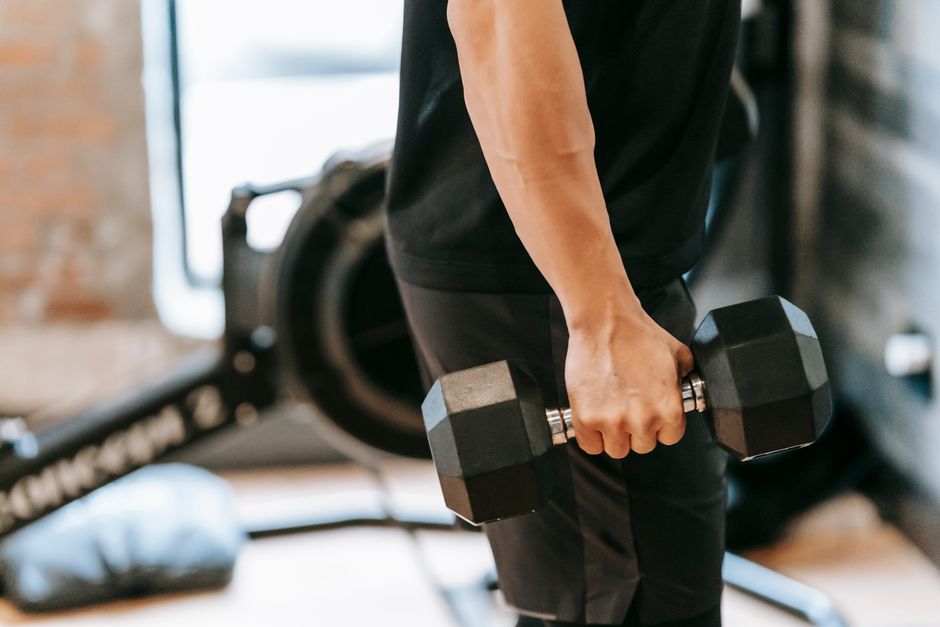
- Support grip. Holding a heavy dumbbell, kettlebell, or loaded bar for time. This is what carries your groceries.
- Pinch grip. Picking up and holding a weight plate or thick book between your thumb and fingers.
- Wrist and forearm work. Wrist curls and reverse wrist curls with light weights.
For support grip, a simple approach is a timed hold. Pick a weight you can hold for about 20 to 30 seconds, hold it, rest, and repeat for three to four sets. When you can hold it comfortably past 45 seconds, go heavier. That progression rule — add time first, then weight — is standard strength training logic and applies here too.
For grippers, choose one you can close fully for a few clean reps. Squeeze, hold briefly, release slowly. Do not bounce. Three sets of 8 to 12 reps per hand is a reasonable starting point. If you cannot close the gripper at all, use a softer one or a rolled towel instead.





Do You Need to Train the Bigger Muscles Too?
Yes, and this is where most people leave gains on the table. Your fingers can only hold what your forearms and back can support. If your pulling muscles are weak, your grip will stall.
Exercises that build the whole chain:
- Deadlifts. Nothing loads the hands and forearms like holding a heavy bar off the floor.
- Pull-ups and rows. These train the back and the hands together.
- Farmer’s carries. Pick up two heavy weights and walk. This is one of the most direct grip builders there is.
- Towel hangs or bar hangs. Hang from a pull-up bar for time. A towel over the bar makes it harder.
If you already lift weights, your grip is getting some work. Adding one dedicated grip exercise at the end of a session is often enough to push it further. If you do not lift, farmer’s carries and hangs alone can build meaningful grip.
What About Grip Strength as You Get Older?
Grip strength tends to peak in your 30s and slowly decline after that, with a steeper drop after about age 60. Some of that loss is unavoidable. A large part of it is not.
Older adults who train grip and forearm strength can still gain. The response is slower than in younger people, but it happens. This is one reason grip training is worth starting before you notice a problem rather than after.
Two practical notes for this age group. First, tendons and joints need more warm-up time, so start sessions with light squeezing or easy hangs. Second, hand arthritis and thumb joint pain are common and can limit what you can do. If pain is the main barrier, work within a comfortable range and consider a hand therapist rather than pushing through it.
How Long Until You See Results?
Most people notice better endurance in their hands within two to four weeks. Actual strength gains — measurable on a grip dynamometer — typically show up over six to twelve weeks of consistent training.
Early improvement is mostly your nervous system getting better at using the muscle you already have. That is real and useful. Muscle size changes come later and are slower, especially in the forearms, which respond to training but do not grow as dramatically as larger muscle groups.
Consistency beats intensity here. Two solid sessions a week for three months will do more than five sessions in one week followed by a month off.
Common Mistakes That Stall Progress
The biggest one is training grip every day. Forearm muscles and tendons need recovery like any other tissue. Daily max-effort squeezing leads to elbow and wrist pain more often than it leads to strength.
Other common problems:
- Using straps too often. Lifting straps spare your grip during heavy pulls. That is fine occasionally, but if you use them every session, your hands never get the work.
- Only training crush grip. Grippers are popular and useful, but they miss support and pinch strength.
- Ignoring pain. Sharp pain in the elbow or wrist during squeezing is a signal to back off, not push through.
- No progression. If the weight and reps never change, neither will your grip.
If you feel a dull ache along the inside of the elbow after grip work, that is a common overuse pattern. Rest, reduce volume, and return gradually. If it persists, see a clinician.
Do You Need Special Equipment?
No. A tennis ball, a rolled towel, a heavy book, and a sturdy chair will get you started. A pair of adjustable hand grippers and one heavy dumbbell or kettlebell cover almost everything else.
Grip dynamometers are useful for tracking progress but are not necessary for training. If you want a simple progress measure, note how long you can hang from a bar or how far you can carry a heavy weight before your grip gives out.
Frequently Asked Questions
How often should I train grip strength?
Two to three sessions per week is enough for most people. Leave at least one full rest day between sessions so your forearms and tendons recover.
Can I build grip strength without going to a gym?
Yes. Tennis ball squeezes, towel hangs, and carrying heavy objects like water jugs or books all train grip effectively at home.
Does grip strength really predict health outcomes?
Research consistently links weaker grip in middle and older age with higher rates of disability and earlier death. It appears to reflect overall muscle mass and physical condition rather than causing those outcomes directly.
How long does it take to see grip strength gains?
Most people notice better hand endurance within two to four weeks. Measurable strength gains typically appear over six to twelve weeks of consistent training.
