
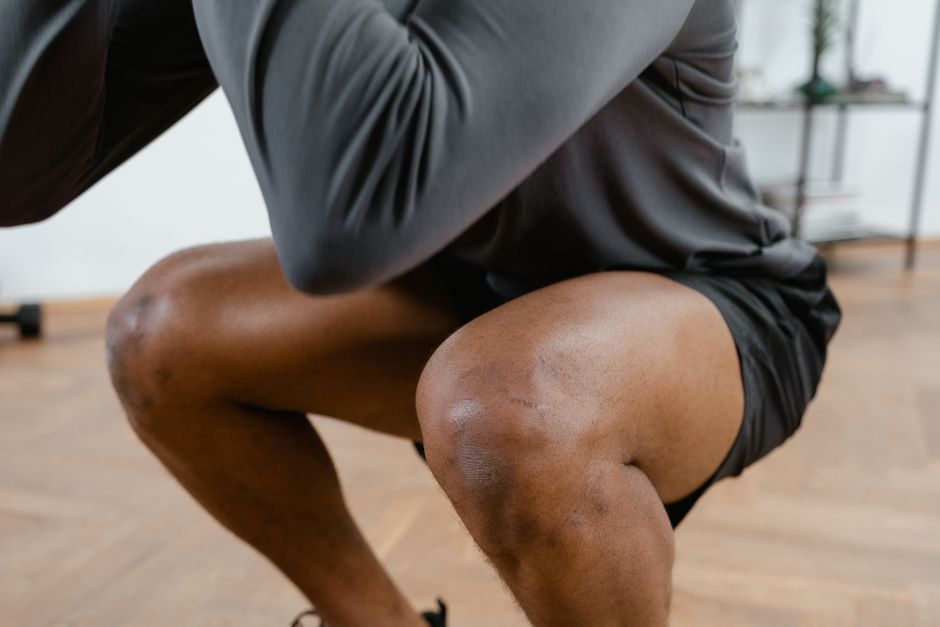
Knee strength improves when you train the muscles that control the joint, not just the joint itself. The quadriceps, hamstrings, glutes, and calves all play a role in stabilizing the knee during movement. The right exercises load these muscles progressively while avoiding positions that stress the joint unnecessarily. Consistency matters more than intensity, and the evidence consistently shows that targeted strengthening reduces knee pain and improves function in people with conditions like osteoarthritis.
Why Does Knee Strength Matter More As You Age?
Muscle mass declines with age, a process called sarcopenia. After age 30, adults lose muscle mass gradually, and the rate accelerates after 60. The quadriceps are among the first muscle groups affected. Weak quads mean less support for the knee joint, which increases stress on cartilage and other structures.
This matters because knee osteoarthritis is one of the leading causes of disability in older adults. Research consistently shows that quadriceps weakness is associated with knee pain and functional decline in people with osteoarthritis. Stronger muscles absorb more of the force that would otherwise hit the joint surfaces.
Knee strength also affects balance and fall risk. Weak knees make it harder to recover from a stumble. Falls are a leading cause of injury in adults over 65. Strengthening the knee is not just about the knee. It is about staying mobile and independent.
Which Muscles Actually Support The Knee?
The knee is a hinge joint, but it does not work alone. Several muscle groups control its movement and stability.
- Quadriceps: The large muscle group on the front of the thigh. It straightens the knee and absorbs shock during walking and stair descent.
- Hamstrings: The muscles on the back of the thigh. They bend the knee and control how fast the leg extends.
- Glutes: The hip muscles. Weak glutes allow the knee to collapse inward during squats and walking, which strains the joint.
- Calves: The gastrocnemius and soleus. They assist with push-off and help control the knee during gait.
A common mistake is focusing only on the quadriceps. The glutes and hamstrings are equally important for knee stability. If the hip muscles are weak, the knee compensates, and that compensation often leads to pain.
What Are The Best Exercises To Increase Knee Strength?
The most effective exercises for knee strength are those that load the muscles through a controlled range of motion. You do not need fancy equipment. Bodyweight and resistance bands work well to start.
Bodyweight and Low-Impact Options
These are good starting points if you have pain or are new to strength training.
- Straight leg raises: Lie on your back, keep one leg straight, and lift it a few inches off the floor. Hold briefly, then lower. This targets the quadriceps without bending the knee.
- Wall sits: Stand with your back against a wall and slide down until your knees are bent. Hold the position. Start with short holds and build up.
- Step-ups: Use a low step or stair. Step up with one leg, bringing the other foot up, then step down. This mimics daily activities and builds quad and glute strength.
- Glute bridges: Lie on your back with knees bent and feet flat. Lift your hips off the floor by squeezing your glutes. This strengthens the posterior chain without loading the knee joint directly.
Adding Resistance
Once bodyweight exercises feel easy, add resistance. Resistance bands, ankle weights, or gym machines all work. The principle is progressive overload: gradually increase the challenge so the muscles continue to adapt.
Research published in the Journal of Orthopaedic and Sports Physical Therapy indicates that both high-intensity and low-intensity strength training can reduce pain and improve function in people with knee osteoarthritis, provided the training is consistent. The key is finding a level you can maintain.





How Often Should You Train Your Knees?
Most clinical guidelines recommend strength training two to three times per week for general musculoskeletal health. For knee-specific strengthening, the same frequency applies. Muscles need rest days to recover and rebuild.
If you are recovering from an injury or surgery, your physical therapist will set a specific schedule. Follow that over any general recommendation. For healthy adults without injury, two to three sessions per week is a reasonable target. Each session does not need to be long. Twenty to thirty minutes of focused work can be enough.
Consistency over months matters more than intensity in any single session. Muscles adapt gradually. Noticeable strength gains typically take several weeks of regular training. This is not a quick fix.
Can You Strengthen Knees Without Making Pain Worse?
Yes, in most cases. But the approach matters. Pushing through sharp pain is not advisable. Discomfort that feels like muscle fatigue is different from pain inside the joint.
Some clinicians recommend the following approach for people with knee pain:
- Start with isometric exercises, where the muscle contracts but the joint does not move. Wall sits are an example.
- Avoid deep squats or lunges if they cause pain. Partial range movements can still build strength.
- Use pain as a guide. Mild discomfort during exercise that settles within a day is generally acceptable. Pain that lingers or worsens is a signal to back off.
- Consider working with a physical therapist if pain persists or limits your ability to exercise.
A study in the British Journal of Sports Medicine found that exercise therapy is effective for reducing pain in knee osteoarthritis, but the effect varies between individuals. Some people respond well. Others need additional treatment. Exercise is not a guaranteed fix, but it is one of the most reliable non-drug options available.
What Role Does Weight Play In Knee Strength?
Body weight affects the load on your knees. Every pound of body weight puts roughly three to four pounds of force through the knee during walking. This is not about blame. It is simple physics.
For people who are overweight, losing weight can reduce knee pain and improve function. Research published in Arthritis & Rheumatology found that weight loss combined with exercise produced greater improvements in knee osteoarthritis symptoms than either alone. The combination matters.
That said, weight loss is not a requirement for strengthening your knees. You can build strength at any weight. The exercises work regardless. If weight loss is a goal, it can be part of the plan, but it is not a prerequisite.
When Should You See A Doctor Or Physical Therapist?
See a healthcare provider if you have knee pain that does not improve with rest, swelling that does not go down, or a knee that gives way or locks. These can be signs of a structural problem that needs evaluation.
If you have had knee surgery, follow your surgeon’s or physical therapist’s protocol. General exercise advice does not replace post-surgical rehabilitation.
For most people with mild knee discomfort, starting a gentle strengthening program is reasonable. If pain worsens or new symptoms appear, stop and get assessed. It is better to check than to push through.
How Long Before You Notice A Difference?
Strength gains begin within a few weeks of consistent training, but they are often subtle at first. You may notice that stairs feel easier or that you can stand up from a chair without pushing off. These are real improvements even if the scale or mirror does not show them.
Significant changes in muscle size and joint function typically take longer. Research on exercise for knee osteoarthritis often measures outcomes at eight to twelve weeks. That is a reasonable timeframe to expect meaningful change if you are consistent.
Progress is not always linear. Some weeks feel better than others. That is normal. The overall trend is what matters.
Frequently Asked Questions
What is the single best exercise for knee strength?
There is no single best exercise. A combination of quadriceps, hamstring, and glute exercises works better than any one movement. Wall sits and step-ups are good starting points.
Can I strengthen my knees without weights?
Yes. Bodyweight exercises like straight leg raises, wall sits, and glute bridges can build knee strength. Add resistance bands or ankle weights as you progress.
Should I exercise if my knee hurts?
Mild discomfort during exercise is often acceptable if it settles within a day. Sharp pain or pain that worsens should be evaluated by a healthcare provider before continuing.
How many days a week should I train my knees?
Two to three sessions per week is a common recommendation for strength training. Muscles need rest days to recover and rebuild.
