
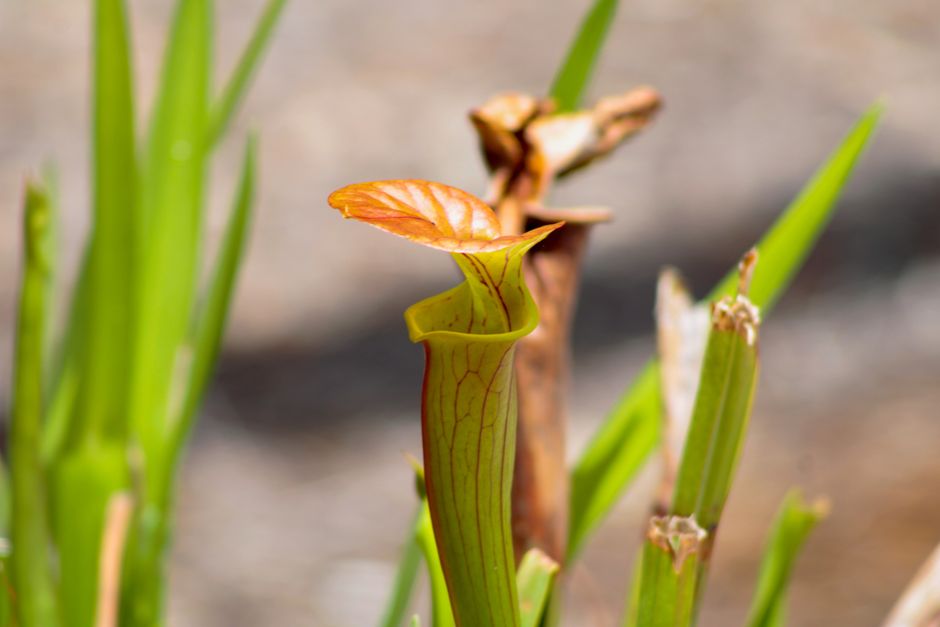
A Nepenthes “Suki” is a tropical pitcher plant cultivar prized for its compact growth and colorful, long-lasting pitchers. Identify it by its smooth, reddish-green leaves and pitchers with a flared, speckled peristome. Grow it like most intermediate Nepenthes: bright indirect light, high humidity, temperatures between roughly 65°F and 85°F, and consistently moist, low-mineral water.
If you have ever bought a pitcher plant labeled only “Suki,” you already know the trouble. The name floats around nurseries and hobbyist forums with very little documentation behind it. This article explains how to recognize the plant, what conditions it actually needs, and where the honest limits of our knowledge about this particular cultivar lie.
What Is A Nepenthes “Suki” Exactly?
“Suki” is a cultivated variety of Nepenthes, the genus of tropical pitcher plants. It circulates in the horticultural trade as a named clone, not as a wild species found in Borneo or Sumatra.
Here is the part most sellers gloss over. A named cultivar is a specific plant selected and propagated because it has desirable traits. It is not a species. That distinction matters because the growing advice for “Suki” comes from general Nepenthes horticulture, not from field studies of a plant in its native habitat.
The genus Nepenthes contains well over 100 recognized species, plus countless natural and man-made hybrids. Most plants sold to home growers are hybrids, because hybrids tend to be more forgiving than pure species. “Suki” fits that pattern. It is generally described as an intermediate grower, meaning it does not demand the cool nights of a highland species or the sweltering heat of a true lowlander.
You will sometimes see “Suki” listed with a species name attached, such as Nepenthes “Suki” or Nepenthes alata “Suki.” The alata connection is plausible but not something I can confirm from reliable records. Nepenthes alata is a widespread, variable species, and many cultivated clones have been grouped under it historically. Treat any precise parentage claim with caution unless the seller provides documentation.
How To Identify A Nepenthes Suki
Identification rests on the pitchers, not the leaves. Leaves across Nepenthes look broadly similar, so the trap is where the plant reveals itself.
Look for these features:
- Pitcher shape: Lower pitchers tend to be rounded and stocky near the base, while upper pitchers become more slender and funnel-like. This shift between lower and upper pitchers is normal in the genus.
- Peristome: The ribbed rim around the pitcher mouth is often flared and lined with distinct ridges. Color is typically reddish to orange, sometimes with darker striping.
- Coloration: Pitchers commonly show a green to reddish base with speckling or mottling. Exact color shifts with light intensity and age.
- Size: Plants sold as “Suki” are usually described as compact, with pitchers that stay manageable indoors rather than reaching the large dimensions of some species.
- Lid: A small, rounded lid sits over the mouth, often with a spur at the base.
One honest caveat. Because “Suki” is not a formally documented species, two plants sold under the same name from different sources may not be genetically identical. If precise identity matters to you, buy from a seller who keeps propagation records.
What Light And Temperature Does It Need?
Bright, indirect light is the standard for intermediate Nepenthes. Direct midday sun can scorch leaves and dry out developing pitchers, especially through glass.
A spot near an east or lightly shaded south window works well for many growers. If you use artificial light, aim for a full-spectrum fixture kept at a reasonable distance so the leaves stay warm but not hot to the touch. Watch the plant, not the calendar. Leaves that turn yellow or develop brown patches usually signal too much light. Long, dark green leaves with no pitchers usually signal too little.
Temperature is where intermediate plants sit in the middle of the range. Roughly 65°F to 85°F suits most of them. A modest drop at night is generally tolerated and often appreciated, but “Suki” is not a highland plant that needs cold nights to survive. It is also not a true lowlander that thrives in constant heat.
Sudden temperature swings stress the plant more than a steady, slightly imperfect range. Keep it away from heating vents, air conditioners, and drafty doorways.




Humidity, Water, And Soil
High humidity supports pitcher development. Without enough moisture in the air, pitchers can dry out before they fully form, and the plant may stop producing them entirely.
Most growers aim for humidity well above typical household levels. A bathroom with a window, a terrarium, or a grouped cluster of plants can raise local humidity. Misting helps briefly but is not a substitute for sustained humidity.
Water quality matters more than most beginners expect. Nepenthes are sensitive to dissolved minerals. Rainwater, distilled water, or reverse-osmosis water are the safer choices. Tap water that is hard or high in minerals can build up in the soil over time and damage the roots.
Keep the growing medium consistently moist but never waterlogged. A common mix for Nepenthes combines materials like sphagnum moss, orchid bark, perlite, and sometimes charcoal to create an airy, well-draining structure. The goal is a medium that holds moisture while letting air reach the roots.
Do not fertilize heavily. Pitcher plants in this genus get nutrients from their pitchers as well as their roots, and overfeeding can burn the plant. Some growers use very dilute orchid fertilizer sparingly. If you are unsure, less is safer.
Common Problems And What They Mean
Pitcher plants fail in fairly predictable ways. Reading the symptoms correctly saves a lot of guesswork.
- No pitchers, healthy leaves: Usually low humidity or insufficient light. The plant is growing but has no reason to invest in traps.
- Brown, crispy pitcher edges: Often low humidity or a dry spell. Check the air around the plant, not just the soil.
- Yellowing leaves: Could be too much light, mineral buildup, or root problems. Repotting into fresh medium and switching to low-mineral water addresses several causes at once.
- Soft, rotting stems: Usually overwatering or a medium that stays too wet. Roots need air.
- Pitchers drying before opening: Frequently a humidity issue, sometimes a temperature stress issue.
One point worth stating plainly. Pitcher plants do not need to be fed insects to survive. They photosynthesize like any green plant. The pitchers are a supplemental nutrient source, not a requirement. Feeding insects can help a plant that is otherwise struggling for nutrients, but it is not essential and can cause rot if overdone.
Repotting, Pruning, And Long-Term Care
Repot when the medium breaks down, when roots crowd the pot, or when mineral buildup becomes a concern. For many growers this happens every year or two, but the schedule depends on your water quality and medium.
Use a pot with drainage. A slightly larger container gives roots room without holding excess water. Handle roots gently, since they are fine and easily damaged.
Pruning is mostly about removing dead or damaged growth. Cutting back a long vine can encourage bushier growth, and many Nepenthes will produce new shoots from the base after pruning. Take cuttings if you want to propagate. Many Nepenthes root reasonably well from stem cuttings, though results vary by plant and conditions.
There is no fixed timeline for how fast a “Suki” will grow or pitcher. Growth rate depends on light, temperature, humidity, nutrition, and the individual plant. Be skeptical of any source promising a specific pitcher count or size within a set number of weeks.
Where The Evidence Is Thin
Most of what circulates about “Suki” specifically is grower experience, not controlled study. That is normal for ornamental plant cultivars, but it is worth naming.
What is well established is general Nepenthes biology and horticulture. The genus is real, its pitcher mechanism is well documented, and its preferences for humidity, light, and low-mineral water are broadly consistent across the group. What is not well established is any claim that “Suki” has unique requirements different from other intermediate hybrids.
If a seller tells you “Suki” is rare, or that it needs a special secret technique, ask for evidence. Named cultivars can be genuinely uncommon in the trade, but rarity claims are also used to justify higher prices. The plant’s actual needs are the same as those of most intermediate Nepenthes.
Frequently Asked Questions
Is Nepenthes “Suki” a species or a hybrid?
It is best understood as a cultivated variety or named clone, not a formally described wild species. Many plants sold under cultivar names are hybrids or selected clones of uncertain parentage.
What humidity does Nepenthes “Suki” need?
It generally needs humidity well above typical household levels to form healthy pitchers. There is no single official number, so aim for a consistently humid environment rather than a specific figure.
Can Nepenthes “Suki” grow in normal tap water?
It can tolerate some tap water, but minerals can build up over time and harm the plant. Rainwater, distilled, or reverse-osmosis water is the safer long-term choice.
Does Nepenthes “Suki” need to eat insects?
No. It photosynthesizes like any green plant, and the pitchers are a supplemental nutrient source rather than a requirement for survival.
