
Constipation in babies is stressful for everyone involved. A baby who cannot poop comfortably may cry, strain, and refuse to eat, and parents often feel helpless watching it happen. The good news is that most infant constipation is temporary and manageable at home. The approach depends heavily on the baby’s age, diet, and whether they have started solid foods yet. Here is a practical, evidence-based guide to helping a baby poop, starting with the safest methods first and working through what to do when those do not work.
Is Your Baby Actually Constipated?
Before doing anything, make sure the problem is really constipation. Many parents worry unnecessarily because their breastfed baby suddenly stops pooping for several days. This is often normal.
Breast milk is digested almost completely. Some breastfed babies can go 7 to 10 days without a bowel movement and still be perfectly healthy. The key difference is the consistency of the poop when it finally comes out. If it is soft, even if infrequent, the baby is not constipated. True constipation means the stool is hard, dry, and difficult to pass.
Signs of true constipation in a baby include:
- Hard, pellet-like stools that look like small rocks
- Straining for several minutes with no result
- Blood on the outside of the stool from an anal fissure
- A belly that feels firm and tight
- Loss of appetite or refusal to eat
If the stool is soft, no matter how infrequent, the baby is not constipated. Do not treat a normal pattern as a medical problem.
Why Do Babies Get Constipated?
Constipation in infants has several common causes, and knowing which one applies to your baby helps you choose the right fix.
For babies on formula, the type of formula matters. Standard cow’s milk formulas are harder for some babies to digest than breast milk. Switching to a different formula can sometimes resolve the issue, but do not switch without talking to your pediatrician first.
Introducing solid foods is the most common trigger for constipation in older babies. Rice cereal, bananas, and applesauce are all binding foods. They slow down the digestive tract and produce harder stools. This is a normal adjustment period for many babies, and it usually resolves as their digestive system adapts.
Dehydration is another major cause. Babies who are not getting enough fluids produce harder stools. This is more common after starting solids, when babies may not drink as much milk because they feel full from food.
Less common but important causes include a change in routine, illness, or a medication the baby is taking. In rare cases, constipation can signal an underlying medical condition, so persistent constipation that does not respond to home treatment deserves a medical evaluation.
How To Help A Baby Poop: Safe Home Remedies
Start with the gentlest methods and work up. Never give a baby any laxative, suppository, or enema without explicit instruction from a doctor. Infant digestive systems are delicate, and adult treatments can be dangerous.
For babies under 6 months who are exclusively breastfed, the best remedy is more breast milk. Offer the breast more frequently. Breast milk acts as a natural laxative, and increased intake often resolves the issue within a day.
For formula-fed babies, check the mixing instructions. Adding extra water to formula to make it more diluted is dangerous because it can disrupt the baby’s electrolyte balance and cause seizures. Always mix formula exactly as directed. If the baby is constipated, a pediatrician may recommend a different formula, but that is a medical decision.
For babies over 6 months who have started solids, add high-fiber foods to their diet. Pureed prunes, pears, peaches, and peas all help soften stool. Prune puree is particularly effective. Start with one or two tablespoons mixed into cereal or another food. You can also give the baby a small amount of water — about 1 to 2 ounces — in addition to their regular milk feeds, but check with your pediatrician first.
Warm baths can help. The warm water relaxes the baby’s abdominal muscles, which can make it easier for them to push. You can also gently move the baby’s legs in a bicycle motion while they are in the bath or on the changing table. This movement stimulates the intestines and can trigger a bowel movement.





Gentle Physical Techniques That Work
Beyond diet, several physical techniques can stimulate a bowel movement. These are safe when done gently and correctly.
Bicycle legs are the most common. Lay the baby on their back and gently move their legs in a circular motion, as if they were riding a bicycle. Do this for 1 to 2 minutes at a time, several times a day. This works by gently compressing the abdomen and stimulating the colon.
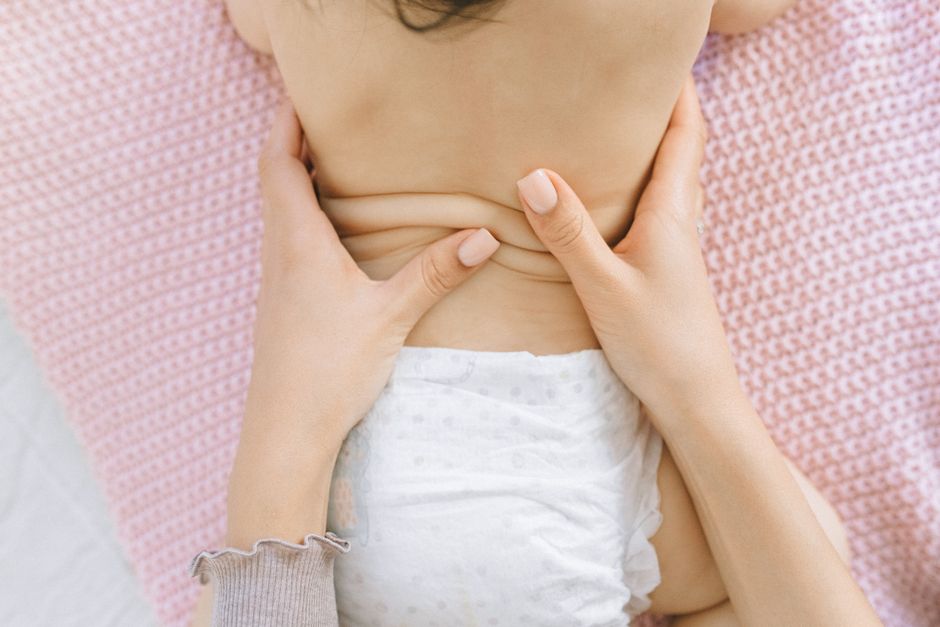
Abdominal massage is another option. Use your fingertips to make small, clockwise circles on the baby’s belly. Clockwise follows the natural path of the colon. Use light pressure — you are not trying to push anything through, just stimulate the muscles. Do this for a few minutes after feeding.
The “tummy time” position can also help. Lying on the stomach creates gentle pressure on the abdomen, which can stimulate a bowel movement. If your baby is comfortable with tummy time, let them do it under supervision for a few minutes.
One technique that pediatricians sometimes recommend is the “squat” position. Hold the baby’s legs bent at the knees and pressed gently toward the belly, then release. This mimics the natural squatting position that makes bowel movements easier. Repeat this motion several times.
When To Use Glycerin Suppositories
Glycerin suppositories are a common remedy, but they are not a first-line treatment. They are a rescue measure for when a baby is clearly uncomfortable and other methods have not worked.
A glycerin suppository works by drawing water into the rectum, which softens the stool and stimulates a bowel movement. It typically works within 15 to 30 minutes. These suppositories come in infant sizes, and you should never use an adult suppository on a baby.
Do not use suppositories regularly. They can irritate the baby’s rectum and lead to a dependency where the baby cannot poop without stimulation. Use them only occasionally, and only when your pediatrician has approved the approach. If you find yourself reaching for a suppository more than once or twice, call your doctor instead.
Never use mineral oil, enemas, or laxatives designed for older children or adults. These are dangerous for infants and can cause severe complications.
What To Do If The Baby Is In Pain
If your baby is screaming, drawing their legs up to their chest, and straining hard with no result, they may have a fecal impaction or an anal fissure. An anal fissure is a small tear in the skin around the anus. It bleeds and hurts, which makes the baby afraid to push.
For an anal fissure, keep the area clean and dry. Apply a small amount of petroleum jelly to the area to protect it during diaper changes. The fissure will usually heal on its own within a few days once the constipation resolves.
If the baby is in severe pain, cannot be consoled, or has a hard, distended belly, seek medical care. Do not wait for an appointment. Go to urgent care or the emergency room. Severe constipation can lead to a bowel obstruction, which is a medical emergency.
When To Call The Doctor
Most infant constipation resolves with home care within a few days. But some situations require medical attention.
Call your pediatrician if:
- Your baby is under 4 months old and constipated
- Constipation lasts more than one week despite home treatment
- There is blood in the stool that is more than a small streak
- The baby is vomiting
- The baby’s belly is hard and swollen
- The baby is losing weight or not gaining weight
- The baby seems lethargic or unusually weak
For babies under 4 months, constipation is less common and more concerning. It can indicate an anatomical issue or a metabolic problem that needs investigation. Do not try home remedies for a newborn without medical guidance.
Persistent constipation that does not respond to dietary changes and physical techniques may require a medical evaluation. The doctor may recommend a prescription medication or a diagnostic test to rule out underlying conditions. Hirschsprung disease, a condition where nerve cells are missing in part of the colon, is rare but can present as severe constipation in infancy. It requires surgical treatment.
Preventing Constipation In The Future
Prevention is easier than treatment. Once your baby’s stool is back to normal, keep these habits in place.
If your baby is on formula, make sure you are mixing it correctly. If constipation keeps returning, ask your pediatrician about a formula designed for sensitive stomachs. Do not switch on your own.
When your baby starts solids, introduce high-fiber foods early and often. Prunes, pears, and oats are good choices. Offer water with meals. Limit binding foods like bananas, applesauce, and rice cereal until the digestive system adjusts.
Keep the baby active. Tummy time, bicycle legs, and regular movement all keep the digestive tract working. A sedentary baby is more likely to be constipated.
Pay attention to your baby’s cues. Some babies have a predictable pooping time, often after a meal. If you recognize that pattern, you can place the baby in a comfortable position at that time and give them a few minutes of quiet to do their business.
Frequently Asked Questions
How long can a baby go without pooping before it is a problem?
Breastfed babies can go 7 to 10 days without pooping and still be normal if the stool is soft when it comes. Formula-fed babies should poop at least every few days, and going more than 5 days without a stool warrants a call to the pediatrician.
Can I give my baby prune juice for constipation?
Yes, for babies over 6 months who have started solids, a small amount of prune juice — about 1 to 2 ounces — can help soften stool. Do not give prune juice to babies under 6 months without a doctor’s approval.
Is it safe to put something in the baby’s bottom to stimulate a poop?
Infant glycerin suppositories are safe for occasional use under a pediatrician’s guidance, but they should not be used regularly. Never use a thermometer, soap, or cotton swab to stimulate the rectum, as this can cause injury.
Does gripe water help with constipation?
Gripe water is designed for gas and colic, not constipation, and there is no strong evidence that it helps with hard stools. It is not a recommended treatment for infant constipation.
