
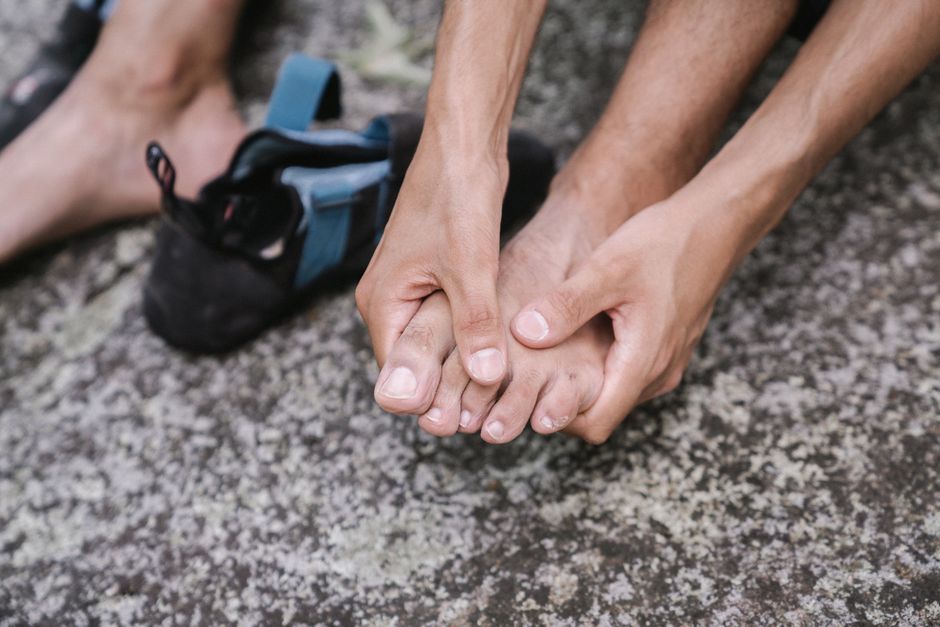
Athlete’s foot is a common fungal infection that can be treated effectively with over-the-counter (OTC) products. The most reliable OTC treatments contain antifungal ingredients like terbinafine or clotrimazole, which are applied directly to the skin. Most mild cases clear up within two to four weeks of consistent daily application, but you must continue treatment for the full recommended duration even after symptoms disappear to prevent the infection from returning.
What Exactly Is Athlete’s Foot and Why Does It Keep Coming Back?
Athlete’s foot is a fungal infection caused by dermatophytes, a group of fungi that feed on keratin in your skin. The medical name is tinea pedis. These fungi thrive in warm, damp environments, which is why the spaces between your toes are a prime target.
The infection does not come back because the fungus is “strong.” It comes back because the environment you create for your feet allows the fungus to survive. If you wear tight shoes all day, sweat heavily, or walk barefoot in communal showers, you are giving the fungus exactly what it needs to regrow. Treating the skin without changing these conditions often leads to a repeat infection within weeks or months.
You should also know that athlete’s foot is contagious. It spreads through direct contact with infected skin or through contact with contaminated surfaces like locker room floors, towels, and shoes. This is why prevention and hygiene matter just as much as the cream you apply.
Which OTC Antifungal Ingredients Actually Work?
The most effective OTC treatments fall into two main classes: allylamines and azoles. Terbinafine is the most common allylamine and is widely considered the fastest-acting OTC option. Clotrimazole and miconazole are azoles that also work well but may take slightly longer to clear the infection.
Terbinafine works by interfering with the fungus’s cell membrane production, which kills the fungus rather than just stopping its growth. Many clinical studies show that terbinafine creams achieve higher cure rates in shorter time frames compared to azole creams. Some research suggests that one to two weeks of terbinafine is comparable to four weeks of clotrimazole for mild to moderate infections.
Other OTC options include tolnaftate and undecylenic acid. These are older antifungals that can be effective for prevention or very mild cases, but they are generally not as potent as terbinafine for an active infection. If you have tried a weaker antifungal for several weeks without improvement, switching to terbinafine is a reasonable next step.
How To Heal Athletes Foot OTC Treatments That Work: Step-by-Step Application
Correct application matters more than most people realize. Many treatment failures are actually application failures. Here is the process that gives you the best chance of clearing the infection.
First, wash your feet thoroughly with soap and water, then dry them completely. Pay special attention to the spaces between your toes. Use a separate towel for your feet and do not share it with anyone. Drying is not optional — the fungus grows in moisture, and applying cream to damp skin traps that moisture.
Apply a thin layer of the antifungal cream to the affected area and about one inch beyond it. The infection often extends beyond what you can see. If the infection is between your toes, apply the cream to both sides of each affected web space. Gently rub it in until it is absorbed.
Apply the cream once or twice daily as directed on the product label. Terbinafine is typically applied once daily, while clotrimazole is usually applied twice daily. Follow the label instructions for your specific product rather than guessing.
Continue using the cream for the full duration listed on the package, even if your skin looks and feels normal. For terbinafine, this is usually one week. For clotrimazole and miconazole, it is usually two to four weeks. Stopping early is the most common reason the infection returns.



When Creams Are Not Enough: Powders, Sprays, and Other Forms
Creams are the most common form, but they are not the only option. Sprays and powders can be useful in specific situations, and sometimes a combination approach works best.
Sprays are convenient for covering large areas of the foot, especially the sole. They are also useful for treating the inside of your shoes. Powders help keep feet dry and can be used as a preventive measure after the active infection has cleared. Some products combine an antifungal with a drying agent, which can be helpful if you sweat heavily.
For most people, a cream is the best first choice for an active infection because it stays in contact with the skin longer. However, if you have a particularly moist environment between your toes, a powder may be more comfortable and effective because it reduces moisture while delivering the medication.
One practical tip: if you use a spray or powder, apply it to the inside of your shoes as well. This reduces the fungal load in your footwear and lowers the chance of reinfection. Do not rely on this alone — treat your skin first and foremost.
How Long Until Athlete’s Foot Heals and When To See a Doctor
With consistent treatment, you should see visible improvement within a few days. Itching and burning usually decrease within the first week. Complete clearing of the skin typically takes two to four weeks depending on the severity of the infection and the product you use.
See a doctor if there is no improvement after two weeks of consistent OTC treatment. Also see a doctor if the infection is severe, covers a large area, or shows signs of a bacterial infection such as increased redness, swelling, warmth, pain, or drainage. People with diabetes or weakened immune systems should seek medical advice early rather than waiting, because foot infections can become more serious in these populations.
A doctor may prescribe a stronger topical antifungal or an oral antifungal medication like terbinafine pills. Oral antifungals are reserved for cases that do not respond to topical treatment or for infections that cover extensive areas. These medications require a prescription because they carry a small risk of liver side effects.
If the infection clears and then returns repeatedly, you may have a different condition. Some skin conditions like eczema or psoriasis can look similar to athlete’s foot. A doctor can perform a simple skin scraping test to confirm the diagnosis before you continue treating the wrong problem.
Preventing Athlete’s Foot From Coming Back
Prevention is not complicated, but it requires consistency. The fungus needs warmth, moisture, and darkness to survive. Remove those conditions and the fungus cannot thrive.
Dry your feet thoroughly after bathing, especially between the toes. Change your socks daily, and if your feet sweat heavily, change them more than once a day. Choose socks made of moisture-wicking materials like merino wool or synthetic blends rather than cotton, which holds moisture against the skin.
Alternate your shoes so each pair has time to dry out completely between wears. This means not wearing the same pair two days in a row. Wearing sandals or going barefoot at home allows your feet to stay dry and exposed to air.
Wear shower shoes or flip-flops in communal areas like gym locker rooms, public pools, and dormitory showers. These surfaces are frequently contaminated with dermatophytes, and walking barefoot on them is a common way to pick up the infection.
Do not share towels, socks, or shoes with others. Wash your towels and socks in hot water to kill any fungal spores. If you have had a stubborn infection, washing your socks in hot water with bleach or using an antifungal laundry additive can help reduce reinfection risk.
Myths and Misconceptions About Athlete’s Foot Treatment
Several myths circulate about athlete’s foot, and believing them can delay proper treatment. One common myth is that bleach or vinegar soaks will cure the infection. These substances can irritate and damage your skin, and no clinical evidence supports them as effective treatments. They may temporarily reduce itching but do not reliably kill the fungus deep enough in the skin to cure the infection.
Another myth is that athlete’s foot only affects athletes or people who use public showers. Anyone can get athlete’s foot. Wearing tight, non-breathable shoes for long hours creates the same warm, moist environment that the fungus needs, regardless of how often you exercise.
Some people believe that if the infection clears up, they can stop treatment immediately. This is incorrect. The visible symptoms resolve before the fungus is fully eliminated. Stopping early allows the remaining fungus to multiply and cause a new infection, sometimes within days.
There is also a misconception that all foot rashes are athlete’s foot. Contact dermatitis, eczema, and even psoriasis can mimic the appearance of a fungal infection. If a “fungal” treatment does not work after a full course, the diagnosis itself may be wrong. A doctor can confirm with a KOH test, which examines skin scrapings under a microscope.
Frequently Asked Questions
Can I cure athlete’s foot with just OTC cream?
Yes, most mild to moderate cases of athlete’s foot clear completely with consistent use of OTC antifungal creams. The key is applying the cream daily for the full duration listed on the label, even after symptoms disappear.
How long does it take for OTC athlete’s foot treatment to work?
Improvement typically begins within a few days, with complete clearing usually taking two to four weeks. If there is no improvement after two weeks of consistent daily application, see a doctor.
What is the strongest OTC athlete’s foot treatment?
Terbinafine 1% cream is generally considered the most effective OTC option because it kills the fungus rather than just inhibiting its growth. It is typically applied once daily for one week.
Why does my athlete’s foot keep coming back?
Reinfection usually happens because the fungus survives in your shoes, socks, or environment, or because you stopped treatment too early. Dry your feet thoroughly, alternate shoes daily, and wash socks in hot water to reduce recurrence.
