
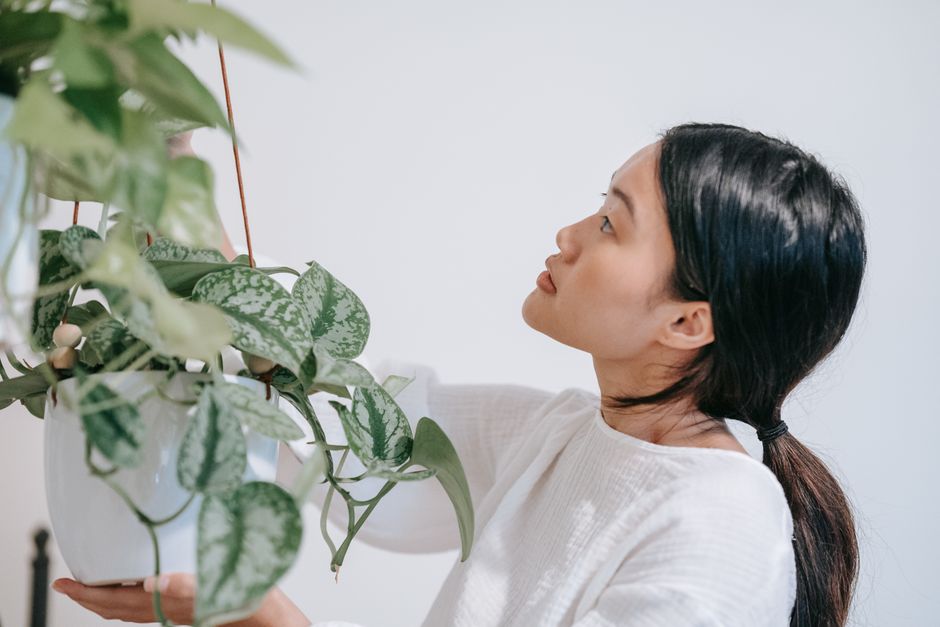
Scindapsus is a genus of tropical climbing plants in the Araceae family, closely related to Epipremnum — the plants most people call pothos. To grow one well, give it bright indirect light, water when the top inch or two of soil feels dry, keep temperatures roughly between 65°F and 85°F, and provide a moss pole or trellis if you want the vines to climb and produce larger leaves. These plants are not difficult, but they do have specific needs around light and watering that separate a thriving plant from one that slowly declines.
What Exactly Is Scindapsus, And How Is It Different From Pothos?
Scindapsus and Epipremnum are separate genera, though they sit in the same plant family and look similar at a glance. The mix-up is common because nurseries and older houseplant books used the names almost interchangeably for decades.
The clearest difference most growers notice is leaf texture. Many Scindapsus species have thicker, more leathery leaves with a satin or silvery sheen. The popular Scindapsus pictus — often sold as “satin pothos” or “silver pothos” — shows silvery variegation that looks almost painted on. Epipremnum leaves tend to be glossier and thinner.
There is also a practical difference in growth habit. Scindapsus is a slower grower than most pothos. If you expect the rapid trailing growth of a golden pothos, a Scindapsus may feel sluggish by comparison. That slower pace is normal, not a sign you are doing something wrong.
Common species and cultivars in cultivation include:
- Scindapsus pictus — the standard species, with silver-marked green leaves
- ‘Argyraeus’ — smaller leaves with distinct silver spots and splashes
- ‘Exotica’ — larger leaves with broad silver patches
- ‘Silvery Ann’ — heavy silver variegation, often concentrated near the leaf edges
- Scindapsus treubii — darker, narrower leaves; the ‘Moonlight’ cultivar is silvery-green
One clarification worth making: “satin pothos” is a nickname, not a botanical classification. If you are comparing plants or buying online, the genus name Scindapsus is the reliable identifier.
How Much Light Does Scindapsus Need?
Bright, indirect light is the sweet spot. A spot a few feet back from an east or west window, or behind a sheer curtain on a south window, usually works well.
Light matters more for Scindapsus than for many houseplants because of the variegation. The silvery patches contain less chlorophyll than the green tissue, so a heavily variegated plant has less capacity to photosynthesize. In low light, these plants tend to stall, and new leaves may come in smaller and with less silver patterning.
Direct midday sun is a different problem. Scindapsus leaves can scorch, and the damage shows up as brown, dry patches that do not heal. Morning sun is generally gentler and usually tolerated, but harsh afternoon sun through glass is not.
If you are unsure whether a spot is bright enough, look at the plant’s new growth over a month or two. Steady new leaves with good color suggest the light is adequate. No new growth, or leaves that keep getting smaller, usually means the plant needs more light.
How Should You Water A Scindapsus?
Water when the top inch or two of potting mix feels dry to the touch. That is the practical rule most growers use, and it works because it accounts for your specific pot, soil, and room conditions rather than a fixed calendar schedule.
Overwatering is the most common way people kill these plants. Scindapsus roots need oxygen, and soil that stays consistently wet deprives them of it. The result is root rot, which often shows up as yellowing lower leaves and a soft, mushy stem base before the plant collapses.
Signs you are watering too often:
- Yellowing leaves, especially near the base of the plant
- Soil that stays damp for more than a week or two
- A musty smell from the pot
- Black or mushy stems
Signs you are watering too little are usually more obvious — leaves droop, curl, and the edges may turn crispy. A thirsty Scindapsus often recovers quickly after a thorough watering, while an overwatered one may not.
Two factors change how fast the soil dries: pot size and season. A small plant in a large pot stays wet longer, which is a common cause of rot. And in winter, when growth slows, most Scindapsus need noticeably less water than in summer.




What Soil, Pot, And Humidity Does Scindapsus Prefer?
A chunky, fast-draining mix is best. These plants are epiphytes in nature — they climb trees rather than grow in ground soil — so their roots are adapted to airy conditions, not dense, water-retentive potting mix.
A workable mix combines regular potting soil with materials that create air pockets, such as perlite, orchid bark, or coco chips. The goal is soil that holds some moisture but drains freely and does not compact around the roots.
Always use a pot with drainage holes. A decorative cachepot without drainage traps water at the bottom, and that standing water is a direct route to root rot.
Humidity is where Scindapsus and many other tropical houseplants differ from desert plants. Average home humidity is usually tolerated, but these plants tend to grow better and produce larger leaves in higher humidity. A bathroom with a window, a grouping of plants, or a pebble tray can all raise local humidity modestly. A small humidifier is the more reliable option if your home air is very dry, particularly in winter.
Should You Let Scindapsus Climb Or Trail?
Scindapsus can do both, but the plant’s growth changes depending on which you choose. This is one of the more useful things to understand about the genus.
In the wild, Scindapsus climbs tree trunks. As it climbs, the leaves typically get larger and the silver patterning becomes more pronounced. When the plant is allowed to trail downward from a hanging pot, growth tends to stay smaller and more compact.
If you want the biggest, most dramatic leaves, give the plant something to climb — a moss pole, a coir pole, or a trellis. Keep the pole slightly moist if it is a moss type, since the aerial roots that grip it respond to moisture. If you prefer the trailing look in a hanging basket, that is a perfectly valid choice. You are simply selecting for a different growth form.
Either way, occasional pruning keeps the plant full. You can trim leggy vines back to a node, and the cuttings root easily in water or moist soil.
What Temperature Range And Fertilizer Schedule Work Best?
Scindapsus grows best between roughly 65°F and 85°F. Below about 60°F, growth slows and the plant becomes more vulnerable to cold damage, especially if leaves touch a cold windowpane.
Avoid placing the plant near heating vents, radiators, or drafty doors. Sudden temperature swings stress the plant more than a steady, slightly cooler room does.
For fertilizer, a balanced liquid houseplant fertilizer diluted to about half the label strength, applied roughly once a month during the active growing season, is a reasonable approach for most home growers. Stop feeding in winter when growth slows. Over-fertilizing can burn roots and cause leaf tip browning, so more is not better here.
If you repot into fresh, quality potting mix, the plant usually has enough nutrients for a while without additional feeding. Fertilizer supports growth — it does not fix a plant that is struggling because of poor light or overwatering.
Common Problems And What They Usually Mean
Most Scindapsus problems trace back to water, light, or pests. A few patterns are worth knowing.
Yellow leaves most often point to overwatering, especially if they appear near the base. Occasionally they signal a nutrient issue, but rot is the more common cause.
Brown, crispy leaf edges usually indicate low humidity or inconsistent watering. Brown, soft patches more often suggest sunburn or a bacterial problem.
Leggy growth with long gaps between leaves is a light problem. The plant is stretching toward a light source. Moving it somewhere brighter usually corrects this over time.
Pests to watch for include spider mites, mealybugs, and scale. Spider mites tend to appear in dry conditions and show up as fine webbing and stippled, faded leaves. Mealybugs look like small white cottony clumps in leaf joints. Scale appears as small brown bumps on stems and leaves. Each can be managed, but early detection makes it much easier.
One note on safety: Scindapsus, like many aroids, contains calcium oxalate crystals. Chewing the plant can cause mouth and throat irritation in pets and people. Keeping it out of reach of children and animals is a sensible precaution.
Frequently Asked Questions
Is Scindapsus the same as pothos?
No — Scindapsus and pothos (Epipremnum) are different genera in the same plant family. They look similar, which is why the names get mixed up, but Scindapsus typically has thicker, more satin-textured leaves and grows more slowly.
How often should I water a Scindapsus?
Water when the top inch or two of soil feels dry, which is usually every one to two weeks depending on light, pot size, and season. There is no fixed schedule that works for every plant.
Why are my Scindapsus leaves turning yellow?
Yellowing leaves, especially near the base, most often mean overwatering and possible root rot. Check whether the soil stays damp too long and whether the pot has working drainage.
Does Scindapsus need high humidity?
It tolerates average home humidity but generally grows better with higher humidity. Very dry air can lead to brown, crispy leaf edges.
