
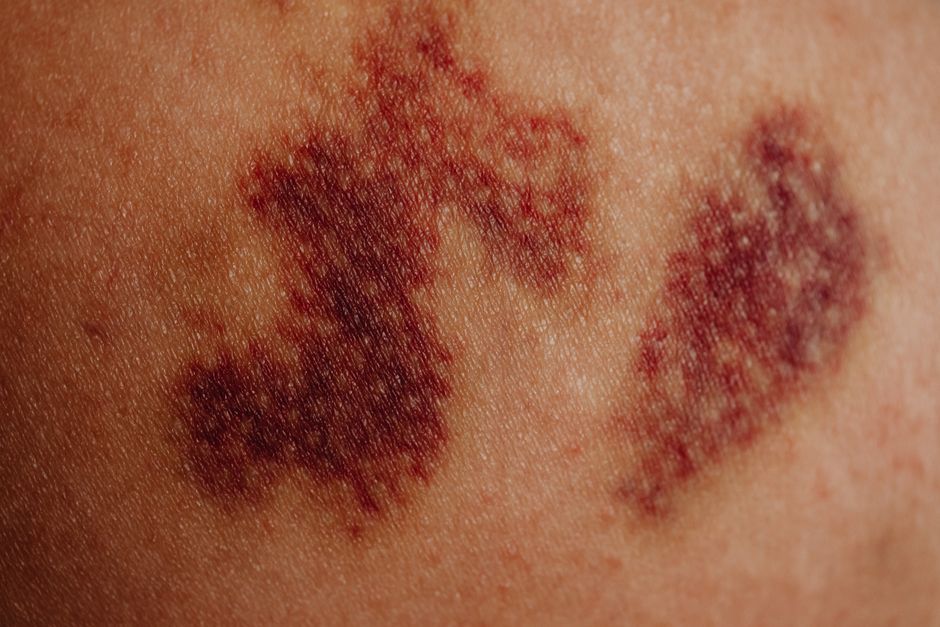
Bruising easily is common. It happens when small blood vessels under your skin break and leak blood into the surrounding tissue. For most people, it is harmless and simply a sign of aging skin or a minor nutrient shortfall. But in some cases, easy bruising can point to a more serious underlying condition, so it is worth understanding what is normal and what is not.
What Causes You To Bruise Easily?
Easy bruising has several well-established causes. The most common is thinning skin and weakened blood vessel walls, which happen naturally as we age. Over years of sun exposure and normal wear, the skin loses collagen and fat, leaving blood vessels with less protection. A minor bump that would not mark a younger person can easily break these fragile vessels.
Blood-thinning medications are another frequent cause. Aspirin, ibuprofen, and prescription anticoagulants like warfarin reduce your blood’s ability to clot. When clotting is slowed, even a small leak takes longer to seal, producing a larger bruise. Many over-the-counter supplements, including fish oil, ginkgo, and high-dose vitamin E, can have a similar effect.
Nutritional deficiencies also play a role. Vitamin C is required for collagen production, which keeps blood vessel walls strong. Vitamin K is needed for the liver to make clotting factors. Low levels of either nutrient can increase bruising, though true deficiencies are uncommon in people who eat a varied diet.
When Should You Worry About Bruising?
Most bruises are not a cause for concern. But certain patterns should prompt a conversation with your doctor. If you develop bruises without any remembered injury, especially on your trunk or back, that is worth checking. Bruises that are unusually large, painful, or slow to heal also deserve attention.
Bleeding in other places is a red flag. Nosebleeds that last more than ten minutes, bleeding gums, blood in your stool or urine, or heavy menstrual periods can all signal a clotting problem. If easy bruising appears alongside any of these, do not wait for it to resolve on its own.
Sudden changes matter too. If you have never bruised easily and now find yourself covered in marks, that shift is more concerning than a lifelong tendency. A new medication, an undiagnosed condition, or a dietary change could be responsible, and identifying the cause matters.
Common Medical Conditions Linked to Easy Bruising
Several medical conditions can cause easy bruising by affecting blood cells, clotting factors, or blood vessel integrity. Liver disease is one example. The liver produces most of your clotting proteins, so when it is damaged by cirrhosis or hepatitis, bleeding and bruising can increase.
Platelet disorders are another category. Platelets are the small cells that clump together to form a plug at the site of injury. If your bone marrow produces too few platelets, or if your body destroys them too quickly, bruising becomes more likely. Immune thrombocytopenia and certain leukemias fall into this group.
Inherited bleeding disorders like hemophilia and von Willebrand disease are less common but important to consider. These conditions involve missing or defective clotting factors. People with these disorders often have a history of excessive bleeding from minor cuts, prolonged nosebleeds, or heavy periods that goes back to childhood.
Ehlers-Danlos syndrome and other connective tissue disorders weaken the collagen that supports blood vessels. This makes vessels more fragile and prone to breaking. People with these conditions frequently have stretchy skin, loose joints, and scars that form abnormally.




What Medications and Supplements Increase Bruising?
Blood thinners are the most obvious culprits, but they are not the only ones. A wide range of medications can increase bruising through different mechanisms. Corticosteroids like prednisone thin the skin and weaken blood vessels when used long-term. Some antidepressants, including selective serotonin reuptake inhibitors, can affect platelet function.
Certain antibiotics, particularly penicillins and cephalosporins, can interfere with platelet activity. Chemotherapy drugs suppress bone marrow, reducing platelet production. Even some herbal supplements with blood-thinning effects — garlic, ginger, ginseng, and turmeric — can contribute when taken in large amounts.
If you take any of these regularly and notice increased bruising, talk to your doctor before stopping anything. Suddenly discontinuing a blood thinner can be dangerous. Your doctor can review your full medication list and help identify what is causing the change.
Are Vitamin Deficiencies Really a Common Cause?
Vitamin C and vitamin K deficiencies are the ones most often discussed in relation to bruising. Vitamin C deficiency is rare in developed countries because it is found in so many common foods. When it does occur, it causes more than bruising — you would also see gum bleeding, poor wound healing, and fatigue.
Vitamin K deficiency is also uncommon in healthy adults. Your body recycles vitamin K efficiently, and it is present in leafy green vegetables, so daily requirements are easily met. People at higher risk include those with fat malabsorption conditions like celiac disease or cystic fibrosis, people on long-term antibiotics, and patients taking warfarin.
Some research suggests low iron levels may contribute to bruising, but the evidence is less clear. Iron deficiency affects red blood cell production, not directly the clotting system. If you have iron deficiency anemia, you are more likely to notice fatigue and pale skin than bruising as a primary symptom.
How Are Bruises Treated and Prevented?
Most bruises fade on their own within one to two weeks. The body gradually reabsorbs the leaked blood, and the color changes from purple to green to yellow as it breaks down. Applying a cold compress in the first 24 hours can reduce blood flow to the area and limit the bruise size. After that, gentle warmth may help speed reabsorption.
Prevention depends on the cause. Protecting your skin with long sleeves and padding during activities helps if fragile vessels are the issue. Using sunscreen daily slows the skin-thinning effects of sun damage. Moisturizing keeps skin supple and less prone to tearing.
If a medication is responsible, your doctor may adjust the dose or explore alternatives. If a deficiency is confirmed with a blood test, correcting it through diet or supplements can help. Do not start vitamin supplements on your own — excessive vitamin K can interfere with blood thinners, and too much vitamin C can cause digestive upset.
There is no evidence that any cream, gel, or supplement can make bruises disappear faster once they form. Products marketed for bruise removal have not been proven effective in clinical trials. The body heals bruises on its own timetable, and nothing reliably speeds that up.
What Tests Will a Doctor Run for Easy Bruising?
If you see a doctor about easy bruising, they will start with a physical exam and a detailed history. They will ask about your medications, supplements, family history of bleeding, and any other bleeding symptoms. This information alone often identifies the cause.
Blood tests are the next step when the cause is not obvious. A complete blood count checks your platelet levels. A coagulation panel measures how well your blood forms clots by testing the time it takes to clot. Your doctor may also order liver function tests and tests for specific clotting factors if the initial results are abnormal.
These tests are simple blood draws and results come back quickly. Most people who bruise easily have normal test results, which is reassuring. It means the cause is likely fragile blood vessels or a medication effect rather than a serious clotting disorder.
Frequently Asked Questions
Is bruising easily a sign of cancer?
Easy bruising alone is rarely a sign of cancer. When cancer is involved, bruising usually comes with other symptoms like fatigue, unexplained weight loss, frequent infections, or bleeding from the gums or nose.
Can stress cause easy bruising?
Stress does not directly cause bruising. However, stress can disrupt sleep and eating habits, which may lead to nutrient shortfalls that contribute to bruising.
How long does it take for a bruise to heal?
Most bruises heal within one to two weeks. Larger bruises or those from significant trauma may take longer, especially in older adults with thinner skin.
When should I see a doctor about bruising?
See a doctor if you have bruises without injury, bruises that are unusually large or painful, or bruising combined with nosebleeds, bleeding gums, or blood in your stool or urine.
