
Going gluten free means removing all wheat, barley, and rye from what you eat and drink. For people with celiac disease, that change is not a lifestyle choice — it is the only treatment that exists. For everyone else, the reasons to do it and the benefits you can expect are different, and often smaller than the internet suggests. Here are the steps that actually matter, in the order that matters.
Who Actually Needs to Go Gluten Free?
Celiac disease is the clear case. It is an autoimmune condition affecting the small intestine, triggered by gluten. It affects roughly 1 percent of people worldwide, according to research published in The Lancet. For these people, even small amounts of gluten cause damage, and a strict gluten-free diet is the treatment.
Wheat allergy is a different condition with a different mechanism. It involves an immune response to wheat proteins, and reactions can happen within minutes to hours of eating. Management also centers on avoiding wheat, though barley and rye are not always part of the problem the way they are in celiac disease.
Then there is non-celiac gluten sensitivity. This is a real diagnosis in the sense that clinicians recognize it, but it is also the most uncertain category. There is no blood test and no biopsy for it. Some people report digestive symptoms, fatigue, or brain fog that improve on a gluten-free diet, and some controlled studies support that. Others do not improve when gluten is removed in blinded trials. The evidence is mixed, and researchers are still working out what is actually causing symptoms in this group.
What is not established is the idea that gluten is broadly harmful to people without one of these conditions. No clinical evidence currently confirms that a gluten-free diet improves health, energy, or digestion in people who tolerate gluten well.
How To Go Gluten Free Steps For Beginners
Start with testing, not with the diet. This is the single most important step, and it is the one most beginners get wrong.
If you suspect celiac disease, you need to be eating gluten for the tests to work. Celiac blood tests look for specific antibodies, and those antibodies fall when you stop eating gluten. Endoscopy with biopsy, which is often needed to confirm the diagnosis, can also miss damage if you have already been gluten free for weeks or months. Going gluten free before testing can mean a false negative result and years of uncertainty.
Talk to a doctor first. Get tested first. Then change your diet.
Once testing is done, or if you have already been diagnosed, here is the practical sequence:
- Learn the three grains. Wheat, barley, and rye are the core problem. Everything else follows from this.
- Read every label. Gluten hides in sauces, soups, seasoning blends, and processed meats.
- Clear your kitchen. Or at least separate utensils, cutting boards, and spreads.
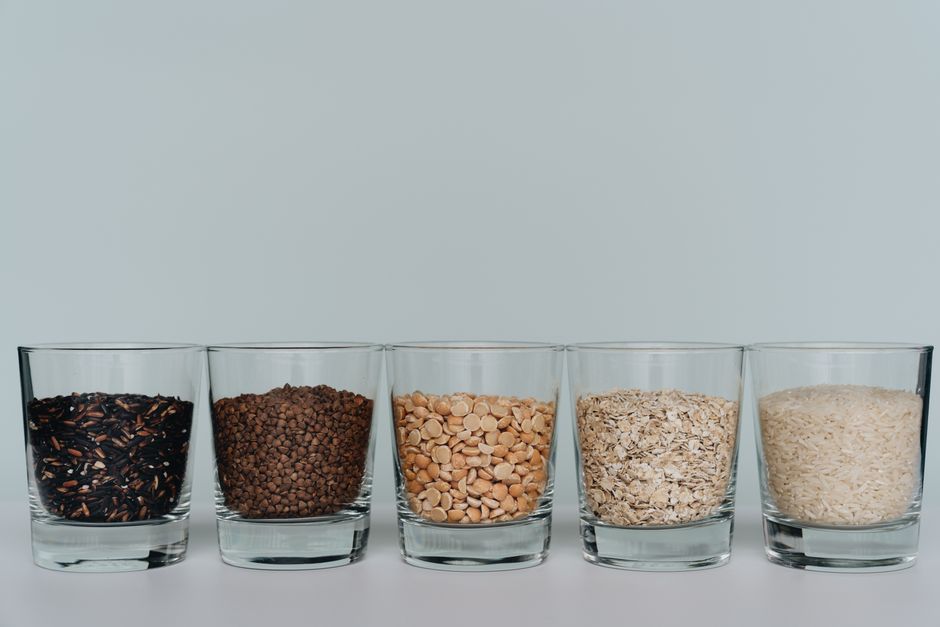
- Rebuild your meals around naturally gluten-free foods. Meat, fish, eggs, beans, vegetables, fruit, rice, corn, potatoes, and quinoa.
- Plan for eating out. Restaurants are where most accidental exposure happens.
Expect the first few weeks to be clumsy. That is normal. The learning curve is real, and it flattens out.
Which Foods Contain Gluten and Which Do Not?
This is where beginners lose the most time. The list of foods containing gluten is longer than most people expect, and the list of naturally gluten-free foods is longer than most people realize.
Wheat shows up under many names. Durum, semolina, spelt, farro, farina, graham, kamut, and einkorn are all wheat. So is malt, which is usually made from barley. Triticale is a wheat-rye hybrid. Oats are naturally gluten-free but are frequently contaminated with wheat during growing and processing, so unless oats are labeled gluten-free, they are not safe for someone with celiac disease.
Here is a simple comparison of what to avoid and what is naturally safe:
| Category | Avoid (contains gluten) | Naturally gluten-free |
|---|---|---|
| Grains | Wheat, barley, rye, spelt, farro, malt | Rice, corn, quinoa, buckwheat, millet |
| Flour | Wheat flour, semolina, graham flour | Almond flour, chickpea flour, rice flour |
| Protein | Breaded meats, most meatballs, some sausages | Plain meat, fish, eggs, beans, tofu |
| Condiments | Soy sauce, some salad dressings, malt vinegar | Tamari, most vinegars, olive oil, herbs |
| Drinks | Beer, malt beverages, some flavored drinks | Wine, distilled spirits, coffee, tea, juice |
One clarification that surprises people: distilled spirits made from wheat, barley, or rye are generally considered gluten-free. The distillation process removes the proteins. This position is supported by the science on gluten proteins, though individual reactions are sometimes reported and are not well explained.




How Do You Read Labels for Hidden Gluten?
Reading labels is the daily skill that makes a gluten-free diet work. It gets faster with practice.
Start with the ingredient list. Look for the words wheat, barley, rye, malt, and any of the wheat aliases listed above. In the United States, the Food Allergen Labeling and Consumer Protection Act requires wheat to be declared on packaged foods, either in the ingredient list or in a “Contains” statement. Barley and rye are not covered by that law, so you have to scan for those yourself.
Then look for a gluten-free label. In the US, the Food and Drug Administration defines “gluten-free” as containing less than 20 parts per million of gluten. That threshold is the established regulatory standard, and products labeled gluten-free must meet it. The same 20 ppm figure is used in many other countries and reflects the level most research supports as safe for people with celiac disease.
Watch for these common hiding places:
- Soy sauce and most Asian sauces
- Soup bases and bouillon cubes
- Seasoning packets and marinades
- Processed deli meats and sausages
- Some medications and supplements
- Some lip balms and toothpaste
When in doubt, contact the manufacturer. It is annoying. It is also the only reliable way to know.
What About Cross-Contamination?
For someone with celiac disease, cross-contamination matters as much as the ingredient list. A tiny amount of wheat flour on a shared cutting board or in a shared toaster can be enough to trigger an immune response.
The practical fixes are simple:
- Use a separate toaster, or use toaster bags.
- Keep separate butter, jam, and peanut butter, or use squeeze bottles.
- Use separate cutting boards and strainers for gluten-free pasta.
- Wash utensils and surfaces thoroughly between uses.
- Store gluten-free flours above or away from wheat flour.
Shared kitchen appliances like air fryers and ovens can also be a problem if wheat flour has been used recently. The protein does not evaporate. It sits on surfaces and in crumbs.
Some people with celiac disease report reactions to amounts that seem impossibly small. That is consistent with what is known about the disease — the immune response does not scale linearly with dose.
What Happens to Your Body After You Stop Eating Gluten?
For people with celiac disease, the small intestine begins to heal once gluten is removed. The villi — the finger-like projections that absorb nutrients — can regrow over time. How fast this happens varies widely. Some people notice symptom improvement within weeks. Full intestinal healing often takes months to years, and it does not always complete, especially in adults diagnosed later in life.
Nutritional deficiencies are common at diagnosis, particularly iron, folate, vitamin D, and B vitamins. These often improve on a gluten-free diet, but some people need supplements. A doctor can check levels and guide treatment.
For people without celiac disease or wheat allergy, the picture is different. If you cut gluten and feel better, that is worth paying attention to. But the improvement could come from many things — eating fewer processed foods, eating more vegetables, or simply paying more attention to what you eat. Some studies suggest a genuine effect in non-celiac gluten sensitivity. Others suggest the effect is smaller than reported. The honest position is that the evidence is mixed.
One thing worth knowing: a gluten-free diet is not automatically healthier. Many gluten-free packaged products contain more sugar, fat, and salt than the wheat versions they replace. They are also often lower in fiber and certain B vitamins. If you go gluten free without a medical reason, you may trade one set of issues for another.
How Long Does It Take to Adjust?
Most people report that the practical side of the diet gets easier within a few weeks. Label reading becomes faster. You learn which brands and restaurants you trust. The mental load drops.
The physical side depends on why you went gluten free. For celiac disease, symptom improvement often starts within days to weeks, but intestinal healing is a longer process measured in months. For non-celiac gluten sensitivity, timelines vary and are not well defined in the research.
What does not change is the need for ongoing attention. A gluten-free diet only works if it is followed consistently. Occasional lapses — a bite of regular bread, a splash of soy sauce — can be enough to cause problems in celiac disease, even if you do not feel anything at the time.
Frequently Asked Questions
Do I need to be tested for celiac disease before going gluten free?
Yes. Celiac blood tests and biopsies only work reliably if you are still eating gluten, so going gluten free first can cause a false negative. Talk to a doctor before making the change.
Is a gluten-free diet healthier for everyone?
No. There is no clinical evidence that a gluten-free diet benefits people who do not have celiac disease, wheat allergy, or a diagnosed sensitivity. Many gluten-free packaged foods are also higher in sugar and lower in fiber than the wheat versions.
Are oats gluten free?
Oats are naturally gluten free, but they are often contaminated with wheat during growing and processing. Unless oats are specifically labeled gluten free, they are not safe for someone with celiac disease.
How much gluten is too much if I have celiac disease?
The FDA defines gluten free as less than 20 parts per million, and this is the level most research supports as safe for people with celiac disease. Even small amounts above that can trigger an immune response in some people.
