
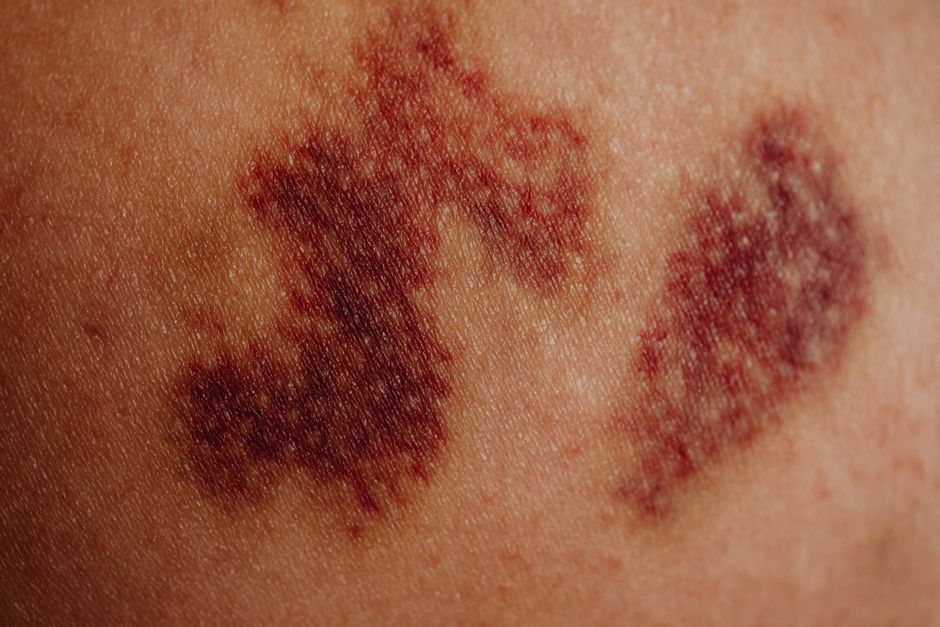
A bruise forms when small blood vessels under your skin break and leak blood into the surrounding tissue. That pooling blood is what creates the familiar black-and-blue mark. The fastest way to make a bruise go away is to act within the first 48 hours using the RICE method — rest, ice, compression, and elevation. Ice constricts the blood vessels and limits how much blood leaks out, which directly reduces the final size of the bruise. After 48 hours, heat and gentle movement help your body reabsorb the trapped blood faster. Most bruises fade noticeably within one to two weeks, but the right early care can shorten that timeline.
What Actually Happens When You Get a Bruise
A bruise is bleeding under the skin. When you bump something hard enough, the impact tears tiny blood vessels called capillaries. Blood escapes into the tissue around them. Your body then sends immune cells to clean up the leaked blood, which is why bruises change color as they heal.
The initial red or purple color comes from fresh blood under the skin. Over the next few days, the hemoglobin in that blood breaks down into other compounds. This is why bruises turn green, then yellow, then brown before fading completely. The entire process is your body’s natural cleanup system working as designed.
Some people bruise more easily than others. This can relate to skin thickness, blood vessel fragility, medications, or simply genetics. Women tend to bruise more easily than men. Older adults bruise more easily because their skin thins and blood vessels become more fragile with age.
Ice Works Best in the First 48 Hours
Cold is the single most effective tool for limiting a bruise. Apply an ice pack wrapped in a thin cloth to the area as soon as possible after the injury. The cold narrows the blood vessels, which reduces the amount of blood that escapes into the tissue. Less blood under the skin means a smaller, less painful bruise.
Apply ice for 15 to 20 minutes at a time. Remove it for at least 20 minutes between sessions. You can repeat this cycle several times during the first two days. Never apply ice directly to the skin — always use a cloth or towel barrier to prevent frostbite or skin damage.
Do not use heat during the first 48 hours. Heat opens blood vessels wider and increases blood flow to the area. That can make the bruise larger and more painful. Save heat for the later stages of healing.
Elevation and Compression Reduce Blood Pooling
Elevation works by using gravity to your advantage. If the bruise is on an arm or leg, raise that limb above the level of your heart whenever possible. This reduces blood pressure in the area, which limits further leaking from damaged vessels.
Compression also helps. An elastic bandage wrapped snugly around the bruised area can reduce blood flow to the region and prevent additional pooling. The wrap should feel firm but not tight. If your fingers or toes tingle, go numb, or turn blue, the wrap is too tight.
Compression works best when combined with ice. Many sports medicine professionals recommend wrapping the ice pack in place with an elastic bandage. This delivers both cold therapy and compression simultaneously. Keep the wrap on for short periods and remove it between icing sessions.



After 48 Hours, Switch to Heat and Movement
Once the bleeding has stopped, the goal changes. Your body now needs to reabsorb the trapped blood. Heat helps by increasing blood flow to the area, which speeds up the cleanup process. A warm compress or heating pad applied for 15 to 20 minutes a few times daily can help.
Gentle movement also aids recovery. Stretching the area or moving the joint through its normal range of motion encourages blood and lymphatic fluid to drain away. This can reduce stiffness and help the bruise fade faster. Do not push through sharp pain — gentle motion only.
Massage is another option after the first two days. Light, gentle massage around the bruise can help break up the pooled blood and encourage reabsorption. Do not massage directly on the bruise during the first 48 hours, as this can worsen the bleeding.
What About Arnica and Other Topical Treatments?
Arnica is one of the most popular natural remedies for bruising. Some research suggests that arnica gel applied topically may help bruises fade faster. The evidence is not strong, and results vary between studies. Some people find it helpful; others see no difference.
Vitamin K cream is another option that some clinicians recommend. Vitamin K plays a role in blood clotting, and applying it topically may help bruises resolve faster. The evidence here is also limited. A few small studies show benefit, but larger trials have not confirmed it.
Over-the-counter bruise creams often combine several ingredients like arnica, vitamin K, and bromelain. Bromelain, an enzyme from pineapples, has anti-inflammatory properties that may help. However, no clinical evidence currently confirms that these combination products work better than simple ice and elevation.
Be cautious with any product that promises dramatic results. A bruise is a normal healing process, not a condition that needs aggressive treatment. If a product sounds too good to be true, it probably is.
How Long Does a Bruise Normally Take to Heal?
Most bruises follow a predictable timeline. The mark appears within hours of the injury and peaks in size and color over the first one to two days. Over the following week, the color shifts through green and yellow as the body breaks down the trapped blood. Most bruises fade significantly within two weeks.
Bruises on the legs and feet often take longer to heal than bruises on the arms or face. This is because gravity makes it harder for the body to drain fluid from the lower extremities. Deep bruises involving muscle tissue can take several weeks to fully resolve.
If a bruise does not improve after two weeks, or if it grows larger over time, see a doctor. This can sometimes indicate a more serious injury like a fracture, a muscle tear, or a bleeding disorder. Large bruises that develop without any known injury also warrant medical evaluation.
When Should You See a Doctor About a Bruise?
Most bruises heal on their own and do not require medical attention. However, certain situations should prompt a call to your doctor. If the bruise is accompanied by severe pain, significant swelling, or an inability to move the area, you may have a fracture or deep tissue injury.
Bruises that appear without any injury, or that occur frequently and easily, may signal an underlying bleeding problem. This is especially concerning if you also experience frequent nosebleeds, bleeding gums, or prolonged bleeding from small cuts. These symptoms warrant a medical evaluation.
If you take blood thinners like warfarin or aspirin, any bruise deserves closer attention. These medications increase bleeding risk, and what looks like a simple bruise could indicate a more serious internal bleed. A bruise that continues to expand over several hours needs urgent medical care.
Does Vitamin C or Other Supplements Help Prevent Bruising?
Vitamin C is necessary for collagen production, and collagen is a key component of blood vessel walls. Some research suggests that vitamin C supplementation may reduce bruising in people with low vitamin C levels. However, if you already get enough vitamin C from your diet, taking more will not prevent bruises.
Bioflavonoids, plant compounds found in citrus fruits, have also been studied for bruise prevention. Some evidence indicates they may strengthen blood vessels and reduce bruising. The research is preliminary, and no large human trials have confirmed these benefits.
Eating a balanced diet with adequate vitamin C, vitamin K, and protein supports healthy blood vessels and normal healing. But supplements are not a substitute for treating the bruise itself. Ice, elevation, and time remain the most reliable approaches.
Can You Stop a Bruise From Forming If You Act Fast?
Acting within the first few minutes can significantly reduce the final bruise size. Ice applied immediately constricts the blood vessels before much blood has leaked out. This is the only window where you can meaningfully limit the bruise’s development.
After 30 to 60 minutes, the blood has already pooled and the bruise has largely formed. Ice at this point still helps with pain and swelling, but it will not prevent the bruise itself. The mark will likely be smaller than it would have been without ice, but it will still appear.
This is why athletes receive ice treatment immediately after injuries. The goal is not just comfort — it is limiting tissue damage and reducing recovery time. The same principle applies to everyday bumps and knocks. The faster you apply ice, the better the outcome.
Frequently Asked Questions
How long does it take for a bruise to go away completely?
Most bruises fade significantly within one to two weeks. Deeper bruises on the legs can take three to four weeks to fully resolve.
Does ice actually make a bruise heal faster?
Ice does not speed up the healing process itself, but it reduces the amount of blood that leaks into the tissue, which makes the bruise smaller and less painful. A smaller bruise takes less time to clear.
Can you massage a bruise to make it go away?
Gentle massage around the bruise after the first 48 hours can help reabsorb the trapped blood. Never massage a fresh bruise within the first two days, as this can worsen the bleeding.
Are there any foods that help bruises heal faster?
Foods rich in vitamin C, vitamin K, and protein support normal healing processes. No specific food has been proven to make a bruise disappear faster than usual.
