
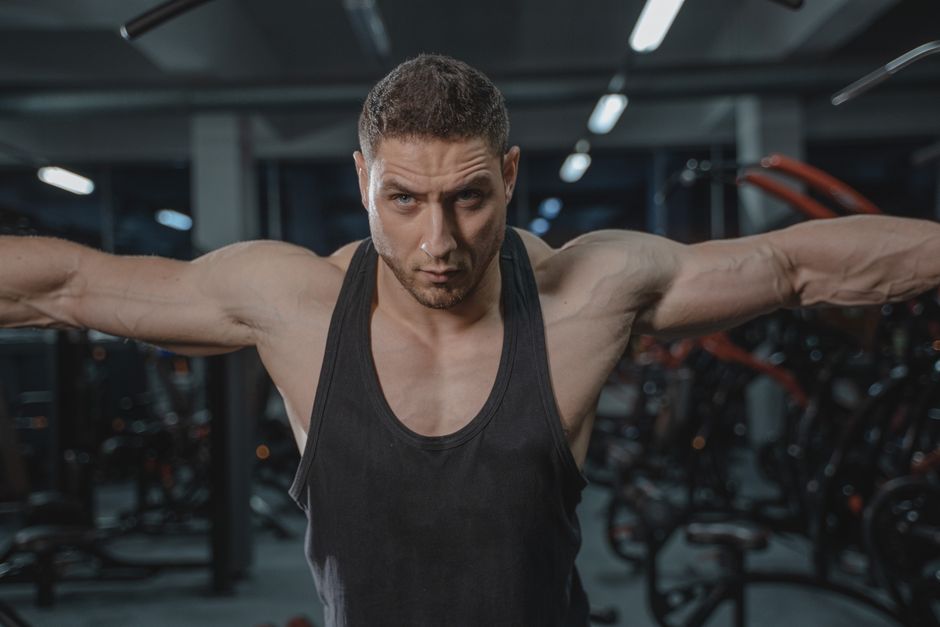
Round shoulders are not just about lifting heavy weights. They come from training all three parts of the deltoid muscle — the front, side, and rear heads — with equal attention. Most lifters overdo the front head with pressing movements and neglect the rear head entirely. To build a truly round shoulder, you need a balanced approach that targets each head with specific exercises, proper form, and enough training volume.
What Are the 3 Delt Heads and Why Do They Matter?
The deltoid is one muscle with three distinct sections, or heads. Each head pulls the arm in a different direction. The anterior deltoid (front) lifts the arm forward. The lateral deltoid (side) raises the arm out to the side. The posterior deltoid (rear) pulls the arm backward.
Each head attaches to the same bone at the upper arm but originates from different points on the shoulder blade and collarbone. This means you cannot fully activate all three heads with a single exercise. You need specific movements for each one.
Visually, the lateral head creates the width of the shoulder. The front head adds thickness when viewed from the side. The rear head completes the round appearance from behind and gives the shoulder its full 3D look. Skip any one head and the shoulder looks flat or incomplete.
How To Get Round Shoulders Build All 3 Delt Heads?
The answer is simple: train each head with dedicated exercises, use enough weight to challenge the muscle, and progress consistently over months. There is no shortcut and no single magic exercise.
A balanced shoulder program includes overhead pressing for the front head, lateral raises for the side head, and rear delt work for the back. You also need to manage your total volume so the shoulders recover between sessions. The deltoids are small muscles but they work hard during many compound lifts, including bench press and rows.
Most people need to prioritize the side and rear heads because pressing movements already train the front head heavily. If you bench press, overhead press, or do push-ups, your front delts get plenty of work. The side and rear heads often lag behind because they only receive direct stimulation from isolation exercises.
The Best Exercises for Each Delt Head
Choose exercises that place tension on the target head throughout the full range of motion. Avoid swinging or using momentum. Controlled reps with a moderate weight build muscle more effectively than heavy, sloppy reps.
Front Delt Exercises
Overhead pressing is the foundation for front delt development. The barbell overhead press and the dumbbell shoulder press both load the front head heavily. The dumbbell version allows a slightly more natural range of motion and can be safer for people with shoulder mobility issues.
Front raises isolate the front head directly. You can do them with dumbbells, a cable, or a plate. Keep the movement controlled and stop when the arm reaches shoulder height. Lifting higher than that shifts tension to the upper traps.
Side Delt Exercises
Lateral raises are the primary exercise for the side head. Stand with a dumbbell in each hand and raise the arms out to the sides until they reach shoulder height. Slightly bend the elbows and lead with the elbows, not the hands.
Cable lateral raises provide constant tension throughout the movement. Unlike dumbbells, cables do not lose resistance at the top of the lift. This makes them an excellent option for building the side head.
One common mistake is using too much weight on lateral raises. When the weight gets heavy, people start using their traps and upper back to lift it. Drop the weight and focus on feeling the side delt working.
Rear Delt Exercises
Rear delt flies are the most direct way to target the back head. Bend forward at the hips with a flat back and raise dumbbells out to the sides. You can also do this exercise on an incline bench, which removes some of the strain from the lower back.
Face pulls with a rope attachment on a cable machine work the rear delts along with the upper back muscles. Set the cable at face height and pull the rope toward your face while keeping your upper arms parallel to the floor.
Reverse pec deck is another effective option. Sit facing the machine and push the handles backward in a wide arc. This machine provides stable support and makes it easier to isolate the rear delts.





How Much Volume Do Your Shoulders Need?
Research consistently shows that muscle growth requires adequate training volume. For the shoulders, most people respond well to 10 to 20 hard sets per week spread across all three heads. Beginners can start at the lower end and advanced lifters may need more.
A practical split might look like this:
- 4 sets of overhead pressing for the front delts
- 4 to 6 sets of lateral raises for the side delts
- 4 to 6 sets of rear delt work
This totals roughly 12 to 16 sets per week, which falls within the effective range for most people. You can split these across two shoulder sessions per week or dedicate one full day to shoulders.
Volume matters, but so does intensity. Each set should be challenging. The last few reps should feel difficult to complete with good form. If every set feels easy, increase the weight or add more reps.
Common Mistakes That Keep Shoulders Flat
Many lifters train shoulders for years without seeing the round shape they want. The problem is usually one of these mistakes.
Skipping rear delts. The rear head is the most neglected part of the shoulder. It is also the hardest to see in the mirror. But without rear delt development, the shoulder looks flat and incomplete from the side and behind.
Using momentum. Swinging weights during lateral raises shifts the work away from the delts and onto the traps and upper back. This is one of the most common form errors in the gym. Slow down the tempo and control the weight on both the way up and the way down.
Overtraining the front delts. If you bench press, incline press, and do overhead presses in the same week, your front delts may be getting 20 or more sets of indirect work. Adding front raises on top of that creates an imbalance. Cut back on direct front delt work if you do a lot of pressing.
Ignoring the upper chest. The upper chest sits right next to the front delts and contributes to the overall shape of the shoulder area. Incline presses and other upper chest work help create a fuller appearance.
Training Frequency and Recovery for Shoulders
Shoulders recover faster than large muscles like the back or legs. Most people can train them two to three times per week without issues, as long as total volume is managed.
A two-day split might look like this: heavy pressing on day one and isolation work on day two. A three-day split might include short shoulder sessions after other workouts. The key is spreading volume across the week rather than doing everything in one brutal session.
Sleep and nutrition play a role in recovery. The deltoids need protein to rebuild and adequate rest to grow. Aim for 1.6 to 2.2 grams of protein per kilogram of body weight daily if you are training seriously. This range is supported by sports nutrition research.
If your shoulders feel painful rather than sore, stop training them. Sharp pain during lateral raises or pressing can indicate tendon issues. Rest for several days and consider seeing a physical therapist if the pain persists.
Progressive Overload Is the Key to Growth
Muscles grow when they are challenged beyond their current capacity. This principle, called progressive overload, applies to all three delt heads. You must gradually increase the weight, reps, or sets over time.
Track your workouts. Write down the exercises, weight, and reps for each session. Aim to add a rep or a small amount of weight each week. Small consistent increases lead to significant gains over months.
For lateral raises, adding 2.5 pounds (about 1 kilogram) every few weeks is a realistic goal. For overhead presses, you may progress faster, especially as a beginner. The key is consistency and patience.
Deload weeks can help. After 6 to 8 weeks of hard training, take a week with lighter weights and lower volume. This allows your shoulders to recover fully and often leads to better progress afterward.
What About Genetics and Shoulder Shape?
Genetics influence the insertion points of your deltoids and the length of your collarbones. These factors affect how round your shoulders look even with the same amount of muscle. Some people naturally have broad, round shoulders while others have narrower frames.
That does not mean you cannot improve. Everyone can build their deltoids significantly with consistent training. The roundness of your shoulders is largely within your control, even if the starting point differs from someone else.
Body fat percentage also matters. Lower body fat makes the deltoids more visible and defined. If you carry excess body fat, the shoulders may look softer and less round even with well-developed muscles.
Focus on what you can control: training each head consistently, progressing over time, and maintaining a reasonable body composition. The results will come.
Frequently Asked Questions
How many times per week should I train shoulders?
Two to three sessions per week works well for most people when total volume is spread across the week. Beginners can start with two sessions and advanced lifters may benefit from three.
Can I build round shoulders without heavy overhead pressing?
Yes, but overhead pressing is the most efficient way to build the front and side delts. If pressing causes pain, you can use dumbbells, machines, or focus entirely on isolation exercises like lateral raises and rear delt flies.
Why are my rear delts not growing?
Most people train rear delts with too little weight or too few sets. Use a weight that challenges you for 10 to 15 controlled reps and perform at least 4 to 6 sets per week dedicated to the rear head.
How long does it take to see round shoulders?
With consistent training and adequate nutrition, visible changes typically appear within 3 to 6 months. Significant shape changes take 1 to 2 years of dedicated training.
