
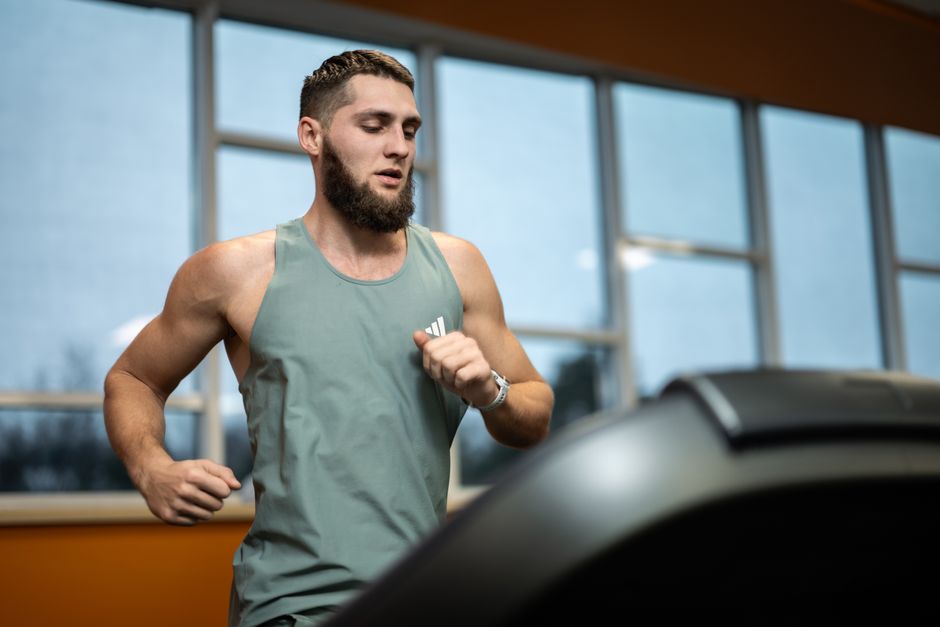
Running is one of the most common forms of exercise in the world, yet many people wonder if it actually builds muscle in the legs. The short answer is yes — running does build leg muscle, but the results depend heavily on how you run. Steady jogging builds endurance in muscle fibers, while sprinting and hill running create more noticeable muscle growth. The type of muscle you build from running differs from what you get from lifting weights, and understanding that difference matters for your fitness goals.
Does Running Build Leg Muscles Effectively?
Running builds leg muscle, but not in the same way weight training does. Research consistently shows that running activates the major muscle groups in the lower body — the quadriceps, hamstrings, glutes, and calves. Every stride requires these muscles to contract, support your body weight, and propel you forward.
However, the amount of muscle growth depends on the type of running. Long-distance running at a steady pace primarily trains type I muscle fibers. These are slow-twitch fibers that resist fatigue but do not grow large. Sprinting and hill repeats recruit type II fibers — fast-twitch fibers that have greater growth potential. This is why sprinters typically have more defined leg muscles than marathon runners.
For most recreational runners, the muscle changes are subtle. You may notice your legs become firmer and more toned over several months, but significant size increases require higher-intensity running or added resistance.
Which Leg Muscles Does Running Work?
Running is a compound movement that engages nearly every muscle in the lower body. The quadriceps on the front of the thigh extend your knee and absorb impact when your foot strikes the ground. The hamstrings on the back of the thigh bend your knee and help drive your leg backward.
The glutes are among the most powerful muscles used in running. They extend your hip and provide forward propulsion, especially when running uphill or sprinting. The calf muscles — the gastrocnemius and soleus — control ankle movement and push off the ground with each step.
Running also engages smaller stabilizer muscles in the hips and feet. These muscles do not grow visibly, but they strengthen and improve your balance and running economy. The hip flexors work during the swing phase when your leg moves forward, though they are not typically a focus of muscle growth from running.
Why Running Builds Less Muscle Than Lifting Weights
Muscle growth requires a specific stimulus that running does not always provide. The principle of progressive overload states that muscles grow when they face increasing resistance over time. Weightlifting allows you to add small amounts of weight regularly, forcing muscles to adapt and grow.
Running provides a different kind of stimulus. Your body weight stays constant, and the resistance comes from gravity and momentum. Once you adapt to a certain pace and distance, your muscles no longer face a new challenge. This is why experienced runners can run the same distance for years without additional muscle growth.
Another factor is energy systems. Weightlifting uses short bursts of intense effort that deplete muscle energy stores quickly. Running, especially at endurance paces, trains your body to use oxygen efficiently and spare muscle mass. Some research suggests that high volumes of endurance exercise can actually suppress pathways that promote muscle growth.
Running also burns significant calories. If you run frequently without increasing your food intake, you may lose body fat along with a small amount of muscle. This is not necessarily negative — most runners prefer a leaner physique — but it explains why running alone rarely produces bulky legs.





How to Build More Leg Muscle From Running
If your goal is to build visible leg muscle while running, you need to change how you run. Sprinting is the most effective running style for muscle growth. Short, maximal-effort sprints recruit fast-twitch muscle fibers that have the greatest growth potential. Hill running provides similar benefits because the incline increases the resistance your muscles must overcome.
Interval training combines these principles. Alternating between high-intensity running and recovery periods challenges your muscles more than steady-state jogging. A typical session might include 30-second sprints followed by 90 seconds of easy jogging, repeated for 15 to 20 minutes.
Adding strength training alongside running produces the best results for muscle growth. Squats, lunges, deadlifts, and calf raises target the same muscles used in running but provide the progressive resistance needed for growth. Many runners find that two strength sessions per week are enough to build and maintain leg muscle without interfering with their running performance.
Nutrition also matters. Muscle growth requires adequate protein and overall calories. Runners who want to build muscle need to consume enough protein throughout the day — spread across meals rather than in one large serving. If you are running to lose weight, you may build less muscle because your body is in a calorie deficit.
Does Running Tone Legs Without Bulking Them?
Many people, especially women, worry that running will make their legs bulky. This concern is largely unfounded for most runners. The muscle growth from running is modest compared to weight training, and the calorie burn from running typically keeps body fat low, which makes muscles appear more defined rather than larger.
Genetics play a role in how your legs respond to running. Some people naturally build muscle more easily and may notice their legs become more muscular with sprinting or hill work. Others may run for years with minimal visible change in leg size. Neither response is abnormal.
If your goal is toned, defined legs without significant size increase, steady-state running combined with a moderate calorie intake is a reasonable approach. Your legs will become firmer as muscle tone improves and body fat decreases, but dramatic size changes are unlikely without high-intensity sprinting or added resistance training.
What Research Says About Running and Muscle Mass
Research on running and muscle growth paints a nuanced picture. Studies consistently show that untrained individuals who begin a running program gain some leg muscle in the first several months. This initial gain comes from neuromuscular adaptations — your brain learns to activate existing muscle fibers more efficiently — rather than from significant new muscle tissue.
After this initial adaptation period, muscle growth from running plateaus. Long-term runners typically have similar or slightly lower leg muscle mass compared to sedentary individuals when adjusted for body weight. This does not mean running is bad for your muscles — it means the stimulus is not strong enough to promote continued growth.
Some research suggests that endurance exercise may interfere with muscle-building pathways. A protein called AMPK, activated during endurance exercise, can suppress the activity of mTOR, a key regulator of muscle growth. This is why combining heavy strength training with high-volume running can be challenging for muscle growth.
The evidence is clear that sprinting produces more muscle growth than distance running. One study found that untrained individuals who performed sprint intervals gained significant muscle mass in their thighs over several weeks, while those who did steady cycling did not. The principle applies to running — intensity drives growth.
Frequently Asked Questions
How long does it take to see leg muscle changes from running?
Most people notice firmer legs within 4 to 8 weeks of consistent running, especially if they are new to exercise. Visible size changes take longer and require higher-intensity running or added strength training.
Will running make my legs bigger or smaller?
Running typically makes legs leaner and more defined rather than bigger. Sprinting and hill running can increase muscle size, while steady distance running tends to produce a slimmer appearance as body fat decreases.
Can I build leg muscle by running alone without lifting weights?
Yes, but only to a limited degree. Sprinting and hill repeats can build some leg muscle, but the growth potential is lower than with progressive resistance training.
Is it better to run or lift weights for leg muscle?
Weightlifting is more effective for building leg muscle size. Running is better for cardiovascular fitness and endurance, and a combination of both produces the best overall results.
