
You can remove soft plaque between your teeth at home with daily flossing and careful brushing, and you can slow the bacteria that keep rebuilding it. What you cannot do at home is remove tartar, the hard deposit that forms when plaque sits too long. That part needs a dental professional.
The difference between plaque and tartar matters more than most people realize. Plaque is a soft, sticky film of bacteria that builds up on teeth and along the gumline within hours of brushing. It is removable. Tartar, also called calculus, is plaque that has mineralized and bonded to the tooth surface. Once that happens, no toothbrush, floss, or rinse will take it off.
What Is Plaque Between Teeth And Why Does It Form There?
Plaque is a living film of bacteria, saliva proteins, and food debris that forms on every tooth surface. It starts rebuilding within minutes of brushing and reaches maturity in about 24 hours.
The spaces between teeth are where plaque does the most damage, because they are the hardest places to reach. A toothbrush bristle cannot get between two touching teeth. That narrow gap stays warm, wet, and sheltered, which is close to ideal for bacterial growth.
When plaque sits undisturbed, the bacteria in it produce acids as they break down sugars from food. Those acids dissolve minerals in tooth enamel. Over time this causes cavities. The same bacteria also irritate gum tissue, which is why plaque between teeth is a leading cause of gum disease in that specific area.
Two things are worth knowing here. First, plaque between teeth is normal. Everyone forms it. Second, the goal is not a sterile mouth — that is not achievable or desirable. The goal is to disrupt the film often enough that it never matures into something that damages teeth and gums.
How To Get Rid Of Plaque Between Teeth At Home
Flossing is the single most effective home method for removing plaque from between teeth. Done correctly and daily, it physically scrapes the film off the sides of teeth where a brush cannot reach.
Technique matters as much as frequency. A quick snap of floss through the gap does very little. The floss needs to wrap around the side of each tooth in a C-shape and slide up and down against the surface, going slightly below the gumline. Each gap gets two passes — one for each tooth.
If traditional string floss is hard to use, several alternatives work on the same principle of physically disrupting the film:
- Interdental brushes — small bristle brushes sized to fit between teeth. For people with wider gaps or gum recession, these can clean more surface area than floss.
- Water flossers — a directed stream of water that rinses between teeth and along the gumline. Evidence suggests they help reduce plaque and gum inflammation, though they may not remove sticky plaque as thoroughly as string floss in tight spaces.
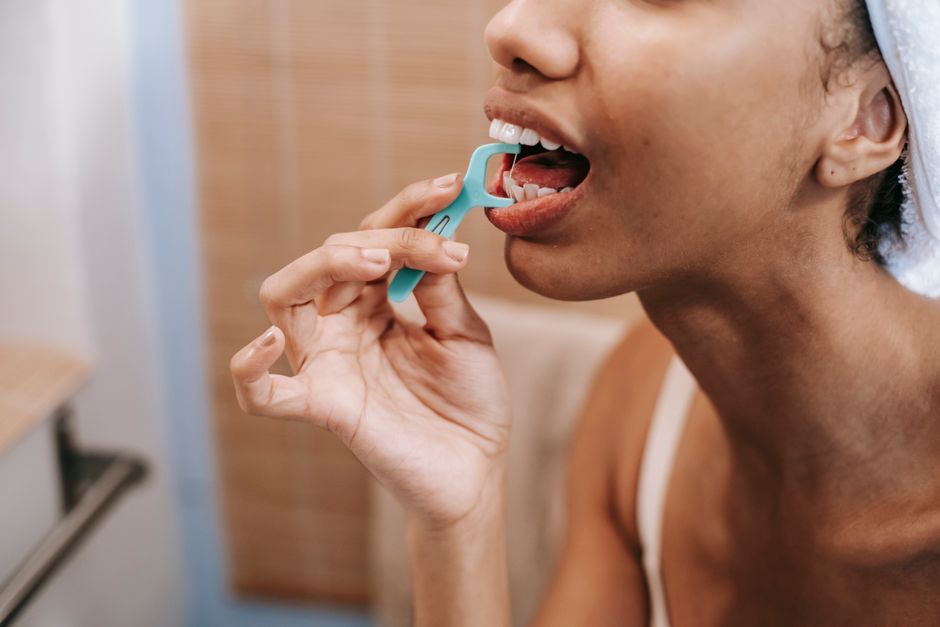
- Floss picks — convenient and useful for people who otherwise would not floss at all, though the short floss span makes proper C-shaping harder.
Brushing still matters, but it plays a supporting role for the spaces between teeth. Use a soft-bristled brush and a fluoride toothpaste, and angle the bristles toward the gumline at roughly 45 degrees. Spend about two minutes total. An electric toothbrush with a round oscillating head has been shown in multiple studies to remove more plaque than manual brushing, largely because it does the work when technique is imperfect.
One clarification that surprises people: mouthwash is not a substitute for flossing. Most rinses reach the surfaces they touch, but they do not physically break up the plaque film wedged between teeth. They can add a small benefit on top of flossing and brushing. They do not replace either.
Does Flossing Actually Work, Or Is It Overrated?
Flossing removes plaque. That part is not in dispute — it is a mechanical action, and the plaque comes off. What has been debated is how much that translates into fewer cavities and less gum disease over years.
The reason for the debate is that flossing is hard to study well. You cannot blind someone to whether they flossed. You have to rely on people reporting what they did, and people are not reliable reporters of their own flossing. Short studies that measure plaque directly tend to show clear benefit. Long studies that rely on self-reported habits are messier.
What most dental professionals and public health bodies conclude is that cleaning between teeth is worth doing, and that the evidence is stronger for gum health than for cavity prevention specifically. The American Dental Association recommends cleaning between teeth once a day. That is a reasonable target.
If you floss and your gums bleed, that is usually a sign of inflammation, not injury. Bleeding from flossing typically decreases over one to two weeks of consistent daily flossing as the gum tissue settles down. If bleeding continues past that, or is heavy, that is a reason to see a dentist rather than to stop flossing.



What Home Remedies Do Not Remove Plaque
Several popular home methods do not do what people hope they do. It is worth being direct about them.
Oil pulling — swishing coconut or sesame oil in the mouth — has been studied, and some small trials suggest it may reduce plaque or gum inflammation slightly compared to doing nothing. The evidence is limited and the effect, where found, is modest. It is not a replacement for flossing or brushing.
Baking soda is a mild abrasive and is present in some toothpastes. Brushing with plain baking soda may help scrub surface stains. It does not dissolve plaque between teeth, and used aggressively it can wear enamel over time.
Apple cider vinegar, lemon juice, and other acidic rinses do not remove plaque. They can erode tooth enamel. This is a case where a home remedy can cause real harm.
Dental scalers sold for home use can chip enamel or injure gums when used by someone without training. They are also the wrong tool for soft plaque, which comes off with floss.
No home method removes tartar. If you can see or feel a hard, crusty deposit between teeth or along the gumline, that is calculus, and it needs to be removed by a dentist or dental hygienist with professional instruments.
When Home Care Is Not Enough
Some signs mean the problem has moved past what flossing and brushing can fix on their own.
- Gums that bleed every time you floss, for more than two weeks
- Gums that look red, swollen, or pulled away from the teeth
- Persistent bad breath that does not improve with brushing and flossing
- A hard, visible deposit between teeth or at the gumline
- Teeth that feel loose, or gaps that seem to be widening
- Pain when chewing or sensitivity that does not settle
These can point to gum disease that has progressed beyond gingivitis. Gingivitis — early gum inflammation — is reversible with good home care and a professional cleaning. Periodontitis, where the infection has reached the bone and tissues supporting the teeth, is not reversible and requires professional treatment. A dentist can tell the difference.
Professional cleanings remove both plaque and tartar from areas you cannot reach, including below the gumline. How often you need one depends on your gum health, your history, and your risk factors. Many people are advised every six months, but some need more frequent visits and some less. That is a conversation to have with your own dentist rather than a fixed rule.
How To Keep Plaque From Coming Back
Plaque cannot be prevented entirely. It reforms constantly. What you can control is how long it is allowed to sit.
Clean between your teeth once a day, every day. The timing is less important than the consistency. Some people prefer mornings, some before bed. Doing it daily is what disrupts the film before it matures.
Brush twice a day with a fluoride toothpaste. Limit how often you eat sugary or starchy snacks, since each exposure feeds the acid-producing bacteria. Drink water, especially after eating. Do not smoke — smoking is one of the strongest risk factors for gum disease, and it also masks the bleeding that would otherwise warn you something is wrong.
The non-obvious point here is that frequency of cleaning beats intensity. A gentle, thorough daily floss does more over a year than an aggressive flossing session once a week. Plaque does not care how hard you scrub. It cares how often it gets broken up.
Frequently Asked Questions
Can I remove tartar between my teeth at home?
No. Tartar is mineralized plaque bonded to the tooth, and no toothbrush, floss, or rinse removes it. It requires a dentist or dental hygienist using professional scaling instruments.
Is it better to floss or use a water flosser?
String floss generally removes sticky plaque more thoroughly in tight spaces, while water flossers are useful for rinsing and for people who struggle with floss. Many dentists suggest using floss as the base and a water flosser as an add-on if you like it.
How long does it take for flossing to stop hurting my gums?
Bleeding and tenderness from flossing usually decrease within one to two weeks of daily flossing as gum inflammation settles. If it continues past that, see a dentist.
Does mouthwash get rid of plaque between teeth?
Most mouthwashes do not physically break up the plaque film between teeth, so they do not replace flossing. They can add a small benefit when used alongside brushing and flossing.
