
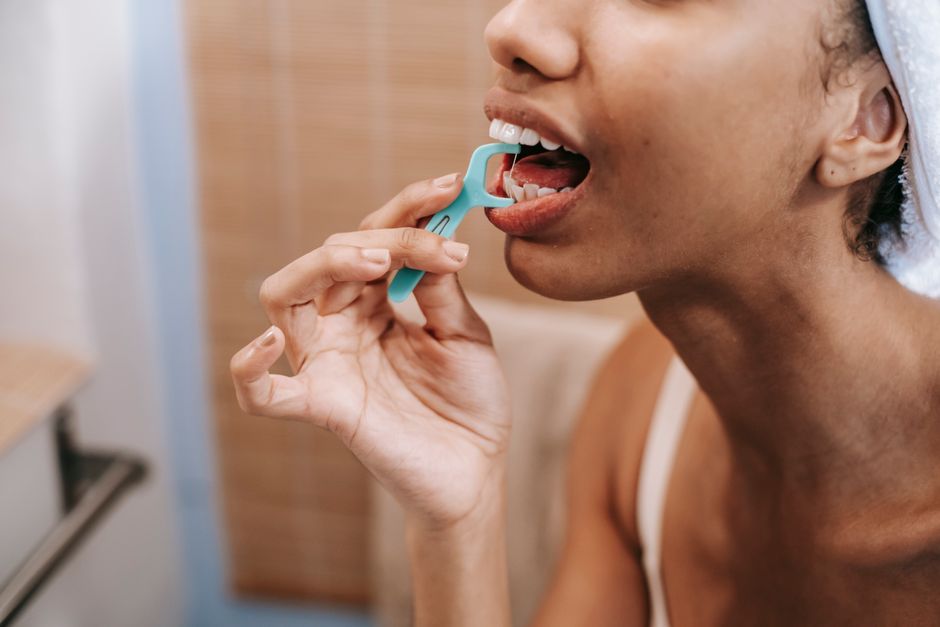
Deep stains that survive regular brushing are usually not on the surface of your teeth at all — they have worked their way into the enamel or the layer beneath it, called dentin, and a toothbrush cannot reach them. Getting rid of them means either breaking down the stain chemically or physically removing the stained layer, which is why whitening toothpaste often does very little. The right approach depends on the type of stain you have, so identifying the cause comes first.
Why Some Teeth Stains Won’t Brush Off
Tooth enamel is not a solid, glass-like shell. It is a hard mineral structure packed with microscopic pores. Those pores allow pigments from food, drink, and other sources to seep below the surface over time. Once a pigment sits inside the enamel or binds to the dentin underneath, brushing only touches the outer surface and leaves the color untouched.
There are three broad categories of stain, and they behave very differently.
- Extrinsic stains sit on the outer surface. Coffee, tea, red wine, and tobacco are common causes. These often respond to polishing or regular professional cleaning.
- Intrinsic stains are inside the tooth structure. Causes include tetracycline antibiotics taken during tooth development, too much fluoride during childhood, and certain childhood illnesses.
- Age-related stains build as enamel thins with time, letting the naturally yellowish dentin show through more.
This distinction matters because a surface polish does nothing for a stain that lives inside the tooth. Many people spend months on whitening toothpaste for a problem that only a dentist-applied treatment or a restoration can address.
How To Get Rid Of Deep Teeth Stains That Wont Brush Off
There is no home method that reliably removes intrinsic stains. The options that work fall into professional treatments and a limited number of evidence-supported home products, and the two are not equal in strength.
Professional in-office whitening uses a high-concentration peroxide gel, often activated by light or heat, applied under a protective barrier for the gums. This is the most effective single treatment for many intrinsic and stubborn extrinsic stains. Results are usually noticeable after one visit, though sensitivity afterward is common and temporary.
Custom take-home trays from your dentist use a lower-concentration peroxide gel worn over days or weeks. They tend to work more gradually than in-office treatment but give you more control and often cost less. A 2019 review of whitening research found that both in-office and dentist-supervised at-home bleaching produce measurable color improvement, though individual results vary.
Over-the-counter whitening strips and gels contain peroxide at lower levels. They can lighten mild extrinsic stains and may help with some shallow intrinsic ones, but they rarely match professional results for deep discoloration.
For stains that peroxide cannot reach — such as those from tetracycline or fluorosis — whitening may improve the color somewhat but often will not fully correct it. In those cases, a dentist may discuss bonding, veneers, or crowns, which cover the stained tooth rather than bleaching it.
Which Type Of Stain Do You Have?
Matching the treatment to the stain type saves time and money. The table below outlines the common patterns, though only a dentist can confirm your specific situation.
| Stain Type | Common Cause | Typical Location | Often Responds To |
|---|---|---|---|
| Extrinsic | Coffee, tea, wine, tobacco | Outer surface, near gumline | Professional cleaning, polishing, whitening |
| Intrinsic — tetracycline | Antibiotics during tooth development | Deep, often banded gray-brown | Limited whitening; may need veneers |
| Intrinsic — fluorosis | Excess fluoride in childhood | White or brown mottling | Mild cases: whitening; severe: bonding or veneers |
| Age-related | Enamel thinning | Overall yellowing | Whitening, sometimes combined approaches |
| Single dark tooth | Prior trauma or dead nerve | One tooth only | Internal bleaching or root canal therapy |
A single discolored tooth is worth flagging. When one tooth turns dark after an injury, the cause is often internal — the pulp inside the tooth may have died. That is a dental issue, not a cosmetic one, and it needs a dentist’s assessment. Internal bleaching or root canal treatment is usually required, and no whitening strip will fix it.




Do Home Remedies For Deep Stains Actually Work?
Most popular home remedies for deep stains do not work, and some cause harm. It is worth being direct about this because the internet is full of confident advice that does not hold up.
Baking soda and hydrogen peroxide are the most common DIY combination. Baking soda is a mild abrasive and can help lift fresh surface stains, and low-concentration peroxide has some whitening effect. But household peroxide is not formulated for teeth, and repeated use can irritate gums and enamel. The evidence for this combination removing deep stains is weak.
Lemon juice, apple cider vinegar, and other acids are the most damaging. Acid dissolves tooth mineral. Using these on your teeth erodes enamel, and once enamel is gone it does not grow back. Thinning enamel also makes the yellow dentin underneath more visible — the opposite of what you want. This is one of the clearest cases where a viral remedy causes real harm.
Activated charcoal is abrasive and has no reliable evidence supporting it for deep stains. It may scratch enamel and, because it is so abrasive, can wear down the surface over time. Some dentists report seeing enamel damage from frequent charcoal use.
Oil pulling with coconut or sesame oil has been studied for oral hygiene, but the evidence for stain removal specifically is very limited. It is not a treatment for deep stains.
The pattern is consistent: remedies that feel strong enough to work are usually the ones damaging your enamel. The ones that are safe tend to be too weak for deep stains. That is why professional treatment exists.
When To See A Dentist About Stubborn Stains
See a dentist if a stain does not improve after a few weeks of consistent oral care, if it appeared suddenly, or if it affects only one tooth. These signs can point to something beyond cosmetic staining.
A dentist can also tell the difference between a stain and other discoloration. Some dark patches on teeth are not stains at all — they can be cavities, which need treatment, not whitening. Trying to bleach a cavity does nothing and delays proper care.
Professional cleaning removes tartar and surface stains that no toothbrush can reach. This is often the first step before any whitening, because whitening works better on a clean surface and cannot lighten tartar.
If you have sensitive teeth, gum disease, worn enamel, or many fillings and crowns, tell your dentist before whitening. Peroxide can cause significant sensitivity in people with exposed dentin, and it does not change the color of tooth-colored fillings or crowns — which can leave an uneven result if those are present.
Can You Prevent Deep Stains From Forming?
Prevention works best before stains become deep. Once pigment is inside the tooth, prevention is no longer the tool — treatment is.
For everyday habits, the evidence supports a few practical steps. Rinsing with water after coffee, tea, or wine reduces how long pigments sit on the teeth. Using a straw for dark drinks limits contact with the front teeth. Brushing twice a day with a fluoride toothpaste and flossing daily keeps the surface clean and reduces the plaque that traps stain.
Regular professional cleanings remove surface buildup before it can set. For people who drink a lot of coffee or tea, or who smoke, cleanings every six months are a common recommendation, though your dentist may suggest a different schedule based on your situation.
Quitting tobacco is the single most effective step for tobacco-related staining, and it also lowers the risk of gum disease and oral cancer.
What does not help prevention: brushing harder. Brushing aggressively wears down enamel and exposes more of the yellow dentin underneath, which makes teeth look more stained over time, not less. A soft-bristled brush and gentle pressure are the standard advice for a reason.
Frequently Asked Questions
Can deep teeth stains really be removed at home?
Most deep stains inside the enamel or dentin cannot be removed with home products alone. Over-the-counter whitening strips may lighten mild cases, but stains from tetracycline, fluorosis, or a dead nerve usually need professional treatment.
Does baking soda and hydrogen peroxide remove deep stains?
This combination can help with fresh surface stains but has weak evidence for deep stains, and repeated use may irritate gums and enamel. It is not a substitute for professional whitening.
Why did one of my teeth turn dark all of a sudden?
A single tooth that darkens, especially after an injury, often means the pulp inside has died. This needs a dentist’s evaluation, because it is a dental problem rather than a cosmetic stain.
How long does professional teeth whitening last?
Results vary by person and by habits such as coffee drinking and smoking, so there is no fixed timeline. Many people see the effect fade over months to a few years and choose to touch up with dentist-provided trays.
