
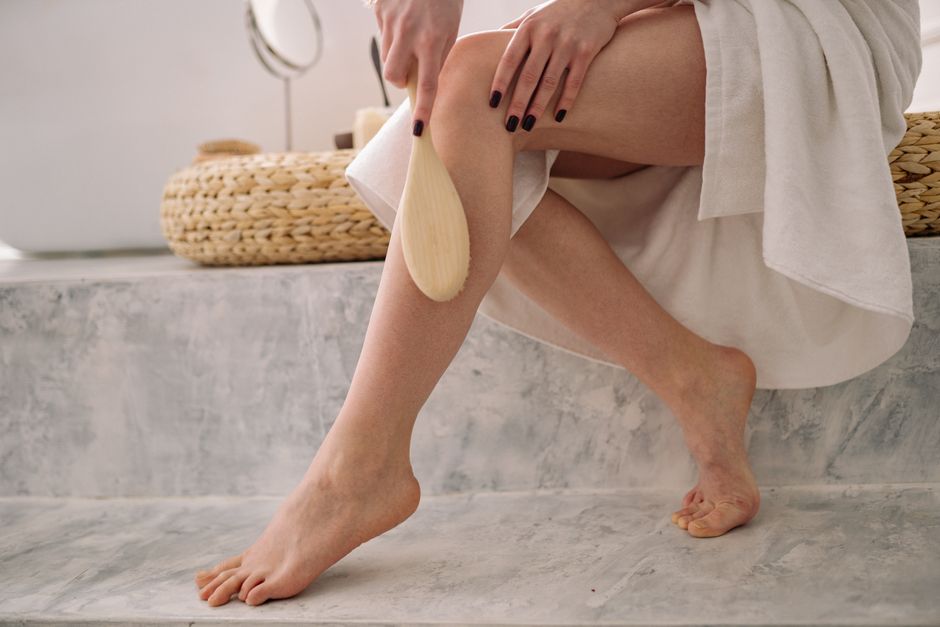
Dry brushing is a simple practice where you use a firm-bristled brush on dry skin before you shower. The basic method is to brush your skin in long strokes toward your heart, starting at your feet and moving upward. Most people do this for a few minutes daily, and it is generally safe for healthy adults when done with light pressure.
What Is Dry Brushing and What Does It Actually Do?
Dry brushing uses a brush with stiff, natural bristles and a long handle so you can reach your back. You use it on bare, dry skin before getting into the shower. The practice has roots in traditional medicine systems, but modern research on its benefits is limited.
What dry brushing clearly does is provide physical exfoliation. The bristles remove dead skin cells from the surface of your skin. This can leave your skin feeling smoother and may help your lotion or moisturizer absorb more effectively. Beyond that, most claims about dry brushing are not backed by strong clinical evidence.
Some people claim dry brushing helps the lymphatic system move waste out of the body. The lymphatic system does rely on movement to circulate lymph fluid, and massage can stimulate this. However, no large human trials have confirmed that dry brushing specifically improves lymphatic drainage or detoxification. Your liver and kidneys handle detoxification through established biological processes that dry brushing does not influence.
How To Dry Brush: Step by Step
Start with a brush that has firm but not scratchy bristles. Natural boar bristles are common, but synthetic bristles work too. The key is that the brush feels firm on your skin without causing pain or redness.
Follow these steps in order:
- Step 1: Stand in a dry area, ideally on a towel or mat. Your skin should be completely dry. Do not wet the brush or your skin.
- Step 2: Start at your feet. Brush the soles and tops of your feet using long, firm strokes.
- Step 3: Move up your legs. Brush in long strokes from your ankles toward your thighs, always moving toward your heart.
- Step 4: Brush your stomach and chest in a circular, clockwise motion. Use lighter pressure here because the skin is thinner and more sensitive.
- Step 5: Brush your arms. Start at your hands and brush upward toward your shoulders.
- Step 6: Brush your back and shoulders. Use the long handle to reach these areas. Brush downward from your neck toward your lower back, or in whatever direction is comfortable.
- Step 7: Shower afterward to wash away the dead skin cells you loosened. Apply moisturizer or body oil while your skin is still slightly damp.
The entire process takes about two to five minutes. There is no established rule for how long you should brush, and no clinical guideline specifies a duration. Most people find that a few minutes is enough to cover their whole body.
How Often Should You Dry Brush?
Most people dry brush once daily in the morning before their shower. Some people prefer every other day. There is no clinical research that establishes an optimal frequency, so the right answer depends on how your skin responds.
Your skin is a good guide. If your skin feels smooth and normal after brushing, daily use is fine. If you notice redness, irritation, or a stinging sensation, reduce the frequency to every other day or a few times per week. Dry brushing is exfoliation, and over-exfoliating can damage your skin barrier.
People with sensitive skin, eczema, or psoriasis should be more cautious. The mechanical friction of brushing can trigger flare-ups in some skin conditions. If you have an active skin condition, check with a dermatologist before starting dry brushing.





What Brush Should You Use?
The brush you choose matters more than most people expect. Look for a brush with natural or synthetic bristles that are stiff enough to feel effective but not so stiff they scratch your skin.
Here are the main brush types and their uses:
| Brush Type | Best For | Considerations |
|---|---|---|
| Long-handled brush | Reaching your back and shoulders | Most common choice for full-body brushing |
| Small hand brush | Arms, legs, and targeted areas | Easier to control pressure |
| Brush with removable head | Easy cleaning and versatility | Head can be swapped or replaced |
Clean your brush regularly. Rinse it with soap and warm water once a week and let it air dry. A damp brush can harbor bacteria, which you do not want to spread across your skin. Replace your brush every few months or when the bristles start to bend or break.
Who Should Avoid Dry Brushing?
Dry brushing is not safe for everyone. If you have any of the following conditions, skip dry brushing or talk to a doctor first:
- Open wounds, cuts, or sunburned skin
- Active eczema, psoriasis, or other inflammatory skin conditions
- Very sensitive skin that reacts to friction
- Recent surgery or healing scars
- Varicose veins — brushing over these can cause irritation
There is no established guidance for dry brushing during pregnancy. Some clinicians recommend avoiding it if you have sensitive skin or skin changes related to pregnancy, but no clinical trials have studied this directly. If you are pregnant and want to dry brush, use very light pressure and stop if anything feels uncomfortable.
Do not dry brush your face. The skin on your face is much thinner and more delicate than the skin on your body. Facial exfoliation is better done with products designed specifically for that purpose.
Does Dry Brushing Have Real Benefits or Is It Just a Trend?
The honest answer is that dry brushing has one well-established benefit — exfoliation. It physically removes dead skin cells, which makes your skin feel smoother. Some evidence suggests that regular exfoliation can improve the appearance of skin over time, but this benefit is not unique to dry brushing. Any gentle exfoliation method provides it.
The claims about lymphatic drainage and detoxification are not supported by solid research. Your body has its own detoxification systems — your liver and kidneys — that work continuously. No external brushing changes how these organs function.
Some people report that dry brushing feels invigorating and helps them start their day with intention. That is a real subjective benefit, even if it is not measurable in a clinical trial. There is nothing wrong with enjoying a practice for how it feels, as long as you do not expect it to do more than the evidence supports.
What Are the Risks of Dry Brushing?
The main risk is skin irritation. Brushing too hard, too often, or with a brush that is too stiff can damage your skin’s outer layer. This can lead to redness, dryness, itching, or even micro-tears in the skin that increase your risk of infection.
Another risk is spreading bacteria. If you use a dirty brush, you can push bacteria into small openings in your skin. This is why cleaning your brush regularly is important.
People with darker skin tones may notice hyperpigmentation if they irritate their skin repeatedly. This is a real concern, and it is another reason to use light pressure and pay attention to how your skin responds.
If you notice any of these signs, stop dry brushing for a few days and let your skin recover. When you restart, use lighter pressure and brush less frequently.
Frequently Asked Questions
Should you dry brush before or after showering?
Dry brush before you shower, on completely dry skin.
Showering afterward washes away the dead skin cells and lets your moisturizer absorb better.
How long should you dry brush each session?
Two to five minutes is enough to cover your whole body.
No clinical guideline specifies a duration, so adjust based on how your skin feels.
Can dry brushing help with cellulite?
No clinical evidence confirms that dry brushing reduces cellulite.
Some people claim it helps temporarily, but any effect is likely from increased blood flow and skin plumping, not a structural change.
Is dry brushing safe for sensitive skin?
Dry brushing can irritate sensitive skin, so proceed with caution.
Use a softer brush, brush less frequently, and stop if you notice redness or stinging.
